Building a Cost-Aware Culture in the Age of AI ft. Henrique Amorim, Crayon | Ep #59
FIA - Henrique Amorim
===
Henrique: [00:00:00] identify those savings and keep them as an ace up your sleeve while using that as leverage to get your roots in the system. Go do your probing and digging and figuring out what is actionable, and then figure out how much you can show to management and then execute on.
Intro: Welcome to FinOps in Action. I'm your host, Taylor Houck. Each week I'll sit down with FinOps experts to explore the toughest challenges between FinOps and engineering. This show is brought to you by 0.5, empowering teams to optimize cloud costs with deep detection and remediation tools that actually drive action.
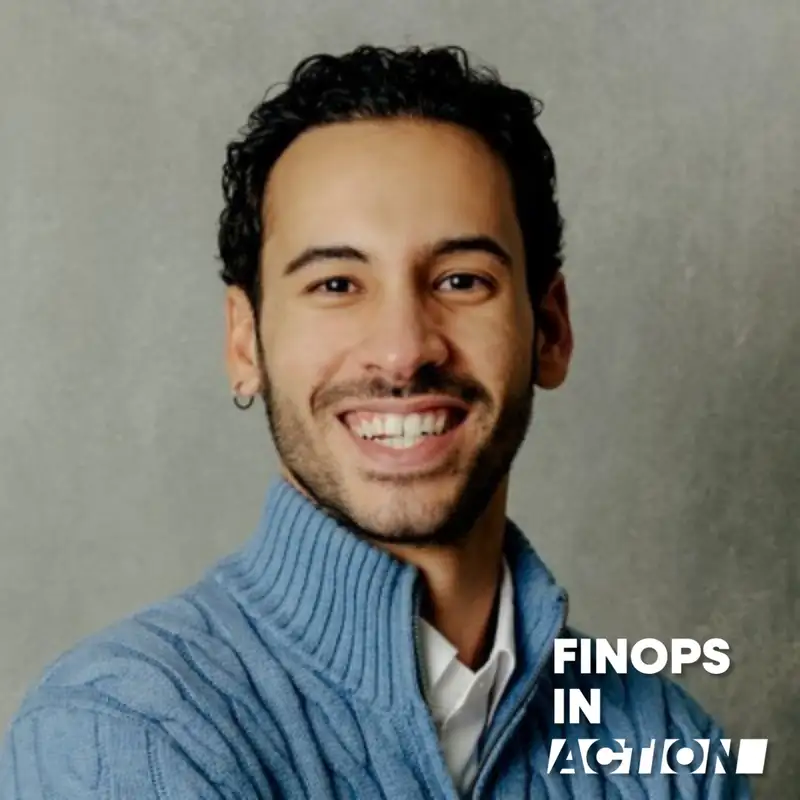
Taylor: Hello and welcome to another episode of FinOps in Action. I am really excited for today's episode. You know, sometimes when you meet someone or you get to know them, you can pretty quickly feel when they, they have that it factor, right? Someone that you don't just take the world for what it is. You bring this energy of you can just do things and they kind of bend reality to make things happen, and everyone around them benefits. [00:01:00] Today's guest is one of those people, and the FinOps world is lucky that he chose this as his arena, right, the arena to channel that energy. Today's guest is a passionate FinOps leader, speaker and presenter. He is a certified FinOps professional, and like me was a FinOps Foundation ambassador before a change in role made him give up that title. He's the founder of the FinOps community in Denmark, a founding contributor. Cloud Efficiency Hub, and he spends his days as a FinOps specialist at Crayon. Welcome to the show, Henrique Amorim.
Henrique: Thank you so much, Taylor, from having me. Good morning, good afternoon, good evening to those listening slash watching. Huge pleasure to be here. Thanks. Thanks so much for having me.
Taylor: Absolutely. I'm, I'm super excited to dive into this with you and You know, you, you've had the pleasure of a, of, of a, of a fairly long career in, in FinOps and working with many different FinOps teams across differing levels of maturity. You've been doing [00:02:00] this for a while. What's something when you look back on your early days of, of FinOps, what's a lesson that you learned or, or something that maybe you, you did wrong in your early days, uh, of FinOps?
Henrique: That's a great question and, and I think that we don't, maybe I don't, uh, reflect enough about it. So it's good to have these moments where we get asked those questions and have to look back for a bit. But I think that a lesson that I carry over to my consultant work right now and that I talk to my clients as well, comes from my time as a practitioner.
And, You know, FinOps fell on my lap. I was hired to do a different job, but then, You know, circumstances changed and they asked if I was in interested in being the first person to look at costs on a more structured way and to make sure that we could keep them under control, both on a monitoring and also an optimizing perspective.
Which was something that I felt very interesting, and I remember that as soon as I started, we identified all these savings and then we just went and applied them and we saved a lot of money. We did a FinOps ledger, as [00:03:00] I called it, with, we identified all these optimizations based on the service, the school type who was involved, and we just saved the organization a bunch of money.
And then when I look back at it, I can't help but thinking that it, it was maybe too soon that, You know, it's your biggest. Leverage is your biggest card, the most powerful one you can play in that game. And I don't wanna say I wasted it because definitely, You know, people were happy that we were saving money.
But you, I used it way too quickly. I think that if I can give a tip based on my career to people who want to break into FinOps or organizations who want to set up their FinOps practice, is to identify those savings and keep them as an ace up your sleeve while using that as leverage to get your roots in the system.
Getting to know engineers, getting to know product, getting to know procurement and finance, understanding what actions are gonna move the needle in the organization. And as soon as you have that mapped out, as soon the people know [00:04:00] you, as the person who's building bridges, who's trying to get everyone on board this cost awareness campaign, it's not about saving money or just cutting costs, it's about ensuring that.
All our expenses in the cloud makes sense. Their ground in business decisions. As soon as we get that going, then please don't wait a year, right? You're gonna be fired. Just wait a year without any savings. Um, but wait a bit. Build up that knowledge, build that awareness in the company of who you are the team is doing, and then you can execute on your savings and ride the wave even longer.
Taylor: Do you see it as. Hey, uh, hold these savings and, and, and don't execute and wait until you build the relationships because you wanna spread it out over time. Or is it more so, Hey, if you take your time and you build these relationships and you build this culture, you'll actually be able to drive a greater impact on these insights that you have and actually potentially save more, rather than just jumping outta the gun and trying to get right to it.
Henrique: I think it's a combination of both. In the ideal world is the second. That You know, you're getting to know [00:05:00] people. You are understanding more of the dynamics of the organization. Maybe it's a small organization where we have direct communication with the CTO or the head of engineering. Maybe it's a matrix organization where you're gonna have to go through hoops and loops and trying to understand where you fit and who actually.
Owns the budget and who owns the development? Sometimes these seat in two different chairs. And we need to understand how can I convince the person who owns development that they also care? They also should care about costs. If the person who has the budget is the one that has, You know, the natural propensity to care about it.
But not all organizations are gonna be like that. Some organizations are just not gonna offer you that kind of support. Or maybe you can and it needs to be a feeling. Conscious effort. You can't just, You know, write down after six months, I'll execute on savings because you need to be able to feel your way through it.
So if you try and you probe and you talk to people and there's nothing coming through, you say, okay, You know, I've tried. I've made my effort. I can't waste any [00:06:00] more time on these savings that I have identified, and then just execute on them. And maybe that will be the leverage you'll be looking for, and you're gonna get some more goodwill from people.
So, You know, in short, yes, hopefully holding off on executing on the savings is also gonna give you more insights into the organization, which will allow you to save even more money. Otherwise, take your time, build up some awareness of who you are and what you're trying to do. And if nothing really comes out of it, then just save the money.
Taylor: Uh, I think it's a really interesting. And one that, You know, when I look back on the early days of my FinOps career, I could have used that advice for a little bit of, of even a different reason, right? I mean, I think back, one of the things that I did, I, I, similar to you, kind of tripped and fell into this, this FinOps domain where I was working for, You know, a medium sized software company.
Our cloud costs were growing like crazy. Hey Taylor, can you help us get this thing under control? We wanna save some money. Of course, You know, jumped right into it. Looked at all the native recommendation tools, saw a whole laundry list of things that we could go do and execute. What's the first thing that I did? [00:07:00] I paraded that number in front of the management and the team that, that put me on this journey, right? Hey guys, guess what? We got all this money. We're gonna go and save. Great, You know, opportunity for us. And You know what they told me? They said, Taylor, okay, awesome. Thank you. Let's execute. Right. Let's see the savings. And then I started the journey of meeting with the teams and understanding the perspective of the developers and the engineering leaders. And that's when, You know, I, I came to recognize that not every recommendation, not every, uh, trusted advisor, uh, alert. Is particularly or necessarily actionable, right?
There's other factors to consider. So slowing down a little bit and getting that feedback and building the relationships, it can help you get a better understanding of much of this is actionable and how much can I actually go and save.
Henrique: Definitely. No, I think that it is, it's really cool that you bring this perspective because. At least I didn't also make that mistake. So it was a number I had for myself. And then X, after we executed on it, [00:08:00] we just reported on the change in in baseline, right? So it was X now is 0.8 x or X minus something, and then we just reported on that.
So I think it made my life a little bit easier now that I hear your story, but it's just definitely something that a lot people, especially those who trip and fell onto it, as you said, don't realize, is that sometimes what is shown as a potential saving is not a. Bug, but it's a feature, right? A lot of people.
When we look into the engineering world, are not FinOps practitioners. They haven't taken the certification, they haven't, You know, really delved into this area, but they're engineers their whole careers. They have been optimizing, they have been optimizing for reliability. They have been optimizing for uptime, for latency.
I mean, little latency, right? But for something, and then some of them naturally go into the, how can we make this cheaper? So there has been, I hope so some degree. Of cost awareness in all organizations. So you need to understand that sometimes those [00:09:00] savings are actually, because someone chose that SQL database to be serverless, even though it's not, You know, included in the reservations.
But it's because having this scalability is something that they needed. And then you see this recommendation popping up, Hey, your QL database could be saved so much money if you change it to a provision state and then bought a three year reservation. Also, something that I know it depends on all the different hyperscalers.
But in some of them, they always show you the largest amount of discount you can get. Right? Which is the perfect situation for three years or for even longer than that. It's usually not the case. You're gonna have to save maybe 80% or 70% of it, and you're most likely gonna start with one year, especially if you don't have anything built up.
Triangle, convinced management, they're gonna commit to a single type of instance or school for three years. They don't even know what six months looks like in the cloud when you have, You know, a distributed development system where you don't have [00:10:00] guardrails and controls, and developers can just do whatever they want.
I mean, within reason, right? But developers are free to choose and try out different types of schools and architectures. Good luck trying to convince anyone that a three year reservation is something that makes sense. It's just not gonna fly. So there's multiple reasons for what this number should not be taken as face value.
Go do your probing and digging and figuring out what is actionable, and then figure out how much you can show to management and then execute on.
Taylor: Let's talk a little bit about that, that probing and digging and what goes into the work of actually finding an optimization opportunity and executing on it, right? Because one of the qualms that. That I've always had in working with the cloud providers directly is you can go to them, especially, You know, in an enterprise scale, you've got these excellent support, um, You know, systems in place.
You can go to your, You know, account manager, you can go to, You know, a solutions architect and you can ask them, how do I save money? And, and what you get almost nine times outta 10 is, Hey, here's some things, but also here's all the [00:11:00] opportunities for you to, to commit, right? And, and save a ton of money. It's not always the commitments that you should start with. As you mentioned, you don't even know what's gonna happen in in six months, let alone three years. So let's, let's zone in on the usage optimization, right? The types of things that we talk about in the cloud Efficiency hub. What's your process of identifying these optimization opportunities from the very early stages of just finding a potential opportunity through all the way to execution?
Henrique: Yeah, no, that's a good question. I maybe wanna just tell people that before becoming a consultant, I was working in the public sector. So I think that's, uh, an interesting piece of information for what I'm about to say next. So, when I was in the public sector. And You know, coincidentally or not, this was my first role.
So close to technology. I have been a headhunter before. So hiring tech headhunter, hiring for CIOs, CTOs, but it was much more on a strategic level, You know, on an organizational plane that I was talking to these people about, You know, about [00:12:00] modernization, about, You know, monoliths and microservices, but it wasn't about the day-to-day life of optimizing cloud.
So that meant that when I started my FinOps job. I didn't actually know what was going on under the hood of that Azure team that I was mostly connected to. So something that helped me a lot was just ask questions and all the questions. I mean, my colleagues know that I just. PE them the whole day walking around and why is this like this?
Or what made you choose this? Or can you point me to the part of the code? So you need to own some of the responsibility. Don't go out delegating all of these questions to people. I think that especially today in the world of, You know, gene AI and chat bots, you can just feed. All these Microsoft links, we work primarily with Microsoft.
That's why I'm using it. But You know, whatever your hyperscaler is or your cloud provider, just feed those documentation links if you're afraid of your, You know, preferred chat bot to go flying around the internet and taking answers from forums or something like that, and then ask you to summarize [00:13:00] those from.
This official pages so you can build a foundational knowledge of why things are done that way. And within that, you're gonna be able to look at the costs and reflect on the architecture or the choices and the explanations and ask questions. Okay, that's very well, but why can't we do it that way? Or What's wrong with us trying to optimize for that.
So I think that in my experience, what I did was I always, you start with the things you spend the most money on. Right. Those are the easiest. And then you start asking questions as to why you're gonna do it. And then sometimes you're gonna stumble upon answers that were done correctly, but maybe they were just done months ago or years ago.
I remember that we were, we changed backup solution, but then we didn't delete some of the backups that were already there. So we just had a constant storage cost due to backups. And then it was only when I asked questions about backups that I, someone told me, Hey, no, but we have this external, we have this other solution for backups.
And I said, yeah, [00:14:00] but why do we have so much, so many costs on the storage accounts that are named backup? And then that led to an investigation and then we deleted those storage accounts. So it wasn't something that was an anomaly. It wasn't something that was, You know, uh, really looked weird on the graph, but I knew that we spent a lot of money on storage.
I went to look into, okay, what are the main resource groups or the main subscriptions? And then as you start asking those questions, it really helps. The other side that also I think benefited me a lot was participating in the architect, we call them architecture forums. So we had these weekly or biweekly meetings where developers that are working on features and the architects, both the enterprise architect and solution architect, would meet to talk about how these were going to be speaking together.
If we had to maybe open an environment. A lot of those. Connections in the public sector, they are running on private endpoints and they're running off the public internet, so it makes things both a little harder in terms of connections and also more expensive. So being inside and trying your best to be [00:15:00] curious and also listen really helped me, I think being able to navigate these conversations with engineering and truly trying to act as their partner.
I think that no one hates people who come and say to you that you've done something poorly. In the workplace. I think that's really something that gets on people's nerves. So be curious, genuinely curious. Assume that they have done their utmost best to optimize for whichever constraints they were giving at that moment.
It just might happen. The cost wasn't one of them, but now you're going try to do something good together to improve the solution that is already in place. I hope that answers.
Taylor: It absolutely did, and it's, it's such an important point and one that I think a lot of. that have been at FinOps for a while have, have come to recognize and learn. It's that it's not necessarily about coming with the solution as a recommendation. What it is about is coming with a point of view, [00:16:00] coming, having done your research, coming, having understood the person that you're working with and the constraints that they are under and what they cared about, and presenting data, asking intelligent questions, and working together because it's going to be. The engineer that, You know, designed the application, it's gonna be the architect that put together the, the application architecture for the given application that's gonna have the, the, the key insight that you're, you as the FinOps practitioner from the outside, you, you're not capable of having, because you don't have all the knowledge that they do.
Henrique: Exactly. A hundred percent. And I mean, if you, in a very small company, odds are they shouldn't be having a FinOps person. They, unless it's a very small company that deals with a, You know, humongous amount of data on the cloud and they have a very expensive bill and you're just a very profitable company.
Amazing. Then you might justify it, but odds are they're gonna be to, to be able to be a full-time FinOps practitioner, you're gonna be in a company [00:17:00] of a certain size, be it in terms of seats, be it in terms of complexity in it. So that all changes. But I also think it's important for FinOps practitioners, and I hear there's a bit.
Um, not a lot, but a bit When I go to conferences and I talk to other people, especially in the FinOps world, that you have this small savior complex that you are trying to execute on all the saves and you are trying to find all the optimizations, and I, I, I really don't see it that way. I, I really see FinOps as this community driven effort in which what I'm trying to do is being an ambassador as we both were for a little bit for the FinOps Foundation, being an ambassador of cost efficiency and cost awareness and decision making.
So, You know, I spent years and years studying economics. And whatever angle you take on economics, we're trying to optimize for something, right? It's probably the first thing you learn, even in calculus, right? Just derive an equal to zero. That's where you find the, the optimum of, of the function. So I think that we need to acknowledge that everyone in the organization is trying to optimize for something.
And our role, and this is very much my opinion, would love [00:18:00] to be challenged on it, and that we as pheno practitioners, we're trying to build a. Culture of cost awareness because so much has changed with the cloud and people are used to the on-premise world and these long kpac processes where the CTO and the CFO are gonna talk together and decide to buy, You know, $500,000 of servers are gonna have to be clean and and put in place.
None of that exists anymore. All developers are one click away from drastically changing your cost bill. And if you don't have processes in place, you're gonna realize it a month after when the invoice comes and it's gonna take you another month to fix it. So you're just two months in the hole. And so I really think that we need to take a step back from trying to do so much and think instead, how can I put these questions in front of the right people?
How can I act every day? Consistently so that the engineering organization and procurement and finance and the business trust me [00:19:00] as someone they can count on and that is there to make the whole company better. I truly see this as the role of FinOps and not just the cost slashing, You know, cost police.
I really dislike the Bible cost police trying to go around and tell people that they have developed poor solutions or they're using too much money. I don't think it's sustainable.
Taylor: I agree wholeheartedly and bringing that kind of Uh, tone to a meeting is not gonna get you anywhere As a FinOps practitioner, the reality is that. Engineers can always build up a justification for why they took a certain action, right? So if you come at them in an accusatory way, able to dig in their heels and, and give you a justification for why they can't make a change. Whereas if you give them the opportunity to think like an engineer and, and come up with a better solution and, You know, drive that themselves, then that's when you get the most optimal outcome. And as you said, it's not about even FinOps taking. [00:20:00] The credit, rather the credit should go the engineers. I see it more as you should be lifting them up and showing them.
I mean, not every engineer, uh, I guess it's not every day that a cloud engineer can hang their hat that they had a. quantitative financial impact on the business, right? It's not every day that they get to say, Hey, I, I just saved $500,000, a million dollars, $1.2 million. In fact, most of the time they're seen as, as a cost, right?
Engineers aren't, aren't cheap to, to employ, right? Whereas if you can flip the script, give them the opportunity to have that financial impact and get them hooked on it, now they're gonna be coming to you with opportunities, right? And then you can work together in a partnership to make it happen.
Henrique: Definitely that's maybe the other side of the FinOps worldwide. So I talked a bit about this community driven, and then the other side is the, the framework aspect of it, which, which tools and which platforms and which [00:21:00] surfaces. Do we have to put in place to ensure that people have access to what they need to incorporate those data points into their daily lives?
In my, and I mean, you, you need to start somewhere, right? You can't just sit down and wait for one day to, for you to wake up and your boss to say, I found the perfect solution for every, and You know, each and every of our problems, you're gonna have to start with the maybe a Power bi. And if you don't know Power bi, then go learn it.
You know? If you don't have Power BI, then go to Tableau or just, okay, I don't have anything. Do Excel. You know, download the data, do it on Excel, do power pivot, and then show a graph, show something, and then you start emailing people and then you're gonna have consistency. Okay, now it's time for us to buy a tool, or now it's time for us to have a more specific dashboard.
Maybe you can call on the Power BI team if you have a Power BI team and ask them to help you to build that. So having those processes also in place is a, a very important part of the FinOps job. And another part which I think gets overlooked. This is for a different reason though. I think that the first one is because.
You know, we start on the [00:22:00] job and get very excited and you think they're gonna get all these costs down, so we just, they just piles on and it just roll on that way. But the other side of it, I think, is because you're drowning in, in tasks and you have all these optimizations you need to chase, you need to remember people, and then the product owners changed.
So you have, You know, delayed information on your spreadsheet of who has that solution. So you've been sending emails to the wrong person all this time, and they need to figure out an update. And, and because of that, I think that FinOps is not managed up so well. You also need to remember that a part of your job is ensuring that you have a job next month, and that might be making sure that the right people in the organization can see both what the state of today is in terms of cloud, what measures have we been taking and what is their success rate.
Be open about it saying, Hey, I mean we're trying to figure this out. We did this and this and this action in the past quarter, only two of them. You know, we can say something good about, that's fine. We learn it. Don't make the same [00:23:00] mistake twice, but it's fine to make mistakes and then remember that people need to know about what you're doing.
They need to feel like there is something happening in the organization for it, for it to be like also to talk about sponsorship from executive team. So all of that just ties in and it's hard. I'm sorry for everyone listening. If it sounds like a challenge, it kind of is. You need to be a little architect, a little software engineer, a little finance, a little, uh, procurement, and then manage up at the same time as you're trying to manage.
I'm not gonna say manage down. I'm gonna be very careful here. I don't think managing down is a part of dinner's job, but as a manager laterally, you really need to be seeing yourself as a peer to those people that you're talking with and contributing and collaborating with, and then managing up to make sure that the organization values what is being executed on.
Taylor: Yeah, I mean, I, I agree wholeheartedly and really it comes down to, to influence in a lot of ways. And as you mentioned, the FinOps role is so dynamic in the sense that you have to be. know, you have to have engineering chops, you need to have finance chops, you need to be able to speak with procurement people.
You gotta be able to deal [00:24:00] with vendor management. You've gotta be able to speak up to executive audiences, right? And, and play all of these roles and influence everyone where people have competing priorities and things that they care about and, and ways of, of working. Right. And that's what, like being a FOP person is, is all about.
And, and shifting gears a little bit, I think that one of the, the awesome things about this industry is how tight knit. People are in the FinOps community. I kind of want to dive into this with you a little bit. I know that you, uh, founded a little, a little community of yourself. I'd love to hear, You know, what, what you think about the broader FinOps community, what we can learn from each other, and what as individuals we can get out of being a part of things like this.
Henrique: Definitely, I think you touch a, a very personal, uh, point. Something that I hold very dear is this vision of the world as a place we share with each other. And it goes on your local, it goes on your, You know, city level, your country level. And it's something that I, I really think it's, it's fundamental to the way I see the world, uh, [00:25:00] personally.
So when I started this job. I didn't know anything about it, right. I'm an economist and I had been working with some tech companies, but it was my first time. So inside the, the engine room with FinOps and cloud and You know, all these hyperscalers. So the first thing that I did is something that's very natural to me.
I just reached out to people. So I just, You know, after it was decided that my job was going to become FinOps with my manager and the team, then I just reached out on LinkedIn. I still had LinkedIn premium from my recruiting days, and I just reached out to people, said, Hey, FinOps just became my job. I did a coco, uh, LinkedIn search and I thought that you work with it.
I would love to, You know, grab coffee with you and hear from your experience. So I did that with maybe, I maybe sent, send 20 messages, 25 messages, and met with, You know, 10 people, 12 people. So it was, it was great. And then. The first part of it. I really, from that point, appreciated the openness that I found within the community.
Most people that I didn't meet was because they didn't answer or they didn't see the message, which was also super [00:26:00] fair. And then we ended up talking afterwards as the community built up. But it's something that is very different from my headhunting world in which every company holds talent and processes as secrets.
We are, I mean, we're competing on something that is quite applicable, right? Of course, you can have those tests and assessments you, you can do of candidates, but finding people is not really something unique, right? You can just build up a business. So a lot of it is on these, uh, we hold it to ourselves. So that's the logic that I.
Uh, started my career and my, You know, professional life in so going to FinOps and finding this environment where people contribute and everyone wants every other company to be cost effective, right? Unless you're working for hyperscalers, then that might not be fully your job. But then I would argue that stickiness and, and, You know, trusting are important factors.
So being able to give your customers the, um. The feeling that you are doing everything you can so that their consumption matches their requirements. I think this is something that hyperscalers need to be taken into [00:27:00] conservation, and it's something that I see in my consultant life with customers changing hyperscalers.
Even customers with a huge lock in, if they don't feel like you are treating them in a, in a fair way and not even in a good way, just in a fair business way, they will change. So just a small vantage out there to the hyperscalers. We all love you, but please don't abuse it. And then going back to the community and then some of these people that I met with, there was a big connection.
We started hanging out and then I had this feeling that maybe more people out there. In Denmark also wanted to be a part of it also felt like FinOps were their job and there wasn't many resources out there. It'd be nice to exchange with some more people and also get to know them on a more personal level.
So five of us were now four, but five of us started this and we started doing quarterly meetings. It was super interesting. We're started with about 20 people. I think we've had something between 20 people to 40 people. Each time we meet. It's always at a company. It started with our own companies in the beginning, but now we have the members of [00:28:00] the community hosting the events.
The company gets some time to talk and present what they have done so far in FinOps, maybe a challenge or maybe an entrance angle that they built or tool they built internally. So all of that is open and then we have different. We've had a panel debate, we've had an interview, we've had some extra talks, and then we had something that we call campfires, uh, in the end, just because it's winter all the time, and Denmark it feels like.
So, um, so we have this campfire in which each table is a campfire and has a topic, and then you can go freely around the meetup and they talk to people about this specific topic. Um, so it's something that I'm very proud of. I look forward to it every day, basically. We're always trying to build it, we're always communicating with people.
We basically know everyone in Denmark. It is very interesting when I see job postings in Denmark because I'm like, okay, I'm pretty sure I know who's gonna be the person who takes the job. And You know, nine times out of 10 I know who got the job. Sometimes I know before, uh, people in their own company because, uh, I, I've been getting [00:29:00] information from all these sides.
Right. So it's quite cool. I'm really, and also a huge thank you to my co-leads. Uh, it's a pleasure to be building this with you.
Taylor: Yeah, I mean, this is what I'm, what I was talking about in the intro in terms of like being a reality bender and, and just making things happen and, um, and Henrique, we talked about it, but I, I, I faced a similar journey. This is why I think we get along so well. I can relate to, and I see a lot of, You know, myself and my career progression in, in what you did.
Although we're on opposite sides of the, the globe, it's a similar path, right? I mean, I was doing this FinOps thing for the first time, uh, living in the Washington DC area. And I had the same experience to you. I was, I was doing it, I was learning, and I said to myself, Hey, I gotta, I gotta meet other people that are doing the same thing, right?
And, and thankfully the FinOps Foundation, You know, existed at that time was putting out a lot of content and putting together these virtual meetings. And I said, Hey, why don't we do in person things? And the answer I got was, Hey, there's no in-person chapter near you. So what did I do? I, I said, okay, let me start it right.
And then all of a sudden, um, we're putting together meetups and we're getting together in [00:30:00] person. And now it's been many years, but many of the people that I. I stay close with and, and know, well, I mean, obviously my network has grown in the FinOps community, but like a lot of these people I look back on it was from these early meetups and, and getting to, to know each other, and it's something that I've seen people. From those meetups connect with each other and it leads to career opportunities for, for them, right? So it's like now you're adding value to the You know, entire world and the ecosystem and, and bringing people together is, is so important. So I think, and this is something we talked about in, in the pre-show, but it's like if you're sitting there and you're like, Hey, well I am in so And so location and, and there's no one and nothing happening near me. Well then make it happen. Like be that person that that starts it right. And get the, get the ball rolling. And I think you'd be surprised at the folks that You know, come outta the woodwork to, to come along for the ride.
Henrique: Definitely. I think that You know, the only. The only thing you need to be aware of is just people's [00:31:00] time, but as soon as you get that out of the way, You know you're doing it a respectful way. You make sure they're getting value for the time and that you're including something that is relevant to them.
That's the only thing that is hard, I feel, after you take care of that, is mostly about. Conveying and trying to rally people behind something. And we are all human. We're all social beings. We, we like to share it has both this human component and this professional component. So, I mean, hopefully you're also gonna learn some, You know, hard skills or comments or new angles or new ways of building something that you didn't know before.
You're gonna apply that tomorrow on your job. But maybe it's just you being able to. Talk about what challenges you're facing right now with a colleague and then having some other perspective on it, or maybe you just saying something out loud. So many times we've seen this person starts. Asking a question and then they explain their situation or they give me a bit more context about their company, and then throughout their question, [00:32:00] they, they already found the answer.
So having these moments, these catalyst moments that allow people to get a bit of a break from day to day work and. Be social with people that you don't interact with on a daily basis, right? They're peers, they're people in from your industry, but not from your company. They don't have all this baggage that your colleagues have in a good way.
I mean, it's school, but we spend all of our days with them anyway, so it's nice to meet some other people every now and then, and then having this moment to. Just think critically about what you've been doing so far, and also about the time before if you feel like you don't have a big enough FinOps community around you and you wouldn't be able to create value for people.
If three people came and you just do a very intimate session, it might be a bit. Overwhelming for some of them. Then expand a bit, find out what, what common ground, what denominator do you have with these people? Maybe you do something with cloud instead of saying FinOps, okay, let's do a cloud meetup. Or if you have a lot of people who developing on one [00:33:00] hyperscaler, you say, let's have a.
AWS Meetup or a GCP meetup, and then FinOps becomes a topic of it. And don't forget, we talked in the beginning, right, about these abilities that I think are important for a FinOps practitioner. And I really believe that knowing cloud is a fundamental ability of being able to do FinOps because again, as we said.
You need to be in a position to challenge people in a productive way, in, in a, let's build this together better way. But I, my colleagues can easily say, if you ask any of them, I don't shy away from conflicts. I come from this, You know, NGO, where we talk a lot about, uh, peaceful resolution of conflicts. I really see confidence as a natural part of our work.
It just means that we have a disagreement in opinions, we think differently about how to solve an issue. I really go to work every day. Believing that all my coworkers are trying to solve the best way possible for the company. That's, that's something that I, I, it would be really hard for me to work with a different assumption given that, and I think [00:34:00] some people don't have that, which makes it harder to frame conflicts in this way.
But if you start from the point that you are all trying to solve that issue the best way possible, a flung a conflict is merely a disagreement in how to do it. So talk through it. Position your points of view, your understanding of the situation. Listen attentively to what the other person listen to, understand and not to answer, not to reply, and then figure out, okay, how do we go from here?
So knowing about cloud and trying back to my original point being, knowing about cloud is what is going to allow you to feel safe in those meetings where people are gonna name drop products onto you, they're gonna find all different excuses because at the end of the day, you might be asking an engineering director for time from their resources to focus on FinOps optimization.
You need to make your business case and your engineering director has made his or her business case to their [00:35:00] boss saying, we are going to deliver this feature next quarter. So there is a conflict, a natural conflict of priorities. So if You know cloud and you can say, yeah, I get what you're saying, but we know that we can maybe circumvent that.
That way, or maybe we can add this into the roadmap so we do a smaller version of what I'm proposing, and then we do a bigger one after your big release. So be sure to be sharp on your cloud. Don't become an architect. That's a bit too much, but be sharp on your cloud and what your product is doing, and then go into those rooms feeling confident and hopefully create a community around you that can support you, that can allow you to make mistakes that can allow you to share.
I really think that only good has come so far.
Taylor: So much to learn and, and, and, And so much to get out of. Connecting with other people that are facing similar challenges Now, um, as we get towards the, the close of the episode, there's, there's one topic I want to, uh, I wanna put you on the spot about here and Henrique right? And that topic is the elephant in every room that we're, that we're in these days, which is [00:36:00] ai. Where do you see AI impacting the role of the FinOps practitioner, and how do you see AI impacting FinOps more generally?
Henrique: That's a great question. On a personal note, I've been, I've gone back to, oh, I can, I dunno if I can say gone back, but I've started programming, uh, with gene ai and it is, uh, joy, I don't think I've ever used. So many of my free time hours into something, You know, a project so far. If you look at my GitHub, I have, You know, 10 days of commits and then one year in between and then 10 days of commit.
And I've been doing it consistently for the past month, I think now. So it's been super cool building up my, my own apps. So it's just to say that, first of all, I really hope that all pH practitioners and everyone in general is trying to understand ai. I don't think you need to be using it. I don't think you need to agree with it.
You know, there's the. Environmental angle. There's the energy angle, but I think you need to face it as something that is here, and it's fundamentally [00:37:00] changing the way we perceive work. And I'm saying work is a very broad term here. I'm talking about. Companies, I'm talking about the way we relate to each other inside our jobs.
I'm talking about the tasks we are executed. I'm talking about value. We bring in how we measure that in organizations. So I do think that AI and specifically, You know, gen ai, be it with coding assistance or building up presentations, or, You know, incorporating the design rules of your company into your, uh, documents automatically is going to change how we perceive those tasks and how we define value.
That said, when supplying it to FinOps, I have been personally, personally using it to make more data-driven decisions. I know there's a term that gets thrown around left and right, so let me explain please. Not using it just for the hype, I have been accessing more and more the APIs that the hyperscalers, uh, put out, and I have been taking that data to myself.
Building scripts and trying to match that with my customer's data, if they give me access to it, uh, to be able to get it [00:38:00] personally right. So instead of only using tools or the native, um, consoles that the hyper hyperscalers give, I'm building my own little set of tools and you can also do it. That's the whole point of what I'm trying to say here is be curious.
Be also a little courageous. I feel, You know, be excited about the possibilities that it's unlocking and how to make your job easier. So that may be point number one. How can you personally do a better job from tomorrow on incorporating gene ai unless you have specific, You know, um, topics against it into your daily job.
That's point number one. Point number two, I think that the, the role of FinOps. It's going to change, but I do believe that someone that carries the banner of cost effective and cost aware decisions is always needed in organizations. I'm not gonna put my hand on the fire here and say that there's gonna be a FinOps practitioner five years from now.
It might evolve into something else. I think that we're seeing several different [00:39:00] pushes from IAM, from SAML, from the license management, from procurement. I also think that we're getting closer to engineering. I do think that cost is going to become. Uh, metric that engineers and engineering leaders are gonna be measured on, especially as we get closer to, is almost telemetry data we have now for costs, right?
We can see costs near real time and as a matter of just plugging in the right pieces, but I do think that this is gonna change as well. So that piece of the puzzle is going to maybe move away from what we currently perceive as a FinOps practitioner, more into the engineering management role. But I do think at the end of the day that these bridges.
These bridge personas are always needed in organizations. And then the last topic may be out of this three, uh, a pronged answer I'm trying to give is FinOps for ai. Right. And it's really, it is really interesting because it's just this continuous loop that AI gets more complex. And now we have, for example, these [00:40:00] orchestrators that can automatically split your prompt into the best model.
Given the complexity of it. So now it's not even that You know which tokens you're gonna use. You have to build a resilient and, You know, a robust enough solution to accommodate for the fact that your prompt might be directed to different tokens and to different models. So you have to think on your feet here, and every time you think you okay, now I understood it, but then AI does something different and the companies build something different and you're trying to catch up.
So I'm very, I'm very bullish. I'm very excited about the future. Taylor. I do think that it's very important to have the guardrails in place. I don't see this as, You know, a silver bullet is gonna solve all the humanities issue. No, we do need to be very aware of it. We do need to be careful with it. We need to fact check.
I also see people throwing, You know, summaries and analysis then by AI left and right and yeah. Have you opened the document? You know, have you actually looked through? And people come to me when I'm a consultant, You know, they say, oh, but I saw this optimization, blah, blah, blah, blah, blah. Oh, [00:41:00] You know, that's my reservation for SQL Serverless instance, maybe.
But you can't. I mean, you can't, it's just not possible. So being able to fact check it is also, um, important. Very long answer. So first topic being, be curious about it. Go look it out. You know, use the terminal. There's all different flavors of it. Uh, You know, data sovereign, big hyperscalers, local, European, American, Brazilian, so many different versions.
Second. Think about every day how your role is changing in your organization with the advent of FinOps inside it, both yourself and also your colleagues around you. And then the third topic being. Be sure if your organization is using ai, that you're building the right monitoring tools to accommodate for how fast it changes.
It's better to have something half made that you can isolate quickly than spending several months on building a dashboard that it may be two weeks. The company has changed its use case and the way they use AI is completely different in your dashboard is suddenly obsolete. [00:42:00] So that would be my three, uh, topics for, for that? How's that?
Taylor: Such an insightful answer and hit so many important points. And I, I, I really think that, um, if, if you need to go back and listen to that again, you should. And I think that the point of being, being willing to experiment and be curious and push yourself past your, your level of comfort to try. tools and, and see what you're capable of building is, is such an important observation that I hope that everyone will, will take and, and put into practice. And as you mentioned, I mean this AI cost is gonna be a huge tailwind for, for the industry and in my opinion, they're going to be only more to manage. And of course, AI tools will be able to help us to do it, but you're still gonna need that. Directly responsible individual, um, to drive this thing forward.
And we will be, You know, working together with, with AI and with people, um, to make it happen. Now, we'll see how, how this plays out. It's very hard to, to paint a [00:43:00] prediction, but, uh, and Henrique, I know that, uh, you'll be there to, to watch along every journey of the way. Perhaps in a year we'll come back and, and revisit this and, and see where we're at.
Um, but just, uh, as we, as we come to a close, You know, one of the things that we. We spoke about in the FinOps role is you've gotta speak a bunch of different languages, right? You gotta be able to talk to the engineers, to the finance, the procurement, to the executive. Well, you speak a lot of languages outside of, uh, the FinOps domain.
How many languages do you speak? Like actual languages? How many languages
do you.
Henrique: Uh, that's a, it's a very, very dear topic. I didn't know you were gonna talk about it. I speak five languages, um, on a comfortable level, maybe four fluent, um, and then one which is getting rustier and rustier by the day. I speak per Portuguese, Brazilian, Portuguese is my mother language.
And then I had English and Spanish and school. It showed two languages that I speak. I did, I lived a year in Norway, which, uh, in which I learned Norwegian, which is the [00:44:00] rusty one. And then I moved to Denmark five years ago, uh, almost five years. And I speak fluent Danish. So I work in Danish. I have been working in Danish for maybe the past two and a half years, or around that.
Uh, it's something that I'm very passionate about on maybe, You know, as opposed to 99% of the people who are learning a language to become fluent in it and to speak it, I actually see speaking as, as a nice consequence. What I think is interesting is the different ways in which societies have come about translating ideas into structured.
Syntax. So I think it's super cool how the different verbs get conjugated in different languages. Some languages don't even have some verbs, You know how and beyond those five, I've also dabbled a bit in Italian French, Arabic, and I'm learning Japanese. So what I'm about to say now, like how in Arabic you don't have some verbs that we are very used to saying because they don't add any value, right?
The I am happy. Why do you need the verb Am if [00:45:00] I, if I say I happy, You know that I am happy. So Arabic doesn't have that, for example, and I think it's super cool. And then you have Japanese who has these particles that help guide you in the sentence on what is actually the topic, what's the object, and what is the place, and is very different on how we have to infer context in some languages, like English, for example, where it's not really clear.
Which part of the sentence, uh, you should be focusing on, or if it's a topic or an object, whereas they have different particles. I dunno if I'm going out on a limb here, but, uh, you should not be asking me these questions 'cause I'm gonna be speaking for another four, five minutes. So, um, let's be careful here.
Taylor: Hey, well, this was, this has been an amazing episode of, of FinOps in Action. Anyone that's out there, no matter what language you speak, you can reach out to Vanke and he'll talk to you probably back in that language. But if he doesn't have it yet, just give him a couple weeks and he'll probably be able to, to speak back to you in that language.
No, but, uh, all, all joking aside, atke, thank you so much for, for coming on the show. I think it was an amazing episode and, um, yeah, really appreciate, uh, you taking the time.
Henrique: Thank you very much, Taylor. Huge, [00:46:00] huge honor to be here. Thank you for everyone listening or watching, um, reflect on it. I think that's my last message. If I can allow myself to say a few words here, there's no right or wrong. You are the person who knows the best, your current place. Think about how you can make your organization more effective.
You know, we're recording this on a Friday, so whenever day you're listening, take the weekend. Just reflect on it. No, no big questions. But I'm pretty sure that you have all the, the answers you need. Reach out to the community. There's slack channels, there's physical meetups, there're virtual meetups. Um, we're really here for you.
So reach out to me. I'm saying this on Taylor's behalf, I don't even, so don't even know if I can do that. But reach out to Taylor. Um, we are here to help. We're, we're so, so excited to see everyone in the community be even more successful. So thanks for having me.
Taylor: Where, where should they find you? If they wanna reach out?
Henrique: basically, every social media, I think, I mean, I use LinkedIn the most and always the bad habits from being in recruitment for so long. But you can find me, he can go on LinkedIn. Uh, there's a bunch of us, but if you'll filter it from Denmark, I think [00:47:00] I'm the only one here, so that should be easy.
Taylor: Awesome. Awesome. Well, to the audience, thank you so much for tuning in. I hope you got a lot of a lot out of today's episode. And once more, Henrique, thank you so much for joining. This has been another amazing episode of FinOps in Action, and I'll see you next time.
Outro: That wraps up another episode of Fit Ops in Action. Thank you for joining. For show notes and more, please visit fit ops in action.com. This show is brought to you by 0.5, empowering teams to optimize cloud costs with deep detection remediation tools that actually drive action.
Creators and Guests