Death by Dashboard: Why FinOps Needs Stories, Not More Charts ft. Gilad Katz, Riskified | Ep #47
FIA - Gilad Katz
===
Gilad Katz: [00:00:00] being in finops. Something that addresses pretty much everyone who is important in the company. I think that what drives the car, what drives the, the, the finops, you know, actual value the story. are a story people.
Intro: Welcome to finops in Action. I'm your host, Alon Arvas. Each week I'll sit down with finops experts to explore the toughest challenges between finops and engineering. This show is brought to you by 0.5, empowering teams to optimize cloud costs with tip detection and remediation tools that drive action.
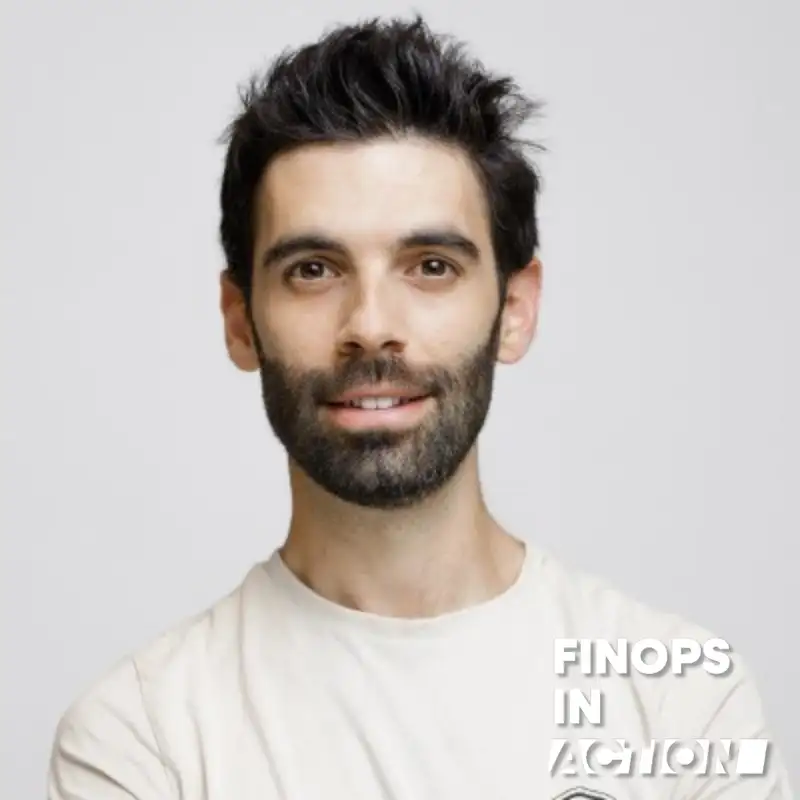
Alon Arvatz: Hello everyone, and welcome to another episode of finops in Action. Today we have a very, very special guest and friend. He actually comes from financial background where his job before finops was a financial analyst at an investment house Today as a finops leader, he actually doesn't report neither to [00:01:00] finance nor engineering, which is something we should definitely talk about.
I'm happy to welcome FinOps lead at Riskified. Gilad Katz. Gilad, welcome.
Gilad Katz: Thank you for having me. Uh, it's a pleasure to, to talk to such a sophisticated, uh, audience.
Alon Arvatz: Yes, we definitely have a sophisticated audience who is really thirsty to hear what you have to say. So Gilad, please share with us what was the one thing you got wrong when you started finops Career?
Gilad Katz: the, the first thing that comes in mind is that, you know, we are, we are constantly being told to be the, the person that recommend things. Uh, do this switch, switch to that type of things. And, you know, and, and at first I felt pretty Not so confident, uh, to go out and [00:02:00] to try to give some, some actual, recommendations about certain things. And before that, I went and I tried to learn pretty much everything. And bear in mind, I, you know, I have. I don't have such a, such a strong technical background and this made me, um, made me, uh, you know, like the base point was pretty low, so I had to learn a lot of things and I couldn't, you know, connect the dots.
So I was pretty, you know, so at some point I felt very comfortable, you know, going and talking to some managers. And then at one point I said, listen. I would not be able to, to know everything, and I would have to speak to the person who has been running things just to get a grasp of, you know, the key elements of what I should look at. And then at this point, I realized that [00:03:00] I'm not a, I'm not a recommendation guy, I'm a data guy. And to put this thing in perspective is that it's like you went to the doctor. And you read something that the GPT or I don't know, whatever wrote to you and you, and you go to him and you tell him, listen, I think that you're doing something wrong even though you are, you know, 20 years in this business and I am five minutes, you're doing something wrong. And um, and, and I know what I have you should align with that and. Once I, once I realized that I'm not a recommendation guy, I'm a data guy, I would say I would bring to this specific doctor a specific test that I did to try to, to shed more light about, you know, different [00:04:00] directions. And that at this point, I'm not, I'm not questioning his knowledge. I'm not, uh, forcing him to do whatever I want. With my, with my, I don't know, one year experience in technical stuff. I'm just handing him some extra data bear, you know, to to see things in a different, in a different view. And maybe with his knowledge he would be able to know exactly what he should do. this, and this was. This was, this changed a lot of things because I'm not going against it. going with them. And the dynamic afterwards was much more comfortable because, you know, no one, no one, especially people who are so technical, like to be, uh, put on, you know, put under, under an investigation about what they're doing wrong, you know?
Alon Arvatz: Absolutely. And [00:05:00] Gilad, first of all, I have to thank you for being so vulnerable and open to share the challenges. I think what you experienced many pheno practitioners experienced or experienced in the. Past and it's great to see that we're all in the same boat. Now you're referring to engagement with engineers from what I understand, and I'm curious, you said in the beginning you tried to learn everything, I would guess, about compute, networking, about, about Kubernetes, all of it.
Gilad Katz: Yeah,
Alon Arvatz: I, I wonder if one, you stopped trying to learn everything or you just changed the expectations from yourself.
Gilad Katz: I think that, I think that being a finops for quite some time, you start to change the way you think about, about how to perform certain processes. So, for example, you start being more efficient also in what [00:06:00] you are doing. 'cause I mean, it, you are you, you are, you are dealing with so much, you know, like the efficiency is, you know, around you.
You are in this efficiency cloud, you know, literally, right? So at some point this thing, you know, goes into your day-to-day. So what I mean by that is that at some point I realized I do not. I don't have to, I don't have to know everything. just have to know the specific element that he's talking about and then, the specific subject that, uh, that the cost just spiked and. Just try to investigate this and try to, you know, try to, try to ask, uh, certain chats, like how, how can he explain this to me as if I'm not a technical guy? Because I'm not a technical guy, you know? And then, and then at some point I [00:07:00] start connecting the dots. So for example, if he explained me in this very, you know, childish way of explaining things. So you have this cup, you have another cup, you have this, you know, line, you have this, uh, fabric that is connecting those two. So the fabric is twice the bigger, you know, twice as much as he needs to be most cases. And then I'm going to the, uh, to the actual, uh, guy. And he explained this to me in, you know, in, in, in his own words.
And then I can, know, try to understand pretty much, you know, what he's talking about because I had the. The example in a very, you know, in a, in a more simple way before that. So this is a, so, so, I'm not trying to get everything. I, I pretty much stopped. I stopped because I realized that no matter how much I'm gonna, I'm gonna try, [00:08:00] in the end of the day, he would be. He would be like four times better than
Alon Arvatz: Yeah.
Gilad Katz: What he does, because this is what he does for quite a long time in this specific product you know, I'm not aware of, of the planning and whatever, uh, you know, in this specific detail. So I, so I'm not, you know, so, so at some point I, I decided to stop fighting this just deal with the actual data.
What I'm good at.
Alon Arvatz: Yeah, no, I, I get it. And it obviously require a lot of humility, which I respect very much. Now if I may ask Gilad the more personal questions. So why did you do it to yourself? Why did you decide to move from being a financial analyst in investment house to work at FENOs, which also actually requires you this engagement with engineers and talk about all these, uh, technical terms.
Gilad Katz: a good [00:09:00] question. Um, but I mean, being a finops for three years and being in the financial world for pretty much four years, so I have this, you know, it's, it's pretty balanced. I think. Being a finops is one of the best, uh, positions there are. And I'm pretty sure that your followers were, were not with their heads right now. Uh, I know. because in the end of the day, you are, when you are working and you are analyzing certain companies. certain fields, um, you know, you check the, you check the margins, you check the profit, you check the, the, the, uh, cost of, you know, every small thing. But then at some point when you're at the finops, you're the guy who, who, who has the power pretty much control the [00:10:00] factory in a very sophisticated way, and being in finops. Something that addresses pretty much everyone who is important in the company. are talking from the, from the financial aspect of this. So I dunno, from, from budgets, from one of the largest, from one of the largest budgets there are, uh, in every company, uh, to reporting to the Nasdaq or to whatever, which is. Exciting for a financial person like myself. Uh, so the financial side is, you know, obvious, the technical side is obvious. Uh, so 'cause you are the person, you're the person who has the most, who has the most comfortable position in the company. In, in, in, in, you know, in a technical view because you are there just to, to, to improve workflow. So you're there not to be, you know, not to [00:11:00] be the bad guy usually because you don't have to be the, the bad guy. 'cause everyone knows what they're supposed to do and you, and you are bringing the data. So they would know, you know, before things escalate, you know how to cope with this thing.
And when you have this kinda understanding you are not, that you're with them. And not against them, then this interaction is pretty, is pretty comfortable and it's pretty nice. So you have this one, you have this one, you have the marketing or the sales,
Alon Arvatz: Yeah.
Gilad Katz: Marketing. So sales. So 'cause 'cause they are looking for you to tell them, listen, that's the, that's, that's, that's, that's how much it's, it's gonna cost us.
Alon Arvatz: Yeah.
Gilad Katz: you cannot go under this. So you, so, so suddenly you became one of the most important people in the company. That determines all the, know, the, the, the, the, the top, the top shelf information. [00:12:00] And you know, as an ex financial analyst, it's amazing.
It's like being exactly where the, where, where, where the money is, where the, where they, where decisions are being made. Not in the board, uh, room. but in the lower one.
Alon Arvatz: No, for sure. So you would, would you say that it's also a matter of, uh, influence.
Gilad Katz: Yeah. It's, it's, yeah, it's, it's tricky 'cause you are, you are, you are the most important non-manager, uh, position
Alon Arvatz: Yeah.
Gilad Katz: Because, because, because you have a lot of, you have a lot of, uh, responsibility. You have a lot of processes, you know, going, you know, in the background, you don't manage any of them.
Alon Arvatz: Yep.
Gilad Katz: It makes it much more like a marathon than like a short sprints. [00:13:00] And this thing also, you know, in my opinion, like to to, to be able to be the marketing guy of your field and to make people. You know, act and follow, you know, according to your vision, you know, but, but doing this with a smile
Alon Arvatz: Yeah.
Gilad Katz: it like, you know, like quite a challenge. But it's like, it's, it's a very nice challenge.
Once, once you pick up those things, you know, things that the interactions are nice and it's comfortable, and then, you know, things are, things are fun at,
Alon Arvatz: Yes. And I think Do It with a Smile is absolutely great advice, not only for finops, for everything in life, but I love it because it's so simple and makes, uh, all the difference. And you basically tell us, Hey guys, you know, follow the money. I actually just read an article about geopolitics, uh, last night, and.
What [00:14:00] it says exactly that like sometimes you see nations make certain decisions, take certain actions, and they say it's because a certain of ideology, but in reality it's a lot around economic incentives, right? So same goes from organization. So in many ways money, that's what drives the company ahead and if you're there, so you obviously have a lot of influence.
Um, that's very, very, uh, fascinating and I think, you know, uh, a great insight. Now, Gilad, we talked about in the introduction about the fact that you don't sit under finance nor under engineering. So who do you report to and why does it work like that at Riskified?
Gilad Katz: I'm reporting to the COO, um, this is the right way to do that. And I'm pretty sure that like, you know, c CTOs will, you know, will, will, would be like, what? [00:15:00] And the CFOs will be like, what? um. In the end of the day, those two positions, the CTO and the CFO, they have very, you know, biased way of looking at cloud cost. One of them trying to make, the lowest cost possible. Sometimes regarding, you know. What's going on in the technical side. The other one is pretty much, you know, it's, he's there to, to, to run the, to run the machine. And, and, you know, and I would I exaggerate and I, and I would say, you know, who dare, you know, questioning my work. I am paying your, I, you know, eventually I'm paying your salary. Like the, the technical guy says, listen, eventually I'm running this machine. Who pays your salary? So who, so who are you to come to me and tell me, listen, you are, [00:16:00] you know, you cost too much. Lower those things. And then, know, we know from, from the industry that, um. That when you, that, that when you ask technical, uh, people to, uh, lower their cost very aggressively, sometimes it results in, you know, in, in, in some bugs or some, or some shutdowns or some other issues. And then, you know, the person who suffers from this is the technical, you know, is the technical person and revenue of course. Uh, so, you know, let's put a scenario that, like a person who is, who is under the CFO tells the dev person, uh, before, I don't know, before some holiday season or something like that. Listen, this time, I want to, I want to, uh, I want the cloud cost to, uh, to, to not exceed [00:17:00] under a certain amount of money. And then. You know, he talks to the CEO, the CFO, all of this, uh, all of these guys and, you know, he's getting this direct, uh, command or order or I don't know, to lower it to under this amount of money. And this thing happens, and then this thing happens. And in the middle of the, the peak, you know, something, something happens. And then. The technical guy is working, you know, all night to try to solve this. And because we saved, I don't know, 20 k, we, you know, we end up, you know, with, I don't know, 200 k less in revenue and a very angry technical team, that would not listen to you afterwards
Alon Arvatz: Yeah.
Gilad Katz: they would say, listen, this guy, that, that's, that's, that's that.
Alon Arvatz: Yeah.
Gilad Katz: So when you are, so when you are reporting to the COO, you pretty much. Like [00:18:00] bias free, let's say. Like, I, I mean, of course I'm like, you know, some, you know, I'm, I'm, it really depends when, but like, generally speaking, I'm bias free because no one is asking me to forcefully, you know, do something for his favor.
Like, I don't know, something happens in a technical side, you know, like. I can say, listen, it was too expensive. And they would know that because I have some understanding with them and like, you know, certain, certain indicators that would say, listen, I know how this usually works and it's too expensive and I, won't be going to snitch to the, I dunno, to the CFO, I, you know, I'm gonna. make sure that it won't happen again. So, you know, I'm not in, um, in a conflict of interest at
Alon Arvatz: Yeah, absolutely. And do you see yourselves more as the UN that have to get engineering and finance to get along, or is [00:19:00] it also more as the bad guy for finance and the bad guy for engineering.
Gilad Katz: I am the, I'm, I'm really, I'm, I, I use this term a lot. I'm the un.
Alon Arvatz: Okay.
Gilad Katz: I'm the peacemaker at this, you know, at this, uh,
Alon Arvatz: Yeah.
Gilad Katz: You know, this, uh, stage.
with a smile. 'cause, because, 'cause you know, in the, in the end of the day, and I get this a lot, 'cause sometimes, you know, like, I don't know, like some, someone forgot to close a certain cluster or whatever and, and, you know, and, and, and, and some people are so focused in their job on their job. That they tend to be so, um, you know, so mad at this person for messing up their budget. Okay? When eventually this guy was working and, you know, he forgot this, and, and things happen, you know, things happen. If you don't wanna, if you don't wanna, if know, burn a bridge, you have to be a little, you have to take a deep breath before that and say, listen, uh, I [00:20:00] see that you forgot
Alon Arvatz: Okay.
Gilad Katz: Um. Let's make sure it won't happen again. I mean, because if, you know, eventually this guy is doing his work, he's not, he's not, he's not, he's not doing this for his favor or for, you know, for whatever. He is not doing this, you know, to harm me or, or my budget or whatever. So this thing happened and you have to be, you know, uh, you have to know that once something happened. happened. That's, that's, that's where it ends. You know, you start looking at things, for, from a future point of view and not from, you know, whatever happened before that, what happened? Hap sometimes I, you know, sometimes I, I, I map up costs with certain teams then, and then they tell me after, I don't know, a month, listen, we were like, I don't know, like four times more expensive than we should have been.
Alon Arvatz: Yeah.
Gilad Katz: And at this point, I don't care. [00:21:00] I don't care. And the fact that I don't care sends them a message. Not that I don't care about the cost, is that I don't care about the past and I care about the future. And moving on. not gonna be the guy who always gonna stick, you know, stick something into their, you know, into them and say, listen, you were so expensive back then, or You were probably more expensive now.
No. Then people, you know, when you have this, this positive DI dynamic, people tend to be more cooperative and uh, and will help you, you know, eventually, you know, get to the goal that you set.
Alon Arvatz: Yeah, absolutely. And Gilad, I wanna pause for a second and just mention to our listeners that a Riskified is a software company. So I think a lot of what you say is connected to that. The fact that you said that you sales care about. What [00:22:00] you have to tell them because they wanna know in, in how much they can sell the product, because engineering knows that if something breaks, it hurts the business.
So I think a lot of that is connected to that. So I just wanted to pause for a second and mention that now what you say about having Philip some of the COO. That's definitely food for thought for me, and I'm sure for our listeners as well. And I can share with you that my perspective, at least until now, which obviously I need to rethink about it.
But my perspective is that finops, uh, needs to be within engineering. And the reason or, or the main reason is the fact that in the end of the day, finops also need to drive action. And it's a lot easier when you're part of the same organization. So basically you have the same boss. For example, the CTO. So if something doesn't work, you can always talk to your boss.
Oh, tell engineering to take care of it. Now, I wonder if you feel this challenge or struggle where your boss is not their boss, and then it [00:23:00] becomes harder to actually drive action.
Gilad Katz: Not really. Not really
Alon Arvatz: Okay.
Gilad Katz: When, when, when I, know, when I feel that, that the current, uh, team is not really, you know, cooperative. Then I can talk to my boss and, and, and he, and he would probably talk to them, not to them, to the, to the CTO. And I like it, you know, at some point, at some point I can also address the CTO, uh, and tell him, listen.
Um, the thing is that because, because we are doing this monthly cost review on a monthly base, monthly cost review, uh, then the CTO. Has to, you know, is exposed to, whatever happens there, uh, on a monthly base. And if I want, you know, and you, when you, when you like, it's like when Newman [00:24:00] said, uh, in Seinfeld, when you control the, the, the a mail you control information, okay?
So when you control the data, you control whatever, you know, narrative, you want to talk. And due to the fact that, you know, you have, you have the CTO and you have all the important, you know, tech managers and they're sitting there looking at the screen and they have to, they have to give some pretty hard, you know, answers why this thing is, you know, constantly going up. Things are, you know, things, things become much more comfortable for me as a finops.
Uh, I'm not doing this, like, I'm not doing this like, you know, to get back at, at someone who is not working with me. at some point, I have to be, I have to be the guy who says, listen, this is where the buck ends, This is where, this is where I'm saying I had enough, or I think that you want to see this before [00:25:00] it explodes in. I dunno, in the, in, in the end of the year or whatever. and, you know, and this, this is pretty much where, where me being not under one of them serves this cause, uh, the best, uh,
Alon Arvatz: Okay, understood. And you absolutely found my weakness, my crypto night, which is Seinfeld quotes that I definitely cannot argue with those. Um, but I think talking about data and the power of data is actually an amazing segue for the next question I wanted to ask you, which is why do you think the biggest problem today in the FENOs world.
Gilad Katz: Alright. I think that the, the biggest, the biggest, uh, problem today, I would, you know, I would, I would call it death by dashboard. This is, this is pretty much it. Uh, 'cause we have, we have so much data, like, you know, we got used to, you know, not having enough [00:26:00] data to having too much data in a blink, in a, in a blink of a second. And people tend to think that a lot of data is good. Generally speaking. It is good. You know, for those of you who try to, um, to, uh, trade and, you know, put a lot of indicators on the chart, right? And at some point they have so much things they just can't see anything, right?
So you have a lot of data. You have a lot of data. And if this da, if, if this data is being consumed. It's outstanding. But if it's, if it's, if it's there, it's like this massive, you know, it's massive
Alon Arvatz: Distraction.
Gilad Katz: distraction. Yeah, yeah. This one. Um, I think that, you know, right now, every, every, uh, platform or every vendor that deals with cloud cost. It gives us dashboards and, you know, different [00:27:00] ones and different graphs and different, you know, things that, and that's, that's, that's nice. But this should be the what's under the hood. 'cause I think that what drives the car, what drives the, the, the finops, you know, actual value the story. are a story people. I can explain you, I can, I can explain you like, like a lot of things in a very, in a very like, you know, data driven way, When I would give you the, the, the, the, the story behind it, you would know this much better. I can tell you, for example, let's, let's, let's go back to investments 'cause it's easier for me. So let's say Nvidia, I can tell you about their margins and their, you know, their, their their revenue growth. Growth and whatever. But I can, at the same point, I can, I can tell you, listen, the story behind this company is that this company is the. Is [00:28:00] is the, the, the main player in the AI boom, right? It's, it's what's driving everyone crazy because they have the special sauce for everyone and then you don't have the, you, you, you don't have to go and, and go through their numbers and there are different sales in different, you know, countries and you get the picture, you get the story.
So. For example, I can show you like 15 different graphs you that the, uh, S3, uh, cost up at a certain product. And you can see this like in, in, in, in know, you know, like through regions and through, uh, and through products and through services and through buckets and through a lot of things. then in the end of the day, what you want to hear. As a, as a, as a person who manages, I don't know, like a, let's say like a, like [00:29:00] a medium, medium, large, um, cloud spend, let's say from half a million dollar to, I dunno, two or above. You wanna, you wanna get juice, for example. The cost of a specific product went up mainly because of the S3 cost that was generated by. Consumption from this area? Just that. So if I would, you know, if I would have to, to, to, to, to give like, my vision on, on how data should be, uh, exploited is making it like a, like, like a Twitter feed or like an Instagram feed. So you can just different, um, divisions. You can choose like different, uh, groups or whatever you want to, you know, to slice and dice the org, the [00:30:00] organization making it like, you know, like a priority message from one to five, meaning one would be like super important.
And usually it doesn't happen that much and usually it can be followed by the CTO or the, the finops or the CEO if it's like a very, you know, very important. Product to five, which means that it's like the lowest ones that no one really follows this except, I dunno, certain people. And then you get the news much better than looking at different type of graphs. Um,
Alon Arvatz: Yep.
Gilad Katz: And you can also get like a summary for like, I don't know, like a half a year or like a year of whatever pro priority was and how it influenced things.
Alon Arvatz: Yeah, totally get it. I Is that also a call for the vendor to evolve, like stop delivering endless dashboards, start delivering bottom [00:31:00] lines, root cause analysis and stories that are maybe actionable.
Gilad Katz: A hundred percent. And, and the thing is that if, if someone insists in, in going through dashboards, he can go afterwards to this message or this tweet or, or whatever, and like check all the sources. Like you check on Gemini or whatever, all the sources that led to this conclusion. So you can see this, you know, for,
Alon Arvatz: Yep.
Gilad Katz: for, for, for yourself, eventually you have to have. people have to have a story. And then once you have a story, when something, you know, when something, um, don't go along with the story, you have to investigate. And then this thing becomes more interesting because you have so much stories going the hood of every cloud cost, uh, every day or every week or every month or every quarter. And you can't really. You can't really catch them all.
Alon Arvatz: [00:32:00] Yeah.
Gilad Katz: like, it's like, it's like under, it's like SubT trends and sub sub trends and things that it's just impossible to, it's impossible for the human, you know, guy to, to, to sit under, like, you know, to
Alon Arvatz: Yeah.
Gilad Katz: to look at like a graph and get like the hot picture.
Alon Arvatz: In my mind, it also instinctively connected to what I see as one of the biggest transitions in the industry, which is moving from looking at cost or spend to thinking about the efficiency. So, so, so spend, like, it's, it's the number, right? This is how many dollars I spend on this, on that, whatever efficiency.
That's already the story that, uh, the spend tells us,
Gilad Katz: exactly.
Alon Arvatz: Efficient or you're not efficient? Are you, are you generating enough revenue for how much you spend? So spend doesn't tell a story because
Gilad Katz: Exactly.
Alon Arvatz: you know, growing in spend, it can be a positive thi thing because my [00:33:00] revenue grew, right?
So it can be a positive thing. Or for example, you know, um, I, I spend very little, but I have 50% waste, so it's a bad thing. Okay? So spend doesn't tell the story of whether it's good or bad. We need to evolve into telling stories about efficiency.
Gilad Katz: Exactly, I mean, like I, you can, like, you can just give like a number of like how, how efficient or, or how unefficient a certain process is and, and at some point, or can also give like four different graphs who, who, who shows that the distance between, you know, between what he, what he needs he asks. Alright. And then, you know. Tell me, you know, in which way you would prefer the data just to see like a number saying, listen, 40, 40% of it is just going to the trash, or looking at like four different graphs [00:34:00] describing the same thing, in a very complex way.
Alon Arvatz: Yeah. Gil, I think this is an amazing, uh, vision for the future of finops and I think this is a great opportunity now that we understand where things are going, uh, to actually learn a bit more about you on the personal level as well. Um, so first of all, you live today in Korea, Toronto in Israel.
Gilad Katz: Yeah.
Alon Arvatz: Correct.
How did you get there?
Gilad Katz: Uh, I had to be close to my parents. Uh, the Tel Aviv is pretty, is pretty expensive, even though I love it. Uh, it was like, you know, it was like a, it was like a very efficient compromise, you
Alon Arvatz: Yeah. Yeah.
Gilad Katz: say that.
Alon Arvatz: It's like for New Yorkers to go live in New Jersey, something like that.
Gilad Katz: Exactly, exactly. You get, you know, it's like, it's like in a distance of like one hour, two hours.
That's it, you know? So, you know.
Alon Arvatz: And uh, how many kids do you have and how old are they?
Gilad Katz: Uh, not including three cats. I have two, [00:35:00] uh, I have one, uh, Abel is, is is five years old. he's gonna be, he's, he's gonna be a great ops one day. Uh, and, uh, and, uh, Geffen, who is like, uh, she's like one year and a half.
Alon Arvatz: Yeah. Okay. Very, very beautiful names by the way. I had some thoughts in the past to change my last name to our be. Um, but, but, um, my mother used their Vitor right to prevent me from doing so, so, so, uh, I'm still, uh, RVAs, uh, but these are really beautiful names
Gilad Katz: thank
Alon Arvatz: and, um, uh, you seem like a person with very, very wide horizons, and I wonder if you have a special recommendation for us on a book or a movie.
Gilad Katz: I would say, um, you know, I would pick one. I'm not such a, you know, film guy. But when I see something good, it just, it, it, you know, [00:36:00] it's, it's just a lot. uh, it's enough. So, um, I would say there is a German movie The Life of the Others. It's pretty random, uh, the, the, the interesting thing about this, uh, movie. And how it connects to the, uh, to everyday, um, with like fake news and, you know, and like, like very bias opinion about certain things. Is that in this movie, the, it's a movie that he, that, that happens in like East Germany and Azi officer. Has to listen to certain, uh, to, to, to like a couple of, uh, people who are suspected of like wanting to escape to the uh, west. And because of that, he has to listen to all of their con conversations. at some point he [00:37:00] realize, he realizes that, um, he was wrong. He was wrong about a lot of things. And it's amazing because he starts the movie very enthusiastic about the idea of the Communist Party and whatever, that at some point he's like, all of my li my life has been, you know, with propaganda.
And, you know, and it's, and it's, and it's amazing because first of all, it, it shows you how people can change their opinion. About, you know, about about a, a lot of things. Once they, once they give themself like the permission to being exposed and just like, maybe just, you know, I can hear it, but then I can say, I don't, you know, I don't agree with that.
So that's, that's fine. And it's fascinating. Excellent. Uh, excellent. Like actors
Alon Arvatz: Wow, sounds fascinating. And a lot more optimistic than the end of, uh, 1984 when it's [00:38:00] being brainwashed.
Gilad Katz: Yeah, yeah, yeah, yeah.
Alon Arvatz: So, so that's a lot more optimistic, which is, uh, absolutely. Great. Um, and gida, what do you like to do for fun?
Gilad Katz: Fun. Um, motorcycles, um, football, like watching or like playing, like watching, playing, playing like video video games, like, uh, like a FIFA. And every now and then I have like a new, like, you know, madness. So the re, so the recent one was like, making pizzas and I went like full, full blown on it. and, uh, so like every, I just can't stand still.
I have
Alon Arvatz: Yeah.
Gilad Katz: I have to also, like, I have to push my limits,
Alon Arvatz: Yeah.
Gilad Katz: a, on a, on a quarterly base, let's say.
Alon Arvatz: Yes. And it sounds like you're doing a lot of fun.
Gilad Katz: Yeah. Yeah. I am. I am, I am, I am. This is like one of the, one of the funds that
Alon Arvatz: Yeah.
Gilad Katz: waiting for me.
Alon Arvatz: [00:39:00] That's great and after you share with us so many unconventional and interesting wisdom, I'm sure a lot of people would love to reach out, maybe challenge you, maybe ask some questions. What is the best way to reach out?
Gilad Katz: I would say LinkedIn. I'm getting a, I'm
Alon Arvatz: I.
Gilad Katz: not a lot of like, uh, uh, messages, but I'm getting quite a lot. Uh, and like I'm trying to be as, as, as responsive as possible. Mostly for people that has like, like, uh, I know, like ideas or like they want to just, you know, get my, get my, uh, get my, uh, review about a certain thing
Alon Arvatz: Yeah,
Gilad Katz: I love helping.
Alon Arvatz: you, you heard Gilad, if you wanna pick his brain.
Gilad Katz: exactly.
Alon Arvatz: LinkedIn search for Gilet. Pat, reach out Gilad, it was a fascinating conversation. I particularly liked your insights around reporting to the CEO, which is obviously something that requires me to [00:40:00] rethink my prior assumptions and about the future of, uh, finops and the call for vendors Obviously.
I run a startup that develop a field of solution. So that's definitely food for thought, uh, uh, for me, although we are thinking about making things actionable all the time, but I think that's even taking it a few steps ahead. So thank you again for joining us. I really appreciate it.
Gilad Katz: Thank you.
Alon Arvatz: For sure. And. Thank you again to our listeners for joining us once again listening, following, commenting on our post on LinkedIn.
It really means a lot. Please tell your friends about finops in action so we can spread the word and get more people, uh, uh, into the space and understanding the space, uh, better. Gila. Thank you again. This will be another fascinating, fun, interesting episode of FinOps of in Action. See you next time.
Outro: That wraps up another episode of finops in Action. Thank you for joining. For [00:41:00] show notes and more, please visit finops in action.com. This show is brought to you by 0.5, empowering teams to optimize cloud costs with tip detection and remediation tools that drive action.
Creators and Guests