Fail Fast, Optimize Smarter: Lessons in FinOps ft. Rense Siegmund, Gasunie | Ep #58
FIA - Rense Siegmund
===
Rense Siegmund: [00:00:00] FinOps so interesting because it's very diverse. You meet all kinds of different people. get different specialties. Experiences working together to make smart choices on how to invest money in it spend or, or money in it. And it's more than just cloud.
Intro: Welcome to FinOps in Action. I'm your host, Taylor Houck. Each week I'll sit down with FinOps experts to explore the toughest challenges between FinOps and engineering. This show is brought to you by 0.5, empowering teams to optimize cloud costs with deep detection and remediation tools that actually drive action.
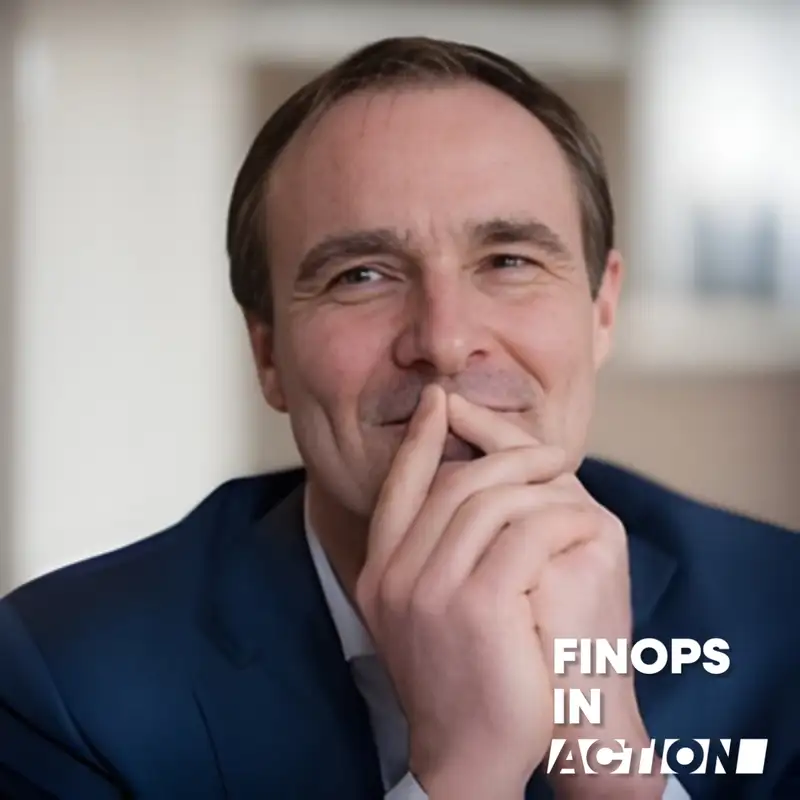
Taylor Houck: Hello, and welcome to another episode of FinOps in Action. I am super excited for today's episode because I'm joined by someone who is not only a FinOps expert, but also a professional coach and trainer. He's an entrepreneur who's founded multiple [00:01:00] companies. relevant for today's discussion. He's the founder of FinOps Academy. A training platform that enables organizations to optimize and manage their cloud spend. he's not just a trainer. He's also a hands-on practitioner in his role as FinOps lead at Gasunie. Welcome to the show, Rense. Siegmund.
Rense Siegmund: Hi. Nice.
Taylor Houck: Oh, I'm super excited to be chatting with you today, ley, because you've got. A ton of experience across, You know, hands-on FinOps roles to training and helping organizations get
better,
Rense Siegmund: Yeah.
Taylor Houck: to kick things off,
right? Simply
Rense Siegmund: Yeah.
Taylor Houck: we've all been through a lot in our, our careers, especially someone as seasoned as you. What's something that you got wrong early in your FinOps journey?
Rense Siegmund: what I got wrong is, um, in what I see in, in, if you talk FinOps and for example, if you go to FinOps X or uh, you [00:02:00] go to FinOps Foundation, meetup, uh, you meet a lot of very. Experience, technical, nitty ditty, gritty, detailed guys and girls, uh, that are really into the tech details. And I was really impressed by that, uh, in the beginning because I don't have a very technical background and I thought how, uh, FinOps is all about, uh, it's all, all, all technical.
And I learned later on that the technique and engineering is part of FinOps, but there's a very big part that is about how do you collaborate, how do you create a culture, et cetera, et cetera. So in the beginning I was really maybe a little bit too impressed about the technical knowledge of others.
Uh, and, uh, now I know, uh, If I ask them to help me on the technical part, they're really willing. And so I [00:03:00] think that that's what I think got wrong in the beginning.
Taylor Houck: It is a very. Interest, observation, and one that be, you can play both sides, right? Because you really need both.
Rense Siegmund: Yeah. You need both
Taylor Houck: you can't have a
successful FinOps
program
Rense Siegmund: it.
Taylor Houck: understanding the cloud and the
technical
aspects
Rense Siegmund: Yeah.
Taylor Houck: right? But if that's all You know, then you're not gonna drive
as big of an
Rense Siegmund: Yeah,
Taylor Houck: I'm curious in your, your, uh, Academy.
Rense Siegmund: yeah,
Taylor Houck: are the things that you're trying to drive when you're coming
in and working
with your
Rense Siegmund: yeah.
What we're trying to drive with the FinOps Academy is we're trying to. Help organizations, uh, start with FinOps. but we're not going into that, that somebody takes over and does FinOps for the co. Our organization, we try to teach and help, uh, or coach organizations that they can do FinOps themselves.
And, [00:04:00] uh, probably one of the biggest challenges is that, uh, probably also the first principle in, uh, in FinOps said, teams need to collaborate. Uh, that's probably the biggest challenge for most organizations to get that going. have for example, uh, a proper discussion in between engineering and, and finance or business.
Uh, what language do they speak, uh, what value are we looking for, et cetera, et cetera. Um, that's probably what most, what we bring as FinOps Academy is. Uh, knowledge and then, uh, we get action as possible. So something happens in the end,
happens.
Taylor Houck: It's actually a different approach than many service providers, uh, take, right? Because I've heard of a lot of teams. Or consulting companies that come in and they want to do right, like fractionalized [00:05:00] FinOps services for their, their customers and like own the FinOps discipline within a company. You're saying, no, I'm actually gonna teach you to do it yourself. When you're doing that, who, who should lead it? Like who is it that you want to hand the rein to that when you leave is gonna drive this thing
going forward?
Rense Siegmund: Yeah, that's not always completely clear in the beginning. Uh, uh, what's very important that there is, um, a, a certain form of, uh, C-level buy-in. So if there's no C-level support, it's very hard to do. but if the minimum support is there, uh, yeah, it sometimes needs to grow. And, uh, in our experience, if you grow this and you are, uh, enthusiastic about this and you challenge people to, uh, take up the reins to to, to get going, uh, people, yeah, people, um, they put up their hand and say, Hey, hey, I wanna be part of this.
And then it grows. And, uh, and then you can end up with a central [00:06:00] FinOps team with maybe in a hubs spoke model with, uh, different champions or ambassadors. Uh, but if the organization is smaller, it could be one or two guys, uh, that, uh, may, uh, run the FinOps and, uh, and, and, and they have their ambassadors around the organization.
Taylor Houck: Where do those one to two people usually sit in the organization?
Rense Siegmund: There always will be somebody that is involved in, uh, in, uh, managing the platform or the cloud environment or something like that. So you need technical expertise. You need that in there. um, but also we often see that there is somebody who's there. Uh, always got soft skills to be able to talk to different personas, but we're always talking about, uh, in FinOps, uh, and then that are also feeling, uh, that they can, uh, go to [00:07:00] different areas of the company and feel, yeah, feel the freedom to, to talk to business and talk to finance and uh, et cetera.
And I often, see that if you talk to engineering and to finance about the same subject, uh, the, how you frame it as a FinOps practitioner can be really different. So I was talking to, uh, uh, C-level, uh, we had a, a big. Opportunity, uh, to optimize, uh, for a lot of money. And, uh, for the CO, uh, he just, uh, was told by the board, Hey, you need to save this much.
If we would optimize this, he would already have saved, uh, the amount of, or the, You know, he would've cleared the budget hole you had from the boards. So that's a different approach than, uh, of course in engineering, uh, you would take, so it, yeah. So if you're. Curious on, [00:08:00] uh, what their goals are. What's the goal of the CO or what's the goal of finance?
Or what's the goal of engineering? And you can, uh, deliver the message that it fits within their goal, and it makes your story a lot easier.
Taylor Houck: Absolutely. I mean in, in my experience, I've always found that that that kind of walks that line between finance and engineering, right? That has enough technical chops to work directly with engineers and build those relationships and not seem like an outsider, right? But also be able to go back to finance and seem like a peer to them as well. Um, in, in my experience, it's, it's worked well when they formally sit under engineering, so you can really like, go deep into that, that peer relationship with the engineers, but you've gotta be able to jump the fence and also work directly with the finance and the business as
well.
Rense Siegmund: Yeah. And also, uh, uh, so in some organizations you get a, a, a Cloud Center for [00:09:00] Excellence. So it's important they get a seat at that table as well. So FinOps becomes part of the, core processes, uh, within the organization. But. That's not normally where it starts, eh, it starts off small and needs to grow.
And, and then, then, then the trick is to get it embedded in the governance, et cetera, to to, to give it, uh, uh, a stronger body. Uh, otherwise it's, it could well be a one off cost saving. And I think FinOps can be a lot more for organizations than just that.
Taylor Houck: You know, that's, that's such a great tee up for where I, I want to go next, right? Because, hey, how do you get started? You got this, this one guy. Or gal or a couple folks that kind of are part engineering, part finance, they can drive a lot of impact, but they're still just, Hey, one person, two people. And even, You know, a successful FinOps program is, is not even always about the FinOps team themselves. How do you get an [00:10:00] organization to live and breathe FinOps?
Rense Siegmund: Ooh, this, this is probably the hardest question you can ask. Uh uh, I think in FinOps, um, It's depends a little bit on the organization. So context is everything. Yeah. But if you are able to adjust the goals you have with FinOps, for example, in the OKRs of the organization.
So it fits in with the strategy and it aligns with, uh, uh, the goals the organization has. then it, it becomes easier because then you start speaking the same language as business and, and leadership does. Uh, that also makes it easier for engineers to say, Hey, this is the bigger goal we are working for as a company.
So if I do my engineering this and this way, I, uh, contribute to the bigger goal. Uh, that really helps to get your message across. Um, to get that going. So, for [00:11:00] example, uh, is a company that transports, uh, all natural gas within the Netherlands. Reliability needs to be trustworthy. Needs to work all the time.
Certainly now it's winter. Uh, if it's not working, I am sitting at home in a very cold house. Yeah, it's not always about costs. reliability in those things are, are a lot more important than, than costs. And if you're talking that language, uh, and also you can, uh, uh, find opportunities where you can optimize and increase reliability.
Uh, then it's very easy to, to get people moving.
Taylor Houck: How do you pull cost in as a metric though, in that case where hey, reliability is, is paramount, right? We need to make sure that people stay warm.
It's, it's
not
Rense Siegmund: Mm-hmm.
Taylor Houck: It's, it's a fairly cold time of year for you guys, but that doesn't mean that there's no opportunities to, to optimize [00:12:00] or to
reduce
costs.
Rense Siegmund: Yeah.
Taylor Houck: you, how do you handle these seemingly, in conflict priorities?
Rense Siegmund: Now, uh, what what I try to do is, talk to business. Um, okay. What kind, what, what is reliability for you? Is that on production level, is that on acceptance le uh, uh, acceptance environments or, uh, development environments? And, uh, the level of, uh, uh, could be different on all the, all of those. So that could also mean you make different choices, or it could also be, uh, uh, the application.
Is that part of the core reliability of the primary function of te. Or not. And that could also be, uh, mean that the reliability on something that's not on the core, uh, uh, function and the reliability could be less. And then, uh, you can, uh, factor in the business case on, on, on those terms.
Taylor Houck: [00:13:00] I've got a bit of a loaded question for
you.
Rense Siegmund: Mm-hmm. Shoot.
Taylor Houck: What is FinOps?
Rense Siegmund: Uh, we have of course a beautiful definition of the, uh, FinOps foundation,
but I think if you boil down it, is to get different specialties. Experiences working together to make smart choices on how to invest money in it spend or, or money in it. And it's more than just cloud. so I think the scopes, uh, of on-prem licensing, uh, how do I use saas solutions? They all come into play, but with, uh, the, the main.
Focus is okay, how do we get as much value out of the money we have to spend? Um, uh, [00:14:00] I think that's in, in, in, in basics. That's, that's it. And what a key thing is in phenoms is that we can make data-driven decisions that fit the strategy of the organization.
Taylor Houck: So it, it's not just about. One decision or one application that you're balancing between, You know, reliability and, and cost. It's, it's broader than
that.
Rense Siegmund: I think it's a lot broader and, but also, uh, uh, in my view, it makes it FinOps so interesting because it's very diverse. You meet all kinds of different people. uh, uh, I sometimes say, Hey, a FinOps guy is the Canary coal mine. They know first if something is wrong, uh, because, or they see cost rising, or, uh, they know somebody's complaining about it because you talk to everybody.
So you are not just a techy guy, not just a finance guy. You're part of the [00:15:00] whole, uh, uh, community in.
Taylor Houck: So I'm gonna go back to this. The same or, or similar question about living in and breathing FinOps within an organization, how do you, how do you scale it out from, from one person to
to many?
Rense Siegmund: Yeah. Uh, so, uh, and that's where we, we often have a role as the, uh, the FinOps uh, academy. Um, so your first need to get, uh, a common language in, so there's, there needs to be some happening, something about, uh, education, et cetera, et cetera. So we need, people need to be taught, okay, how does it work? Uh, and then you need to do it.
SAP. Yeah. And I think with, uh, the FinOps Foundation is doing a really good job in that if you go do, for example, the, uh, certified practitioner training, uh, we have to, uh, inform, optimize, operate, and do that circle as quick [00:16:00] as you can. So with minimal information, you can find a minimal optimized opportunity and execute it on it straightaway.
And that's probably also the hardest thing in the beginning for, uh, beginning FinOps uh, practitioners to do that. But. If you have no FinOps uh, uh, culture, there's no practitioner you can log into, for example, the Azure Portal, see the first recommendation. So it's easy to find, uh, see if it applies for you and execute on that.
It could be buying a, a a, a small savings plan. Uh, could be optimizing or, uh, removing an idle disc, so something really small. Uh, behavior comes from repetitive small actions, so the sooner you get the first actions in the organization, the easier it becomes.
Taylor Houck: So let's actually drill into this [00:17:00] a little bit, right? Because you talked to some very basic examples of cost optimization, right? These are the things that if you are very, very new to FinOps, you will, you'll
find these things,
Rense Siegmund: Yeah.
Taylor Houck: as you go along your journey, things are gonna get more complex, right?
You're going to pretty quickly. deeply all of the recommendations that are given to you from your, You know,
uh,
Rense Siegmund: From the provider. Yeah.
Taylor Houck: provider
Rense Siegmund: Yeah.
Taylor Houck: then, then what, what's next? But before we go into what's next, I'm gonna ask you, these people that you're bringing in, these people that you're training, number one, who are they and what are the skill sets that you look for?
And then what is the path from a junior in that early days to someone who is running or in the advanced stages of
Rense Siegmund: Mm-hmm. I think the biggest thing is experience is the difference between a junior and a, and and, and a senior. In this, uh, case, uh, everybody says, uh, who is very senior in, uh, FinOps with, uh, 20 years experience is lying because FinOps is not that old. [00:18:00]
Taylor Houck: Yeah.
Rense Siegmund: Yeah. Uh, so, uh, what I'm looking for is people that are curious, that are willing to learn and are willing to fail.
Because everybody's going to fail at, uh, multiple times. And the trick is to fail fast, learn fast, and uh, uh, adjust. And certainly if you are mostly focused on clouds, um, it's easy to adjust because if you do something wrong or you get, uh, the infrastructure is not set up right. Yeah, okay. You can just throw it away and build it again.
Taylor Houck: Yeah, hopefully that mistake wasn't a three year
all upfront
commitment.
Rense Siegmund: so, hey, Phil, fast, and also if you do a three year commitment, and you fail fast enough, you can probably renegotiate that with your vendor. Uh, uh, but it makes it, of course, a lot harder. [00:19:00] Yeah. And,
Taylor Houck: not a strategy I would
recommend.
Rense Siegmund: no, no. no, no.
Taylor Houck: on in your, your FinOps journey, stay away from those, those three years until you're very
confident.
Rense Siegmund: Yeah. And I, I, I think that's very important. So, uh, in the end, if we, uh, uh, close a big contract with a, a vendor for three or five years, sometimes multimillion, uh, deals, that those are, are very common. Uh, if you're talking about so much money, you have to know, pretty sure, uh, uh, what you're doing. So, but then you probably are not a beginning, uh, in the beginning stage of your FinOps journey.
Uh, so I, I would recommend so that if you're. Beginning in your FinOps journey and you're, uh, maybe closing your first enterprise agreement. Okay. Maybe reach out to somebody who's done that before and, uh, get some expert help. Uh, because the, yeah, if failing on that part is not, yeah, it's, is [00:20:00] failing really bad.
Uh, and, uh, I think what I mean by failing is failing, uh, uh, quick and small. Uh, so you can learn really quick.
Taylor Houck: I've got a, a quick and, and small failure from early in
my FinOps journey
that I can share if you're interested.
Rense Siegmund: Yeah.
Taylor Houck: it's uh, kind of relevant to what we were discussing earlier. So it was pretty early in my FinOps journey. This was like
2020 ish.
Rense Siegmund: Yeah.
Taylor Houck: essentially the organization I was working for had very, uh, rapidly growing cloud spend, and I was asked to help them to optimize and reduce that
Rense Siegmund: Yep.
Taylor Houck: we were primarily an AWS shop. So my first stop was trusted advisor. Trusted advisor gave me. A ton of recommendations for things that we
could do.
Rense Siegmund: Yeah.
Taylor Houck: say the sum total was some, I don't know, call it a million dollars
a year right? Of, of savings. So what do I do? I put it into a slide deck.
I go to my [00:21:00] manager and tell him, Hey, we've got a million dollars a year of
savings opportunities, uh, ahead of us. And what does he tell me? Great job. Let's, let's execute. Let's do it right? And then once you start along that path. You start meeting with the engineers and talking about the consequences of taking all these actions, you pretty quickly realize that not all of them are or possible. Right? And then now you're having to go back and explain, Hey, I know I told you we were gonna cut a million. uh, hey, that's, that's not gonna happen. At least not, not in
these ways.
Rense Siegmund: Yep.
Taylor Houck: so be wary of, of
those recommendations
coming out of the, the cloud native tools.
Rense Siegmund: Yeah. So I recommend, uh, if, if, if we do that, for example, in a course and look at, hey, what, what can you find? I recommend, okay, maybe before you present this to C level, maybe first divide it by half and [00:22:00] then say, okay, I think this could be potential, what we're gonna save, uh uh, and then because. Your discussion becomes a lot easier if you, uh, uh, under premise and overperform.
Taylor Houck: was gonna say under
promise, over
Rense Siegmund: Yeah.
Taylor Houck: I mean, the, the only thing that makes saving $500,000 not very exciting, if you said you were gonna save a million dollars, then saving 500 is not good. Right? But if you you're gonna save two 50 and you save 500 now, now that
Rense Siegmund: happy.
Taylor Houck: everyone's happy.
Rense Siegmund: Yeah. So And so, and again, it's all about the narrative you create in the message you send. And I think, uh, that's what you need to be aware of. Who am I speaking to and what's their narrative? What, what, what narrative are they are, are, are, are they keen to hear?
Taylor Houck: I wanna, I wanna shift gears
[00:23:00] just a little bit.
Rense Siegmund: Yeah.
Taylor Houck: and, and where I want to go is I think that a lot of us. That are deep in the FinOps world that have been around it for a while. We're very keen to the challenges that present themselves at enterprise scale.
Rense Siegmund: Yeah.
Taylor Houck: And I, I think that the reason for this is because big enterprises are the companies that can invest in these FinOps programs and have enough money that they really care.
And then that's where we come from. We have enterprise experience. We know there are challenges, but what do you see when you're working maybe smaller organizations
Rense Siegmund: Yeah.
Taylor Houck: still struggling with these
challenges?
Rense Siegmund: Yeah. We, we see mainly two things. Uh, we see techie startups that are really, certainly if they don't have that much funding that are really keen on bootstrapping, and they take every penny they can save, they take it out. Um. But if they grow that culture [00:24:00] of It's my own money, they tend to lose that.
And then they need something of FinOps if they grow. Uh, we see, uh, investors in those small, uh, uh, small areas in those startups, uh, they are keen on, uh, Hey, can we optimize? Really, really. Uh, in early stage because if they sell the company, again, every a hundred dollars saved will be 6, 7, 8 times. Uh, that a hundred dollars in their sales price if they sell the company.
So that's what we see on the, on the, on the startup side. So they're, that's what's happening. And then we have a lot of organizations that are. Not a startup anymore. Uh, maybe also 10, 15, maybe 20 years old, they moved their, uh, on-prem to cloud, or they have partly on-prem, partly on cloud, but they're not spending tens of [00:25:00] millions.
But they may be spending a million, 2 million, 3 million a year. There's no sense of hiring somebody to be a FinOps, a FinOps expert because the, the, the amount of money you pay for somebody to do that and the benefits you reap on the other. Yeah. They're not there. Um, and, and. So we did some, uh, market research on that.
And, uh, if you go into the numbers, you see about 60% of all cloud spend is made by smaller organizations. They,
Taylor Houck: Really.
Rense Siegmund: so the, the, the big spenders, they are, uh, uh, of course the enterprises and we all know them. Uh, but the biggest. Uh, uh, part of cloud spend, uh, uh, is in those smaller organizations.
So, and
Taylor Houck: do you, consider small? Like, like let's talk, let's talk
numbers.
Rense Siegmund: that's stock numbers. I think what our smaller organizations [00:26:00] are the organizations that are spending between maybe 150 KA year to 3 million.
Taylor Houck: Wow. 60% of all
cloud spend is in
folks in that size
Rense Siegmund: Yeah. They have no, they have limited knowledge. Some have, some don't. but they, if you then look at value again. Uh, oftentimes their, a big portion of their cost is in IT infrastructure. So if you can optimize on that, that part of, of their business, that, uh, that will have direct impact on their margin, business value, et cetera.
Taylor Houck: Let's say that your, uh, your cousin came to you and said, Hey, ran, I know you're in this cloud game thing. Hey, I, I had the startup, we started a
couple years ago, and I just realized cloud spend is becoming a material part of our, our business. We're spending a million dollars per year. What should I do?
Rense Siegmund: What should I do? Yeah. Do You [00:27:00] know how you're spending it? That's probably the first question I would ask. And often the answer is, yeah, I get the bill from Microsoft, I get the bill from AWS. That's it. And the next question is, uh uh, then the challenge becomes, okay, how can we provide those kinds of organizations with properly enterprise level insights because that's what they need without somebody who's able to, yeah.
To, to, to. Wr the data to give them the results. And I think certainly with now with, uh, ai, uh, new tools, uh, it becomes possible to give those organizations the insights they need to make decisions. But still, you need to give them also some. Uh, knowledge, and maybe not within them, but give them some guidance, how to [00:28:00] use those numbers to make, uh, uh, make smart strategic decisions on, on, on, on how they're going to use their infrastructure.
Taylor Houck: You know what's funny is that it's, it's not all that different from what the big enterprises should be doing as
well.
Rense Siegmund: It, it's the same but. Uh, uh, we know, uh, different tools. Uh, yeah. If you are spend, uh, uh, for a lot of tool providers, if you are only 1 million in size, uh, they're not willing to, sell them their software, uh, to analyze your, because they see, they think they cannot make money There.
So how do you get, and, and there's, and, and you're not going to. So, so it's a bit a catch 22. The enterprise, uh, uh, pro, uh, uh, providers that can give you the insights. Uh. Maybe in a plug and play way, say, Hey, you are too small. I'm not going to [00:29:00] sell it to you. And, uh, you don't have your own, uh, FinOps guy, uh, or girl, uh, that is going to give you the data and then you're stuck as an organization.
How are you going to solve that problem? And we are going, we are trying to solve that problem to say, okay, hey. Uh, uh, we're trying to team up with, uh, uh, bigger two providers. Uh, and then we say, Hey, if we combine 10, 15 smaller organizations becomes interesting for a bigger, uh, two provider financially, and we can say, Hey.
We do part of the, uh, uh, the data, uh, the boring data stuff for you together with the provider, and we provide you with the data you need to make the proper strategic decision.
Taylor Houck: Yeah. It's interesting because at the small scale too, I mean, you, you don't even always necessarily even need a tool. I mean, you get a very, you, you, you could grab like the CTO [00:30:00] of these types of companies, right? Someone that's technically very intelligent and you enable them with the knowledge in terms of how these billing mechanisms work.
They have all the knowledge of the organization. I mean, at that scale also, it's, it's not like you've got thousands of resources across hundreds of
Rense Siegmund: Yeah.
Taylor Houck: right? Like your architecture's gonna be relatively simple,
right?
Rense Siegmund: Yeah.
Taylor Houck: That being said, there's also sometimes, You know, some, some, complexity in terms of no tagging right, or not
understanding
Rense Siegmund: true,
Taylor Houck: does, and then
not
Rense Siegmund: true.
Taylor Houck: these things off.
So it's, it's the same challenge, but also, uh, a different challenge
Rense Siegmund: Yeah. And, and, and the hard thing is, uh, uh, in, in, in a bigger enterprise, you have one context, You know what's happening, et cetera, et cetera. But every organization changes. So the, the hard trick will be, okay, how can I provide, uh. Strategic information [00:31:00] to, uh, A CTO, for example, to make, uh, the right decisions if I don't know the context of his organization.
So I need to factor that in somewhere. Uh, so that's a challenge we're, uh, trying to solve.
Taylor Houck: And that's why it'll always be a partnership.
Rense Siegmund: Yeah.
Taylor Houck: now, now Rense, I've got another question. I'm gonna put you on the spot a little bit, right? You brought up ai, you said the words, and now I'm gonna, I'm gonna, I'm gonna go a little bit deeper. What do you see? What, what is the impact of AI going to be on
Rense Siegmund: Nah, I think there are two ways. Uh, one, uh, AI will be cost driver, uh, in it. And that's something, uh, you have to deal with with FinOps. Uh, it also gives you, uh, another layer of education. So, for example, I called one of the engineers. I said, Hey, do You know you spent. Two 50, uh, euros yesterday on just AI calls.
He went, no, [00:32:00] where can I see? Because so, so there's an, another layer of visibility needs to happen. Um, so that, that's something you have to deal with, but I don't think that's. That's the same thing as moving to cloud, uh, uh, 10, 15 years ago, uh, is now happening and we're moving to ai, so we need to adjust and probably in, uh, a year or two years time, everybody's used to that and will be okay data wise and visibility wise.
The other thing is, I think a lot of the business as usual things I had to do manually in the beginning. I think a lot of those tasks will be taken over by my, my FinOps agent that, uh, I, I need A-A-T-C-O on a migration and can you calculate that for me? And then 10 seconds later it says, okay, yeah, this will cost that much and that much
Taylor Houck: Yeah, I, I don't really see a world where. Cost reporting and [00:33:00] cost allocation is not just a solved problem,
Rense Siegmund: true.
Taylor Houck: in very short order. Um, but hey, Ren, Rente, this has been a, an amazing episode. I feel that everyone that listen got a, an awesome opportunity to learn from a, a professional trainer and, and coach.
But I know it's, it's not just, it's not just FinOps that you coach, I hear you are also, uh, a sports coach perhaps even. A masters in sports coaching.
what's the story there?
Rense Siegmund: Yeah, the story is that I, by trade, am a PE teacher. So I live and breathe sports I did a master's degree in sports coaching, uh, when I was 35 ish, something like that. Uh, uh, and that was really cool. Uh, also, um, developing my own skills, uh, as a coach. And I often use these skills still, uh, [00:34:00] in trying to get, uh, organizations sort.
Team to working together because in team sports, uh, you have a defender and a forward, uh, if they are not working together, you're not going win the game together. And those principles, uh, You know, they apply in business life. Uh, you can use them one on one.
Taylor Houck: Man. What a strong parallel. And again, rei, thank you so much, uh, for joining the
show.
Rense Siegmund: Thank you for, uh, for having me, and, uh, I'm looking forward, uh, to the, uh, next people you're going speak to.
Taylor Houck: And to the audience, thank you for tuning in to another great episode of FinOps in Action. If you learn something today or you laughed a little bit, uh, tell someone about the podcast. We'd love to, You know, grow this thing and help you share it. But once again, thank you so much, RESO. It's been an amazing show.
Uh, appRenseate your time. All right. This has been another exciting episode of FinOps in Action. [00:35:00] See you next time.
Outro: That wraps up another episode of Fit Ops in Action. Thank you for joining. For show notes and more, please visit fit ops in action.com. This show is brought to you by 0.5, empowering teams to optimize cloud costs with deep detection remediation tools that actually drive action.
Creators and Guests