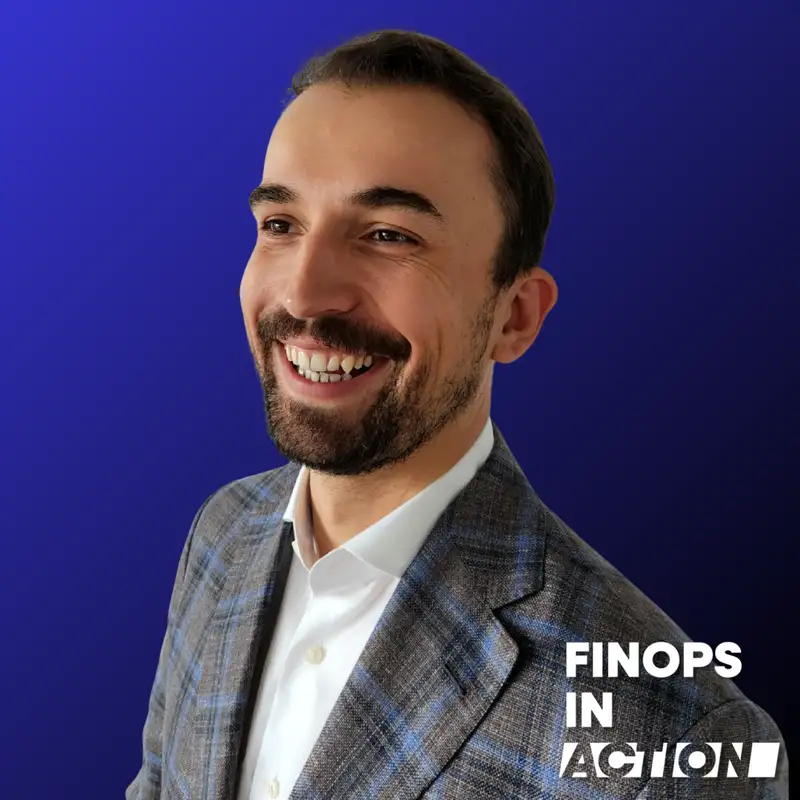
How to Make Shared Data Costs Transparent at Scale ft. Oliver Milke, TD | Ep #69
FIA - Oliver Milke
===
Oliver Milke: [00:00:00] we recognized that this cannot be a one-off, but it needs to be a permanent ongoing thing. They asked me if I want to step into the role more permanently and, uh, that's how FinOps data FinOps, so FinOps for the data lake team was created. It came into, into place and that's how I started in the beginning alone.
And by by now, I have a team that supports me with this.
Intro: Welcome to FinOps in Action. I'm your host, Taylor Houck. Each week I'll sit down with FinOps experts to explore the toughest challenges between FinOps and engineering. This show is brought to you by 0.5, empowering teams to optimize cloud costs with deep detection and remediation tools that actually drive action.
Taylor Houck: Hello, and welcome to another episode of FinOps in Action. Today's guest has a story that I have not heard before on the show. He came from the world of economics and finance and ended up building one of the first cloud data platforms in the financial services industry. And when the bill came in, he didn't just flag it, [00:01:00] he built an entirely new FinOps practice from the ground up.
His team doesn't just optimize costs. They've built a system that can tell thousands of users exactly what their data costs to store, to update and to query down to the individual table. He is the winner of TDS 2025 League of Excellence Award for strategic Vision, uncovering savings and driving.
Financial transparency, senior Manager of Cloud Data FinOps at td. Welcome to the show, Oliver Milke.
Oliver Milke: Thank you very much, Taylor, for having me.
Great to be here.
Taylor Houck: Absolutely. I am really excited to chat with you today, Oliver, and one of the reasons is because you have a title that I actually have not heard before, and that is Senior Manager of Cloud Data FinOps, not just Cloud FinOps. Can you tell me what it means? Cloud Data FinOps as compared to the traditional regular FinOps.
Oliver Milke: [00:02:00] Absolutely to, at td, we already have a cloud FinOps team, a FinOps teams that's taking care of all of our, uh, main applications that's dealing with, uh, reservation purchases, that's dealing was the right sizing. And they're doing a fantastic job asset, uh, at that. But for, for, uh, for the data lake, that's our biggest asset that we have on the cloud. And that is on top another story. So we added that a team distinct from that CloudOps team to manage this particular asset and. My team. My team is doing that now. So my team is taking care of everything around data FinOps. And why we needed that is have just one user for one asset. So it's not one application that serves a very small group of users or even a one large group of users, but we have asset that serves many, many distinct group of users and. Breaking that out, having this shared asset and bringing it, [00:03:00] making it credible, making it transparent to all of our user groups, all the different businesses that are running on it. that's what Data FinOps is doing. And we are looking at it just at the, level of. How big is the virtual machine, but how big is a table that's served by that virtual machine?
So we are going one level below it. So that is how I separate data from Cloud FinOps.
Taylor Houck: That's really interesting. And can you bring me back to the early days? How did you get started in managing this and come into recognizing that data? FinOps was to be its own entity.
Oliver Milke: Yeah, so we started our journey when we, when we moved to the cloud. So about six years ago, uh, the, the TD data team moved all of their on-prem or started the journey of moving all of their on-prem. assets to, to the cloud. So it was a huge migration program and I was part of the program from the get go. Uh, back then as a project manager, I have a background in, in project [00:04:00] management and in finance and as a, as a project manager, I helped build the capabilities. I was on the capabilities stream of the program, and we built all the capabilities that the data teams would be using in the future. And part of that, uh, stream, when you, when you build all the capabilities, you're also there when they're turning them on. So seeing what happens when those things suddenly scale. What happens when, when ideas scale, when, when, when, when compute scales, when storage scales. And when we did that, we wanted to, to see how we can do this at a cost efficient way. So they asked me to help with that. And we did our first cost optimizations back then as part of the program and 'cause it all went relatively well.
And we, we recognized that this cannot be a one-off, but it needs to be a permanent ongoing thing. They asked me if I want to step into the role more permanently and, uh, that's how FinOps data FinOps, so FinOps for the data lake team was created. It came into, into place and that's how I started in the beginning alone.
And [00:05:00] by by now, I have a team that supports me with this.
Taylor Houck: I mean data services, data lakes, managing these, these services. It's a fairly technical undertaking. Right. In your background, it wasn't in engineering, it was, as you just mentioned, in economics and finance. What was it like coming in from that background and working with engineers to manage and optimize, uh, data systems?
Oliver Milke: Having no background directly in technology, but I, I do like technology a lot, so it's not that I, I've never had any contact with that. I was on the teams before and, uh, had some exposure in, in the technology space, but then coming in with a, with a mindset. Helps me to ask sometimes very simple questions and simple questions is what, You know, if you're very deep into a topic, it, uh, it, it is easy to get lost in it and just accept certain things as given and coming with a non-technology mindset to some of those. Areas, like why are we doing it like that? Why does it need to be that big? Do we really [00:06:00] need all of that capacity in order to run that workload? Does this need to be copied? That many times on a data like this question is very, very important. I would be surprised how, how quick copies can happen at multiple places and that then escalates cost.
So coming in with that mindset has helped me a lot to, to drive cost conversation, especially in the cost optimization area. And, yeah.
Taylor Houck: Yeah. And Oliver, You know, we were chatting before we, we started recording and just were remarking about how, You know, most cloud assets. They have, You know, an application with one defined user group. Your data lake has thousands of users sharing one platform. How do you even begin to make costs understandable in that, uh, scenario?
Oliver Milke: That is where it's very beneficial to be with the data team because with the data team, we,
we are just, we have a
I.
of smart people that can help us make data, visual and transparent. So team spend some of its time not just on, on looking [00:07:00] at the bill and flagging things and managing it, but also. Creating the visuals to make it transparent. So we have a, we call it a FinOps hub, uh, a set of dashboards that our users see exactly where they spend money on. So what workload is it that uploads what table and how much does it cost? And that helps really to our users. It helps really, that they can connect to it.
So now they know that's not just workload X to serve table but this is. Workload X and it costs a thousand dollars to do that. And table XY costs, uh, $500 to store. So now we have a whole story front to end. How much does it cost to bring the data in? How much does it cost to transform it, and how much does it cost to serve the report? So bringing that into one place easily accessible and easily consumable for our users, that was very, very important and that has really, uh, made it much, much better to connect to all of the users
as well.
Taylor Houck: [00:08:00] Making the data easy to access and consume, that's step one, right? But then you need them to actually look at it to care and to Use it. How did you find it getting people to actually care about cost and how did you implement and, get that into their regular workflows?
Oliver Milke: So we are doing. Monthly touch points with all of our user groups, with a large, with the, with the main, the main leaders in the space to review the bill and to highlight things, to flag things and to also. Talk about are you aligned with your forecast? Like, are you close to it? Why not? If not, and if you are, within then well good.
But even then, are there opportunities to discuss? So our leaders, of course, on TD's current strategy's all about delivering simpler and more efficient. So it aligns very well with that strategy to do that. And then coming to, them talking about, it's just a natural extension
of that.
Taylor Houck: Are you guys doing [00:09:00] chargebacks?
Oliver Milke: yes.
Taylor Houck: Okay.
Oliver Milke: We, we, uh, went live with it this year, fiscal year, the year prior we used for showback year, so we had a, a full year in which we were our model.
And starting this year, we, we went live with chargeback. Our data is that granular, is that we have a very, very, uh. Driver based chargeback models. It really shows everyone, this is why you spend so much. It's not that we came up with it, but you are actually consuming that much. You are driving that
cost.
Taylor Houck: Did you find that moving to chargeback made your users care more about the cost impact of the engineering decisions that they were making?
Oliver Milke: Absolutely. Absolutely. So it really completely shifts the mindset before that. It is like, yeah, okay. I get my share of the cost. What can I do about it? now it's 100%, oh, that's why I'm spending so much, and I could use this. I have a certain budget, but I wanna do more. I want to bring more insights [00:10:00] onto, from our platform to the users.
So how do I do that? And I need to be very, very conscious with the way I spend my dollars right now.
Taylor Houck: Interesting. And, and You know, Oliver, so far we've talked a lot about, You know, cost reporting and chargeback and showback and getting data in front of people. that's all inherently looking backwards at the cost that's already occurred. Right. When you shift gears and you start to look forward, how do you think about that?
And especially around the area of optimization, right? Identifying actions that individuals or users can take to reduce the cost of their system. Can you walk me through your, your optimization journey and any specific, uh, projects that you've worked on with teams that have been successful?
Oliver Milke: Absolutely. our optimization journey. We have two, two main, main angles that we can look at it here. So there is the optimization of the platform as a whole. So that is in often in combination with our Cloud FinOps partners. We are looking at [00:11:00] things like, can we get good reservations? What is our main virtual machine type? Um, get, uh, do we get the right or best price for the main, main, main billing types that we are using? That's one thing. Then. Even one step further, within the same pillar, within the same angle we, we have, can we optimize the architecture for the whole platform? So not just do we get the best price, but is everything. Set up, and this is where we have really great conversation with engineering, with security teams and all of it. And some of our biggest impact optimization, like moving to job clusters or, uh, enabling spot instances, those early wins that are really, really big or then more granular now, uh, in, in the later times of it. So on the storage account, uh, is the, the right resiliency levels is our data in that right tier there? Those are, are conversations that you need to have across the board, but that bring [00:12:00] dollars down for all of our users. And then there are the, the, the other angle is engaging directly with the teams. So here you are looking at what are you doing, what are, what is this team particularly doing space? And does it need to be as costly as it is right now?
Taylor Houck: I heard you say one thing and my, my ears kind of perked up because it's a topic that I'm hearing a lot recently. You, you said job clusters, I believe you're referring to Databricks. Yes. Have you been doing much work on, on Databricks cost optimization? Because if so, I, I'd love to hear about it. It's a, a really big topic.
I'm, I'm hearing come up in a lot of the conversations, uh, around FinOps right now.
Oliver Milke: Yeah. Databricks, uh, is our main compute engine that we are using on the lake, and for that. the already mentioned move to job clusters was definitely a very big lever that we, we were enabling very early on because it's optimized for batch loads, exactly the type of, of, uh, of computes that you need for a big data platform. And moving to that has made a [00:13:00] significant impact. I believe it's 40 or 50% in, in price reduction, moving from an interactive to that kind of cluster. So that was really, really great. once you have done that, then you are like, okay, what can I do next? So there are options, uh, available by, by Databricks.
Like you can move and enable serverless, for example, which is something that we are looking into right now. But more impactful at this point for us, is Mo working directly with the teams. So looking into. What can our teams do to use Databricks more efficiently? Databricks is driven by how big is the machine that you're on and how long do you run it? And there is a certain certain effect in, in, in that, in in, in optimization that. You can make it faster by giving it more power, but that will naturally cost you more money and you will never, you will never bring the cost down by 50% by doubling the size of it or so you will always have due [00:14:00] to workloads being, being, uh, not always in parallel, but sometimes there's, uh, sequential, you will usually add time.
So the quicker you need it, the faster you need your workload to finish. The more likely it is that it will just. Be costing you more and more and more. So what can you do is can look at, can you bring it down to smaller sizes? It'll take longer, but not necessarily cost you more, uh, just runs longer.
That is one thing that we see. Uh, does it use the resources it runs on efficiently? So for that, you need to really look here, you need to bring in telemetry data. You need to look at exactly through the work, uh, life, uh, of the job cluster, of the interactive, uh, of the job cluster. it? Use the resources efficiently the whole time, or are there certain parts of the jobs that need a lot of resources and then maybe 80% of the workload run on a very, very small size or, or minimum resources, usage of that cluster. And that is where you need to need to then think, do I split it [00:15:00] out in different, different clusters? Maybe do I, do I separate these things within a job? So those are really nitty gritty, granular things that you are working then with the teams. And that's where we are currently trying. we can do it, how we can do it good, and how we can make that accessible to our users because I cannot, we have thousands of, thousands of workloads on the platform.
We cannot analyze them individually all, so we need to make it accessible again to our users, easily to, to look at the data and to work on the data. So we are working on, on efficiency metrics for the efficiency dashboards that we can make available to them to see exactly they are doing and where they have opportunities.
Taylor Houck: It's interesting because You know, in order to make the optimal decision, you need to have both a very deep understanding of the core technology and the levers that are available, but also of your business requirements for the workload. Can you tell me, as you're working through these optimization initiatives, who are the people in the room and what are the [00:16:00] roles of everyone that's coming together to make these decisions?
Oliver Milke: So it depends on, on which of the tool. Optimization, uh, approaches we are taking. So if we are taking the platform optimizations, it's usually that we have our platform engineering, we have our architecture teams. We have maybe a few, uh, head engineers from the, from the more development capabilities optimized, uh, oriented space. And then. All of our risk groups, uh, a lot of risk, uh, in financial institutions. You need to follow a lot of regulations and you need to it very, very tight and secure, and all of these groups need to eventually buy into the optimizations that you are hoping to enable. It's a long, often lengthy process, so it takes a while to enable these kind of optimizations, but they have high impact if you get there. Decision makers are ultimately our executives, of course, but you need to present some, uh, coherent story That story needs to be, we are able to still hit [00:17:00] that, that and that, and reliability and, and security while being more cost efficient at it. And if that comes together, we have a stories that we can sell into, something that we can enable for the optimizations with the individual teams.
That's really driven at, uh, at a more working level with, uh, with the business, uh, technology teams in it.
So you go to them, present an opportunity and then that they can, if they can do something about
it
Taylor Houck: I want to ask you about one specific type of opportunity, because I, I think I also heard you mention the word spot earlier. Are you guys running on on spot today?
Oliver Milke: We are using So spot instances you mean? Yeah,
yeah, absolutely.
Taylor Houck: Yes,
Oliver Milke: we are using spot in Databricks is great and working with, uh, spot instances. So that is a great
lever.
Taylor Houck: I would love to hear about how you put together the story. To start using [00:18:00] spot instances because a lot of times moving to spot, although financially it is incredibly appealing on the engineering side, there is this inherent risk where you could be vacated at any given moment. Now of course there are are ways to work around that, but I would just love to hear if you've been successful in adopting spot instances, how you have gotten to that point.
Oliver Milke: very engineering, uh, depth question for, for that I will keep at a very high level 'cause I'm, the engineers might have a different opinion on certain aspects here, but, uh. I think for most of our workloads, spot instances work very well. Yeah. The, you have to of course develop with that in mind. So our, our frameworks, our engineering frameworks have been built with that in mind that they can recover should you get vacated from a job and. For most of the, of the transformations that run on the [00:19:00] platform or for the basic, uh, data ingestions or so, that works very, very well. So sometimes you might get vacated. There is a bit of a cost to it, but spot instances are so much more price efficient. You often make that up for other workloads with high priority or tight SLAs.
On the other hand, then you might just
not use it. So.
not a one catch all, but you have to look at is it worthwhile for this one, and if not, then you might have to accept the additional cost.
Taylor Houck: No, it's, it's a win to get it, to get it working and, and having your teams adopting it, even for non-production and, and any type of workloads. I know that sometimes it's difficult to get that adoption, so it's really great to hear about how you've had success in that area. Now I do want to transition slightly.
And talk about, um, another area of your FinOps practice that, that we discussed before, and that's education. Um, a lot of FinOps teams, they don't really formalize education, but [00:20:00] you told me you made it one of your core pillars. Yeah. Can you talk about why you've had such an emphasis on education within your FinOps practice?
Oliver Milke: So absolutely happy to do that because we are, we are very proud of that pillar. Um, when we are, when we are looking at what it meant to move from an on-prem data lake to a cloud-based data lake, it meant that suddenly all of our IT teams had to go from fixed spending envelopes or fixed spending, uh, allocations to. Variable spending. So suddenly there was a whole new dimension that they had to manage and that was part of their, their mandate. for that we needed and still need. It's a continuous never ending effort. You need to have strong change management in place to help them get to that place. for us, um, we needed that in place from the get go.
So I put that in my team as one of the core pillars we said. I said, uh, put. [00:21:00] Uh, put an education pillar with a dedicated person that continues to educate the users, that continues to create material that is available for users who have question on. What's happening on the cloud? What drives their costs?
How do they understand their bill? How do they use our dashboards to understand all of that? What can they do after they have done that? So that was just a very, very important thing to put in place in my team. And once it was in place, we, we got so fantastic. uh, payout from that our teams now, our users are using that.
Our users are coming to these sessions. We, we do that a weekly basis. We, we created something called FinOps shorts. So these are very brief videos that we put on our internal, um, on our internal social systems there where users can see. Minute long videos to [00:22:00] understand our dashboard. So you want to understand what happens in your career that's on here.
You have a one minute video that tells you in a short and entertaining way what you can, what you can get from the dashboard, how you use it, and that has gotten great feedback. So all of that has really helped that we have a very uh, change from on-prem spend to cloud spend, and that has helped users understand the variable component much
better.
Taylor Houck: So first. Stop. That's genius. The shorts. Um, I love that idea of just like, Hey, let's make it quick, hit, interesting, exciting to the point. Okay. Call it a day. Then they might actually pay attention.
What are the other strategies that you've employed to like actually get people to care and engage with this, um, education content or uh, programs?
Oliver Milke: So we go out and advertise for it a lot. Right? It is also, it's, it's coming from all sides. It's coming from us. It's coming from, uh, top down. Like you need to be able to manage and understand your bill. So. [00:23:00] Whenever that message comes, we are right after that and go like, if you need any help, if you need anything, if you want to understand it better come to our sessions or reach out to that person.
We have a a, a group mailbox as well. Connect with us and listen to us so we can help you understand it and makes a change you're asked to do so. That is really how, how it, it worked very, very
well.
Taylor Houck: Yeah, and it really gets into this core premise Again, something that we talked about before where FinOps it, it's not a one person job. It's not a one man job. Can you talk a little bit about the, the team and everyone that needs to come along if you're gonna have a successful practice, especially at the scale that you're operating at.
Oliver Milke: yeah. Happy to do so. So our team, uh, or my team is, uh, by now we are five people. So we have, uh, a, a data engineer on our team who's dedicated to. Just gather all the datas [00:24:00] that we need to work with. So it, it's, it's, at this point, it's not just the billing datas that we are working with. We are working with telemetry datas that we need to bring in.
We are working with, with inventories that need to get mapped to, in order to make sure that. The, the right consumer gets their share of the, uh, of their bill. So all of that is happening at the data engineering level. And then we have, uh, the already mentioned parts. The user engagement analyst who's there to help under, uh, our users to understand the, the platform and two analysts who are continuously working on. Reviewing the bill, finding insights, creating insights out of that by, by, by making it available on the dashboard are there to find new ways to connect telemetry data. It's very important in data FinOps to connect the telemetry that you gather from the platform as well with the billing data to get this one level deeper, to get to the workload, to get to the table insights [00:25:00] or to, to, to, find these efficiencies that you're looking
for.
Taylor Houck: I'll say that that is such an important point for anyone who's listening. That's in FinOps, getting started in FinOps, been doing it for a while. The data that you need does not all reside in the billing files. The cost and usage report does not tell you the full story, and it's when you get into combining these other data sources, whether it's utilization data, resource metadata, observability metrics, and tying that back to the cost, that's when things get really interesting.
Oliver Milke: Absolutely. That's when you hit gold, right? When you are going from just having some things that you basically just make available to someone, to the group, to really creating insights to the business bus. It's business intelligence at that point, right? You're really going from. From pure reporting to look at that.
Look at what we are having here. Insights on the bill and that's why you have it.
Taylor Houck: [00:26:00] Oliver, you've, you've learned a lot. You've built a really impressive practice. Um, for the listener's sake, I want to ask you, what would you say to someone who's listening right now who's thinking about getting into FinOps or who is starting a FinOps practice, maybe at a bank, um, or maybe somewhere else?
What advice would you give to them as they embark on this journey?
Oliver Milke: I think it's very good to have, uh, to be very open-minded and willing to engage across different, uh, different groups. will be working not just with. Finance, not just with engineering. No. You will work across all of them. You will work with development teams and you need to have a very open mind. You need to be very willing to learn about each side of the story to a certain extent, to help understand what motivates them and how you can influence that, and how you [00:27:00] can then make the the optimizations With all of these restrictions in mind. So it's a very cross-domain work. So I think being very, very open and having a good background in, or basic understanding, you don't need to be very deep in, but a basic understanding in, in, in finance and dollars, in, in technology and, uh, in in some core principles of how platforms work and how the cloud works. That's very, very helpful. I tell that to, to everyone as well. Always when they're asking like, does it need to have, does a person need to have some dollar knowledge? I think like, yes, Having a basic understanding of, of that a dollar makes everything more scary a bit because as soon as you put a dollars there, it's, oh yeah, this is important.
This costs us a lot. Then,
then that helps.
Taylor Houck: No. It is funny how once you start putting dollars and cents into the conversation, people's ears kind of, uh, perk up and it's, it's [00:28:00] funny the, the, the types of people who. Start paying attention when you start talking about, uh, money and budgets.
Um, Oliver, we're, we're getting close to the end of our time, but before we do, I want to, um, ask you some kind of forward-looking questions on the, the state of our industry. AI is a hot topic that everyone's discussing right now. How do you see AI shaping our industry? And you can take it in any way you want, whether it's the management of.
AI spend the optimization of AI costs or using AI in your FinOps practice to make your team more effective.
Oliver Milke: So we are doing on our team right now, we are, we are trying to take AI to enable our users to understand the build better. So what we are doing is we are using the, the power BI copilot integration to allow our users, or to work on allowing our users in a hopefully very short timeframe to interact with the data. So they don't just [00:29:00] see it in the dashboard, but they can ask like, what's important for me? What's happening right now? What has really changed? Or is it, is there any change that I need to be aware of? a dashboard might show you certain things. Yes. But even better is if you can just ask these these questions, right?
What's important in it for me? So that's one way that we are using it or we are planning to use it in a very, very short timeframe from here. But I do think it can go way beyond it even. Right. So you can eventually. it, take it all the way to Agen, where you can have maybe in the beginning, an agent looking through and actively reaching out to people on opportunities to potentially act on it itself.
In the end, I don't think that's happening yet, but I, I do see that as something that can happen in the not too
distant future.
Taylor Houck: Yeah, if you wanna have a whole conversation about that. I've got a lot of, uh, thoughts and, and perspective and it's, uh, a big focus of, of what I'm working on right now is, is building these types of systems that can work in a scalable way. But the [00:30:00] interesting thing is we. You get into auto remediation, you're gonna reach a point where You know, if you're gonna relinquish control of actually changing resources right to an agent, you need to really trust that they are, number one, getting, uh, accurate detections fed into them and that they have the proper instruction so that they're capable of, of taking this action.
Especially, I mean, you work at. TD in an enormous financial institution, highly regulated industry. I'm sure you wouldn't, um, just unleash any agent into your environment with right access today.
Oliver Milke: No, definitely not in production, but I, I, I do see a lot of opportunities here in the, in the lower environments, right? So, uh, cleaning those up, think that can, that can be an opportunity without too much. Eventually,
I.
Taylor Houck: It's gonna be really interesting to see how all of this plays out across our industry over the next few years, Oliver, and I know that you will, uh, be there for it. But before we wrap things up, I want to, You know, we were talking about AI and [00:31:00] there's so much, um, that AI is going to do for us in, in work and our personal lives, but there are certain things in life that AI, AI can't replace.
I, I, I understand that you, uh, you're a runner outside of work. Is this true?
Oliver Milke: I do run as well. Yes, we are having our big, uh, 10 K coming up where there's a big in Toronto here, a big sporting life, 10 k where we run for campfire Circle and great. We are having a large team here at td, over 200 runners, I believe this year. So it's gonna be very exciting. So all these people running in green for good costs.
It's, uh, it's, it's awesome. Awesome event
for all of us.
Taylor Houck: It's amazing. Can you tell us a little bit about, uh, the cause that you're running for?
Oliver Milke: Sure. So, uh, campfire Circle is an organization that helps children who are affected by, by cancer, who are going through a cancer diagnosis, to have a bit of normalcy again in their life by just experiencing a weekend or a week of. Normal [00:32:00] interaction with people again, in uh, yeah. In a cottage environment for, yeah, because that is where, where, where most of them are struggling.
Once you have that diagnosis affect you, your day to day is just. All around, centered all around that usually. And so normal interactions in life, hanging out with friends, hanging out with with kids your own age might not be there that much anymore. And this organization is dedicating itself to bringing some of that, to bringing one week of all this, well, not all this well, but all can be okay to these kids.
And that's a fantastic cause to help with,
Taylor Houck: that is a great cause, Oliver, thank you for doing that. And thank you for everyone in your organization who, uh, put a. Uh, a program like that in into the World, it's, it's so important, uh, to back up for a minute. In our day-to-day jobs, it's so easy to get so caught up in, um, everything that's going on and life moves so fast.
But to take a break and, and do something, You know, good for others, it's, it's so important. So thank [00:33:00] you for, for doing that.
Oliver Milke: Thanks.
Taylor Houck: Amazing. So, Oliver, this has been a, an incredible episode. If someone who's listening today wants to, uh, reach you and, and chat further, ask any additional questions, where's the best place to find you?
Oliver Milke: I am on LinkedIn available so you can reach out there. It might take a few days to react, but uh, please, please connect.
Taylor Houck: Awesome. Oliver, this has been fantastic. So, uh, thank you so much for coming on the show,
Oliver Milke: Thank you very much, uh, for
having me.
Taylor Houck: And thank you to our audience. If you got something out of today's conversation, which I'm sure you have, please share this episode with someone who needs to hear it. This has been another amazing episode of FinOps in Action, and we'll see you next time.
Outro: That wraps up another episode of Fit Ops in Action. Thank you for joining. For show notes and more, please visit fit ops in action.com. This show is brought to you by 0.5, empowering teams to optimize cloud costs with deep detection remediation tools that actually drive [00:34:00] action.
Creators and Guests