Stop Guessing, Start Saving ft. Loic Fournier, AWS | Ep #63
FIA - Loic Fournier
===
Loic Fournier: [00:00:00] So customer has been, I would say, experimenting ai and suddenly the costs are raising to the sky and uh, suddenly they, they, they are asking help and, um, yeah, they, they, they would like to know how to control the AI cost, for instance. so what I'm saying to them is the first step is to set up a governance.
Intro: Welcome to FinOps
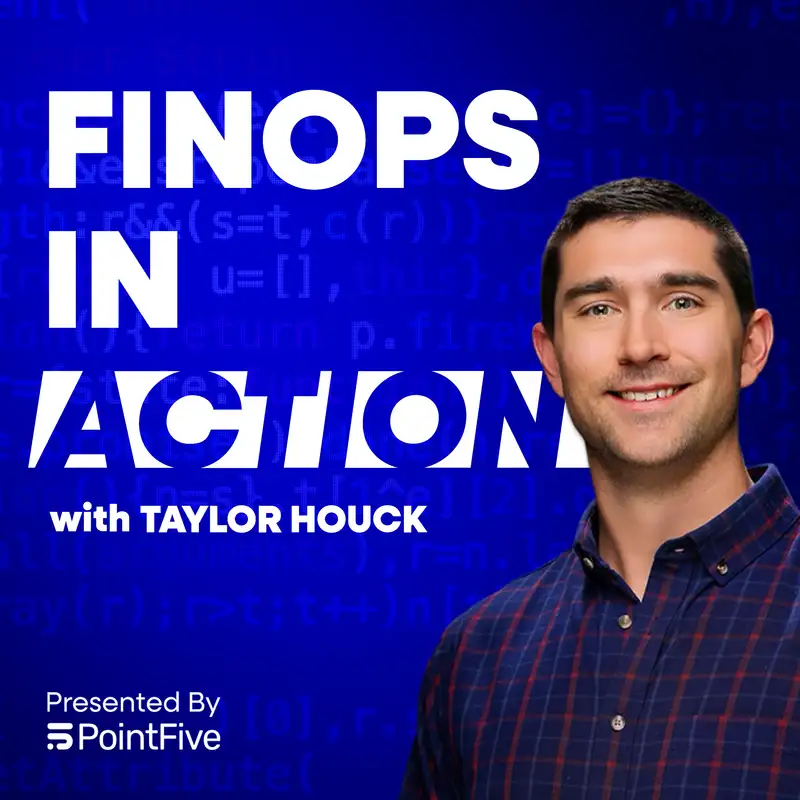
in Action. I'm your host, Taylor Houck. Each week I'll sit down with FinOps experts to explore the toughest challenges between FinOps and engineering. This show is brought to you by 0.5, empowering teams to optimize cloud costs with deep detection and remediation tools that actually drive action.
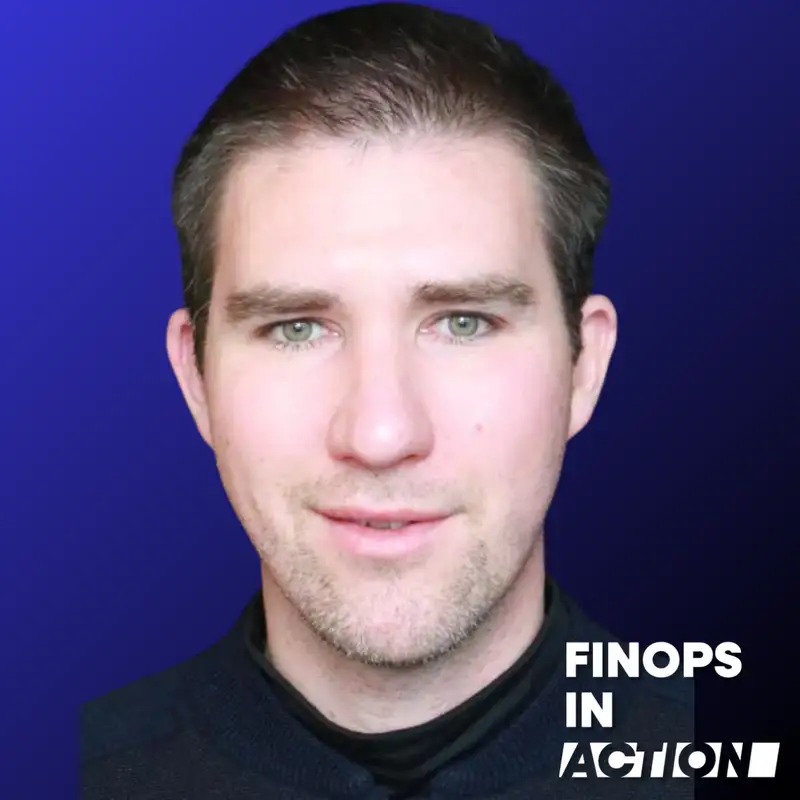
Taylor Houck: Hello, and welcome to another episode of FinOps in Action. Today I'm joined by someone with a unique vantage point on cloud and FinOps. He spent more than 25 years in technology spanning everything from mainframes to modern Cloud. Today he works at AWS as [00:01:00] a senior technical account manager, working closely with public sector organizations.
Over the years, he's become one of the most recognized voices in AWS cost optimization. He was named a 2025 AWS technical Field community legend. He also contributed to the cloud Intelligence Dashboards, CFM Tips and the cloud efficiency Hub. Loic Fornier. Welcome to the show.
Loic Fournier: Thank you Taylor. Hi everyone.
Taylor Houck: I'm so excited to talk to you because You know you work for AWS and you've worked with a ton of customers across many different maturity levels on their FinOps practices. What's the number one thing that you see organizations getting wrong in their FinOps adoption?
Loic Fournier: Yeah, this is the, um, the main question also that the, the customer asking me when, uh, I'm meeting them. This is usually to, to take the FinOps as a project instead of taking it as a practice. Meaning, what it's mean [00:02:00] clearly is the fact that, um. At the end, they will try to fix one problem, but not to think big and to, uh, set up the governance in order to fix the problem long time and avoid the problem to come.
Uh, again. this is the main issue that I'm seeing, not having a real practice and the real ownership of the FinOps. And more and more and more we have more organization. Creating FinOps position, having a FinOps team. But we have still, um, organization having, uh, DevOps or, uh, one project manager taking the FinOps sometimes and not taking it as a full, um, business unit inside an organization.
Taylor Houck: It's interesting because in, in my experience, a lot of times a FinOps practice or journey will get started as a one-off project because say the bill went super high or they feel their costs are out of control. Hey, we've gotta manage this in a better [00:03:00] way. And it starts as a project, but to be successful over the long term, you need to transform that into a practice.
Where do you see this, this transition happening, and what's the difference between a project and a practice?
Loic Fournier: this is, uh, when the, the costs are, are raising. For instance, uh, lately we are seeing this with ai. So customer has been I would say, experimenting ai and suddenly the costs are raising to the sky and uh, suddenly they, they, they are asking help and, um, yeah, they, they, they would like to know how to control the AI cost, for instance. And so what I'm saying to them is the first step is to set up a governance. Because if we are trying to, um, do, I would say the recommendation for one applications. How do we, we reduce scale when you will have a hundred AI applications. [00:04:00] So the idea is to say, okay, governance you have three pillars.
You have people, processes. And technology, and we are in FinOps, we are using always the CSafe plan runs, or, I mean, the first step is of, of course the observability. And then, uh, I would say set up the, the observability with the right tool. So how to observe the cost and then how to, uh, implement processes. To avoid, to redo, uh, the same, uh, effort again and again. Um, and then also educate, uh, educate the people. So educate the people to use the tool, educate the people to fix the problem, and also educate the people to set up the right processes to avoid having to fix the same problem again and again. And this is where we are transforming the project to a practice by, um, having this three pillar being set up as a governance.
Taylor Houck: I, I'm curious if there's any [00:05:00] specific, uh, circumstances or, or, or stories or situations that you've come across, um, in your time working in FinOps, that kind of paint. Um, a picture as this transformation from a project into a practice.
Loic Fournier: I mean, I have seen customer having quite nothing just, um, starting and coming to me and we, we start to implement the, the governance. So we start to have the, the first discussion. And then we, we start to first to implement the tagging, uh, because the, the first step was to understand where the costs were coming from.
So the cost allocation and implement also the cloud intelligence dashboard to have the visibility on the cost set, uping cost anomaly detection to be sure that when the cost, some costs were raising, we will, they will have the alert. Then we implement and educate all the product manager of the business unit or all the [00:06:00] business owner to set a budget, um, like this. Because we, we, we had finally the cost allocation. After some months, we were able to, to forecast and to set the budget and then, uh, we were able to finally educate the customer. Uh, and all the team. So spread the cost, a awareness, s culture across all the team. Uh, we, we are organizing even like, um, uh, quarter review with all the team.
So during the day we have all the team, uh, running and we are reviewing, um, the, their cost, uh, to see what we can, uh, where we can advise them what. And celebrating also the achievement, which is super important when there is a team that, uh, uh, manage to implement the recommendations even more. So if you are telling to a team, yeah, you should experiment spot, so you spend time with them to experiment spot and then the implementing spot and finally [00:07:00] there. Uh, reducing by 20% in one quarter of their easy. Two, you need to celebrate because by celebrating this, you will, um, highlight is good, the best practices, and you will give the, um, this to be highlighted inside the organization. And the, the business, the other business you need will be able to, uh, do the same. To replicate. Um, so as soon yeah, the, the tool are very well understood. The cost of managed structure is spread a across the organizations. We are able to set up the processes. So for instance, uh, do not start any managed service without being, uh, a graviton. Um, um, be sure that, uh, all the EBS will be, uh, I, the, I, I mean not G two, uh, GP three, uh, ensuring that, um. We are using serverless when, when this is required. So every, every, every mistake or every problem that were, that went undetected [00:08:00] we are implementing SCP configures
Taylor Houck: to
Loic Fournier: avoid that the problem happened again. yeah. And after two years, we were able to save around 30% of the cost,
Taylor Houck: That's a lot.
Loic Fournier: Yeah, absolutely.
Yeah. Yeah, that's a lot. I think it's very important also to, to try to target this. This is generally if you are implementing, this is the average rate that you are able to achieve it depending where you are starting from. usually we are doing like, A CFM capacity assessment at the beginning. So this assessment is based on, uh, score on five. Usually when the, the, the organization are starting their cloud, their cost optimization, Philip Johnny, they are around 1.5 to 2.5 average, depending the, the maturity of the organization. And then the goal is to help them to reach three, four and, and target the five. [00:09:00] I think five is very hard to, to reach, but, um,
Taylor Houck: And like, what is that number? 1.5 to 2.5 to five? What? What's that? A measure of?
Loic Fournier: Um, this is the, the CFM capacity assessment.
Taylor Houck: Can you talk a little bit about that assessment and what goes into it?
Loic Fournier: yeah, in fact, uh, this is a, uh, is something that we can organize with AWS customer. Um, this assessment is based on 34 questions, uh, in different area. And the goal is to understand, uh, exactly the FinOps, uh, maturity posture of the customer. The idea is to organize this FinOps assessment.
Every year like this, you are able to measure the progress and also, uh, we, we are giving the ability to the customer, according to their score. To, uh, review where they are compared to the other customer for who we have already run the assessment o over the, the, the, the same customer of their [00:10:00] industry. So this is helping them to, with this KPI, to see what they, of course, what are the remediation paths, but also to see where they are in term of, uh, the global organization around them.
Taylor Houck: First off, I love the idea of. Measuring your, your posture, your FinOps posture, we call it, uh, your efficiency posture. I think that's so important. I'm curious from your perspective and where you're sitting, what is the difference between the organizations that are scoring high in that score and those that are scoring lower?
Loic Fournier: I
Taylor Houck: Yes. This is the, um, the one that ah we, what we said at the beginning that have finally implement a FinOps practice with pheno, uh, higher FinOps practitioner, um, people that are dedicated to the FinOps. Um, this is very hard to convert, uh, the organization because. many organizations think that FinOps trust something we need to do, uh, once a year when we are at the [00:11:00] end of the year when we are quite over the budget and we need to, to make sure that, uh, everything will fit inside the what has been forecast now. Um, I think, um. And I try to speak to the executive because the, the, the executive sponsor is an important part of, of FinOps governance. And, uh, if you would, would like to be sure to have a successful FinOps campaign in FinOps initiative, you need to be sure that you are supported by the, the, the executive. But the idea of an executive for it's, you need to, to speak, it'll not work first time that, uh, you need to hire someone dedicated to FinOps. it's mean that you will start to spend a full, uh, full, I would say, full-time job, uh, in your organization to save cost. So you need, you need to demonstrate at some point, uh, that, because if you take average, uh, in us, I, I would say we take in US average, uh, one, [00:12:00] do 100, 150, uh, K a year uh, salary and plus tax for the, the company.
Loic Fournier: And you need to say, okay. You, you, you need to start to have actually, um, high level of, of spend or already a high level of, uh, cost, potential, cost optimization. So you need to demonstrate this by, uh, coming with a dashboard and showing the ability of the, of the company to transform, um, the potential saving uh, reality. Also because, uh, sometimes, uh, we are funding a lot of potential saving for the customer, but they are not able to implement it. Why? Because all their people are full busy. this is the, the maturity when we are also, uh, convincing the, the chapter lead or the DevOps lead to, uh, integrate the FinOps stories inside their, the, the, the, the, the backlog of the, their [00:13:00] engineers.
But.
Taylor Houck: You know, AWS has a lot of tooling available to help people find ways to save money in the cloud, and I find that it is like the number one place that you should go early in your FinOps journey to find cost optimization opportunities for your team. Now, you pointed out. Sometimes not all of them are are actionable, but many of them will be right, and especially if you're going to invest time in exploring them.
Can you talk us through some of those, um, products or tools that are available outta the box for free within AWS to help customers save money?
Loic Fournier: I would say two, three years ago, we had a trusted advisor. That was the main tool that, uh, where we, we had all the recommendation across the, the, the, the well architective pillar. And three years ago we have released, uh, cost Optimization Hub. And Compute Optimizer is of course there from, uh, 2019. So how now we are orchestrating all the, the [00:14:00] recommendations, so. First we, everything is mainly tracked by, uh, collected by, um, computer optimizer. So computer optimizer is the orchestrator and the, the metrics collector, and is able to collect, uh, as, as of today, um, metrics and provide recommendation for. Performance. Not, is, not, is the, I I mean the, the main objective of computer optimizer is the performance, not the cost optimization. The cost optimization is just the carrier. And, um, it would pro provide this for, uh, EC2, uh, Lambda, autoscaler, uh, uh, EBS storage and, uh, database for MySQL, uh, LDS and Aurora and Postgres. So this is collected. And push to, uh, compost, uh, cost optimization hub, which is also collecting, uh, all the recommendation, uh, from, uh, the [00:15:00] saving plan recommendations. So we have a tool, uh, in the background, which is not really a tool, but we have a page where we have all the reservation and saving plan recommendation. And all this information are also aggregated in cost optimization hub. So cost optimization hub is one dashboard. Where you have the ability cross region and cross accounts inside your organization to see all the potential saving that you can do. Um. And where is Trusted Advisor now? So from last year, uh, in June, just before FinOps six, we have simplified because before we had the recommendation from Trusted Advisor and the one from Cost Optimization Hub, and we, the customer, well lost.
So we have decided that now everything will come from cost Optimization Hub. And even in Trusted Advisor, the recommendation are synchronized. From cost optimization hub so far, if you are using cost optimization hub, you will have [00:16:00] everything. If you are already, uh, integration with trusted advisor, you will also get them. Um, the benefits of using cost optimization compared to trusted advisor is also because you will have the name of the accounts, the tagging of the resources that are not available in trusted advisors.
Taylor Houck: I think that this is, it, it, it plays in so well with the early stages of doing what I would call cloud efficiency, posture management. Right. I mean, we spoke earlier that your efficiency. It's a posture, it's something that you maintain over time. It's actually very akin to security Loic. I know you have some experience in the, in the security world, but there's many tools that go out there and they scan your environment looking for security vulnerabilities.
Well, we can do the same thing for cost inefficiencies. And AWS gives you a lot of functionality out of the box to get started on that journey. And, um, You know, once you. Approach a level of maturity. There could be other opportunities and other things that you consider as well, but what, what are the, the key findings that [00:17:00] people are, are getting out of your AWS native tools and how are you seeing folks actually take those recommendations and put them into practice?
Like, do you have a central person looking at them and then reaching out to teams? How are you seeing it actually come to life?
Loic Fournier: So first our tool need to be activated. So this is something. Um, so now we are trying to promote and promote again all these three tools that are, uh, giving recommendation. But yes. Cost optimization. Hub, compute optimizer in order to work, need to be activated. That's the first uh, step. We are always asking why this is not activated by default.
Um, this is more, uh, legacy, a low. Low discussion. Um, but anyway, um, so regarding the, for instance, another tool that cost optimization hub, uh, is providing from reinvent. Now this is the Efficiency score. Uh, so efficiency score is really great because it, it'll error. [00:18:00] Um, we, we have many customer asking how I can measure. saving that I'm doing. So, um, this is, I I, I think this is just the beginning, but what we are doing is we are starting by giving you the recommendation of the post saving. And if you are transforming the, uh, the, in real saving, we'll tell you will, you will see your efficiency score. Growing up because we have seen that you had, for instance, uh, 10 C two instance right size because they were over-provisioned with a potential saving of $200 a month. You have right size instance. So you have transformed the potential saving in real saving and your efficiency score will grow up. So there is, um. formula and then we are calculating this, your ability to see this across the overall organization or by, uh, specific entity. So you can see which accounts deserve to be more inspected.[00:19:00]
Where there are the transformation of this exponential saving in real saving is not done or, or super business unit. Uh, and we will integrate more and more with the tagging and all of these things in this efficiency score, in, in, in, in the future.
Taylor Houck: What are the top opportunities or optimizations that you're seeing folks, uh, take action on based on the insights? A trusted advisor? In my experience, I use these tools very, very heavily in my previous roles, both at NBCUniversal and at MicroStrategy. For. Compute optimization. Right, right. Sizing and also there was a lot on EBS.
Are those the big buckets you're seeing people use or are there other areas, um, as well?
Loic Fournier: I mean providing, uh, what we introduced two years ago with the, when computer optimizers start to provide the a DS recommendation has been a really transformation because for everyone, we have already tried to make a recommendation on, on that, on database. This is super challenging. You have so many metrics, so many [00:20:00] days to spend to understand if a database is over provision or not. you need to have specific, um, competencies on database. And so I would say this is maybe not the majority of customer using it, but at least for me, this is one of the essential recommendation and this is why, uh, last year IP blog about. Uh, there is a blog about how to use Compute Optimizer, uh, to get the best of your database. But I think this is very important to see that of course, uh, EC2 and especially idling resources, people like to track the idling resources. Uh, so in EC2 machine that are not used, one of the most, uh, idling resources that we are seeing, uh, or, and the customer always surprised, what is this? Uh, no, it's not possible. And finally, yes, it is possible like EBS storage because many people are, are sh. the EC2 instance and are not doing the [00:21:00] same for the EBS. So the, the EBS remain unattached and sometime they are finding two 2000, 2,500 EBS volumes. All of them is not, not a lot like $5 each, $10 each. But at the end it's alot. It's 2000, 3000. It could be, I even see a customer with 10 k per month spend on EBS being just unattached. This is why also last, uh, in reinvent. We have pushed this, uh, new feature on computer optimizer to, uh, automate the this, uh, and manage this EBS volume when attach I idling at scale, uh, with an automation.
We are, we compute optimizer give you the ability to snapshot and delete. Uh, those, uh, EBS volume,
Taylor Houck: Look, I'm curious, as you, You know, they've expanded on many of the tools that AWS puts at your disposal to help you get started on your optimization journey. When you work with, let's say, more mature customers that have been doing this for years at [00:22:00] this point, right? They, they probably realize a ton of savings using trusted advisor, um, especially in the beginning of their journey and then maybe continuously, as You know.
The, the cloud environments are so dynamic by their nature, so things are gonna bubble back up and you help them find them. But what, what are the signs potentially that a customer is, is outgrowing these tools or that they've gotten what they need out of it? And what are you seeing them do next to keep pushing on efficiency?
Loic Fournier: yeah, with the customer, uh, with whom I have started to work on computer optimizer and make them very, uh, good user of it, uh, from two or three years. What I'm seeing is really that they need more features. They are asking always to, okay, I want to, for instance. One of the, the feature that, uh, they're asking is, okay, I'm not interested by this recommendation.
I would like to be able, this is not possible for the moment to remove a recommendation or disable one. And this is something that the people are asking a lot. Or, [00:23:00] um, the ability also now, uh, now that we have agency ai, okay, this is good to see all of this recommendation. But I want, I would like to have automation.
This is why we are, You know, 99% of the feature that AWS is releasing. This is the feed working backward from the customer. So this is our, the, the field team, like tam, like what I'm doing that are, uh, collecting feedback from our, our solution architect that are collecting feedback from the customer. And we are in fact creating internally, um, the feature requests. And those feature requests receive influence from the customer, and then the service team and the program manager of, uh, the product will or the product manager will review in fact those, uh, feature requests to decide according to the influence, according to the, the feedback of this customer, of the, um, which, uh, what will be on the roadmap. And of course, um. They are. And [00:24:00] this is super nice when, uh, one year ago I was saying to a customer, okay, this is a great idea, and one year after you are coming back to him, look, this is released. And because, and now, um, this is how the product is evolving. and this is great. And, and, uh, FinOps six is, uh, in now. Less than three months. I think you will see incredible feature that, uh, Rick's team have prepared for it.
Taylor Houck: Can you give us any, uh, sneak peeks?
Loic Fournier: Um, uh, I'm not authorized to do that. Uh, well, it's, uh, uh, I really think that, uh, yeah, compute Optimizer, uh, will continue to work on, on the automation and provide also more recommendation. The goal is, is to continue to add, uh, more recommendation, um, covering more services inside Compute Optimizer,
Taylor Houck: Yeah, I mean.
Loic Fournier: the name is Computer Optimizer.
Taylor Houck: Obviously that's something that [00:25:00] I, You know, care deeply about in terms of usage optimization and detecting inefficiencies at scale across massive enterprise environments. Um, you are a contributor to the cloud efficiency hub, which is, uh, the largest open source public free to use knowledge base of potential cloud inefficiencies.
Can you tell us a little bit about. That project, your involvement in it and, and why you became a contributor?
Loic Fournier: I would say when you, um, first I, I'm from AWS so I'm customer obsessed. And I think when you are customer obsessed, uh, this is, uh, helping the customer to reduce their spend and to make it, uh,
Taylor Houck: I.
Loic Fournier: efficient. Finally, um, this is. Obviously reducing the spend, it's just making the spend more efficient. Uh, and that is different because you, not because, and this is sometime what I'm explaining to the sales team. Uh, this is not because I will help them [00:26:00] to optimize on one side. That the, you will, uh, lost, uh, the benefits of their spend. They will just reinvest it in something that will be more strategic for the customer. So I think this is very important for me that, uh, the, the, the money is not, uh, trash. And because of the sustainability also, uh, because behind the, the FinOps, the FinOps is a proxy for sustainability. when you are helping somewhere, uh, a customer to, uh, perform better in FinOps, you are also helping. A bit, uh, uh, to save the world.
Uh, I mean, because you, you are also helping to, when you are reducing the, the waste, uh, across all those idling uh, resources, you are also saving energy spent for nothing.
Taylor Houck: it's such a great point on all fronts because when you make cost optimization [00:27:00] actions in a cloud environment, most of the time that cost savings is coming from a reduction in the energy. That you're using, right? So the more cost optimal solution is probably more environmentally friendly.
Additionally, as you noted, there are just with, with the amount of different services and architectures and applications that are hosted in cloud environments, the number of these potential inefficiencies that could exist is just so vast and massive, right? I mean, in the cloud efficiency Hub alone, we have over 300 of these specific inefficiencies that are.
That are mapped and just opening people's minds to the ideas and to the potential inefficiencies or things to look out for is so important because it's just getting that, that FinOps, that cost aware mindset more deeply entrenched in engineering teams and helping them drive measurable impact for their organization, both in terms of dollar save, but as you mentioned also in terms of the environmental impact.
Loic Fournier: I mean, this [00:28:00] is easy to explain to the people, the, the link between, uh, cost optimization and sustainability. Um, there are more and more, uh, mean the, the, and we are trying to, um, I would say to help the customer more and more to monitor, the sustainability also because, You know, collecting these metrics, uh, at different scope, uh, scope one, scope two, scope three is quite difficult because, uh, we are, it's coming also from the, uh, energy providers.
Um. But now we have, uh, more and more customer taking this and more and more industry that are taking this into considerations. And, uh, I really think that it'll be, it's still the challenge of today. It still be the challenge of tomorrow. So, um, yeah, I, I think this is, this is, uh, great to, to have both li uh, linked together and to, and this is why we are seeing [00:29:00] in even in the FinOp foundations, uh, to have the, I'm seeing more and more badge on LinkedIn people, um, going to this green ops, um, training. And having and seeing the FinOps practice, not only focus on FinOps, but also on the Green Ops, to be sure that, uh, the energy saving, uh, is also one of the, the area that the FinOps practitioner are focused on.
Taylor Houck: You know it, it's so important. To recognize, I think it's gonna become increasingly important, especially as AI workloads roll out and the demand for compute just blows up. Um, and on that note, earlier in the conversation you noted that you're seeing customers spend on AI workloads increase rapidly. I'm curious to get your perspective, how do you think AI is going to impact FinOps practices in 2026 and beyond?
Loic Fournier: I think we'll need to more, I, I mean this is very hard to, um. [00:30:00] To help the customer at the beginning, uh, regarding ai because first, uh, everybody wants to experiment ai. Uh, because every, in 2025, it was like everybody was saying, if you missed the, the boat, uh, in 2025, you will, uh, the boat will will be gone and it'll be too late. And then agent TKI arrived, I think it was mid 2025. And now everything about agent and agent is talking, are talking with agent and it's, it's an infinite loop and we don't know what will come tomorrow. And so we are, I mean, I don't know, I don't have specific figures, but I know that massively the customer are still experimenting and there are very few still having really something except the most advanced company in the world that have really um. AI application in production, [00:31:00] so. Now how to help them to tackle ai. Because first, when they, when they're experimenting, this is hard because they, they are, they have not set up the governance. So first we need to explain that they don't need to use the latest model. What are the way to, um, I would say be more. Um, selective on the model. So there is two, for instance, in, two ways to do that. You can use, uh, the intelligent model routing. So you will use an LLM that will analyze your prompt. Of course, prompt caching is not by default on every, um, on every models, but, um, or they will, um, use in inte NLLM to route your pro to be, uh, the reasoning will be done by a smallest model, or you have the, the evaluation.
Tool. So we are more and more bedrock evaluation. So you can evaluate, uh, the reasoning that you need to do with your application. And we, and Bedrock will recommend you, uh, which, uh, smallest model you can [00:32:00] use, um, to perform your task. And then there is also the duplication. Now we are starting to have duplication of model, and if you are looking the, the model, if you continue to. To pay for, uh, a model that is deprecated, you are paying too much. This is why we have in cloud Intelligence Dashboard, uh, in the AML page, we have the unique cost per model. And if you are looking to that, that will give you very good information about which model you should use and the one that you should not use. Uh, and, and I don't know if philanthropic is communicating about, um, the extract costs that are. For the, to continue to use a deprecated model. Um, but I think of course, um, if for the same price, if the two are the same, price better to use the new one. Um, in, in, because also they are, when they are releasing a new model, they are also improving the way that the model is [00:33:00] using the GPUs and the energy, uh, in behind.
Taylor Houck: Yeah, and things are accelerating so. Rapidly in this space, it's gonna be really fun to keep an eye on it and see how things develop. But already we're seeing massive impacts, both in terms of FinOps folks being in charge of managing the cost of these AI applications and seeing how quickly the growth of the usage of these applications is.
It's, it's going to become a bigger line item on everyone's cloud budget. And then there's also using AI in your FinOps practice to accelerate your ability to drive, You know. Action and outcomes within your organization. But Loic as we're getting close to, to a close here, I think we've spent a lot of time here learning, learning from you.
But now I kind of wanna learn a little bit about you. Um, during the introduction, I, I mentioned that you were named the 2025 AWS Technical Field Community legend. What does this recognition mean and how did you come to be [00:34:00] such a legend?
Loic Fournier: Uh, in fact, um, the technical, technical field community inside us, this is, um. It's, in fact, it's more volunteering, so you can use 10% of your time as expert in one aspect. And, uh. This time, in fact, you will, uh, we have internally what we call, uh, requisition or spec rack. And the spec rack are assigned to experts.
So you will not help your, uh, customer that are assigned to you in daily basis, and you will help the other customer that need the help. Um, And so the idea here is to have a conversation with a new customer to help them on a specific topic. So, why I got this? Because, um, I participate to different, um, to a lot of recommendations.
Uh, I, I, I did more than I think it was, uh. Uh, 70 or 75, uh, customer being [00:35:00] support across the year. Uh, I also helped to develop this, uh, fr this frugal architect game day that has been played in reinvents. Uh, with the Burner team. Um, I also develop, um, You know, inside the leadership principle of AWS. We have, uh, hiring and develop the best. I'm spending a lot of time internally to, um, create trainings and to train the, the people FinOps. And also, uh, collaborating to the different programs, CID, uh, CFM, tips and uh, uh, cloud efficiency hub also, but is not accounting. Uh, but anyway, is to my collaboration across the different, uh, initiative, uh, for FinOps.
Taylor Houck: Hey, man, I'll tell you this, the, the community, both the broader cloud and also the FinOps community are, are, are lucky to have you as a part of it with the amount that you're giving back to everyone on sharing your knowledge. I think that, You know, folks that work at the [00:36:00] providers like yourself, you get to see so much And so many different types of applications and workloads and organizations and getting to share those, those learnings and, and help us all, um, grow and, and be better because of it.
Man, thank you for, uh, for all that you're doing.
Loic Fournier: Thank you so much.
and thank you for this, uh, cloud Efficiency Hub initiative also, uh, because, uh, outside of the, I mean, say to hub of knowledge, uh, this is great to have the opportunity to also meet, uh, during the different, um, call that we are doing, uh, the other FinOps practitioner. Because it's a great, um, I would say, um, podium to, to discuss about FinOps initiative And so this is really great.
Thank you.
Taylor Houck: Thank you, Loic, And, and I don't usually plug, uh, stuff on, on the show. I, I keep it about the guests, but to any of the listeners, if you are a more technically inclined FinOps practitioner that's really focused or passionate about usage optimization and driving, You know, [00:37:00] efficiency, best practices within cloud architecture.
I would highly encourage you to check out the Cloud Efficiency Hub it's hosted at hub.05.co and please get involved as a contributor to this effort. As Loic mentioned, there's a lot of programs also to meet the other contributors and learn from each other. Um, but that being said, as we transition to the closing of the show, Loic, I, I know you're based outta Geneva, Switzerland.
It's a place that I think a lot of us would, would like to be based out of. What, what's life like there and, and what do you do outside of work?
Loic Fournier: Um, outside of work, I have two sons, uh, and, uh, so, um, and, and a wife also an incredible, and me wife. So I'm spending my time outside of work, um, time with them. So, um, I'm, we are doing hiking, skiing during the winter, um, and a lot of hikings. I'm also climbing and, uh, this is a mystery for everyone because I'm usually climbing between, uh, 11:00 [00:38:00] PM and midnight, uh, in a, in a arco space.
It's, uh, a kind of room where you can, you have a, uh, those climbing, uh, wall. Um, why so late? Because this is where everything is super quiet. Otherwise, those, uh, room are super busy. Um, I'm also, um, doing ton and some sports. Um. Swimming And so on. I, I, as soon I have time also, uh, I'm trying to make sports because it's very important to balance the work and the sports to, to stay in good shape.
Taylor Houck: I agree, man. I'm thinking to myself as you're rattling through all that, how does he have time for all of this? But that is, that is so, so amazing. Loic, again, thank you so much for coming on the show. Where, where can people find you if they wanna learn more or get in touch?
Loic Fournier: Uh, LinkedIn, I guess. Um, and, uh, yeah, in Geneva we are, uh, I would say the AWS office are really in the middle of Geneva. So if you are around Geneva. Um, we are also, um, yeah, having, um, some events, um, [00:39:00] in the community, uh, in Geneva, um, um, nearly at every user group of AWS Geneva, so, or Lausanne or Zurich in Switzerland. So do not hesitate, uh, to join here.
Taylor Houck: Are you going to the London AWS summit?
Loic Fournier: Yeah.
Taylor Houck: I will be there too. I will see you there. I'm not sure if this episode will be posted by then, but if it is, then we'll see you there. If it is posted after that, then I hope that we saw you there, to the listener. Uh, but Loic, this has been incredible. Thank you so much for coming on the show.
Loic Fournier: Thank you so much. Bye-bye.
Taylor Houck: thank you to our audience. If you got something out of today's conversation, please share this episode with someone who needs to hear it. This has been another amazing episode of FinOps in Action, and we'll see you next time.
Outro: That wraps up another episode of Fit Ops in Action. Thank you for joining. For show notes and more, please visit fit ops in action.com. This show is brought to you by 0.5, empowering teams to [00:40:00] optimize cloud costs with deep detection remediation tools that actually drive action.
Creators and Guests