Why Cloud Efficiency Is More Than Just Right-Sizing ft. Rick Triana, IHG Hotels | Ep #53
FIA - Rick Triana
===
Rick Triana: [00:00:00] if that's your focus is just saving money. I think you missed the big
picture. you need to access, assess the level of risk, the level of effort action on that recommendation, and how much value you're going to get from actioning on it.
Intro: Welcome to FinOps in Action. I'm your host, Alon Arvatz. Each week I'll sit down with FinOps experts to explore the toughest challenges between FinOps and engineering. This show is brought to you by 0.5, empowering teams to optimize cloud costs with tip detection and remediation tools that drive action.
Alon Arvatz: Hello everyone. Welcome to FinOps in Action. Today we have a very special guest. I've been waiting for a long time to do it with him. He actually started his FinOps career in 2017 as a temp at AWS, where he ran cost optimization workshops. Then he moved to Accenture to help companies build their FinOps practice.[00:01:00]
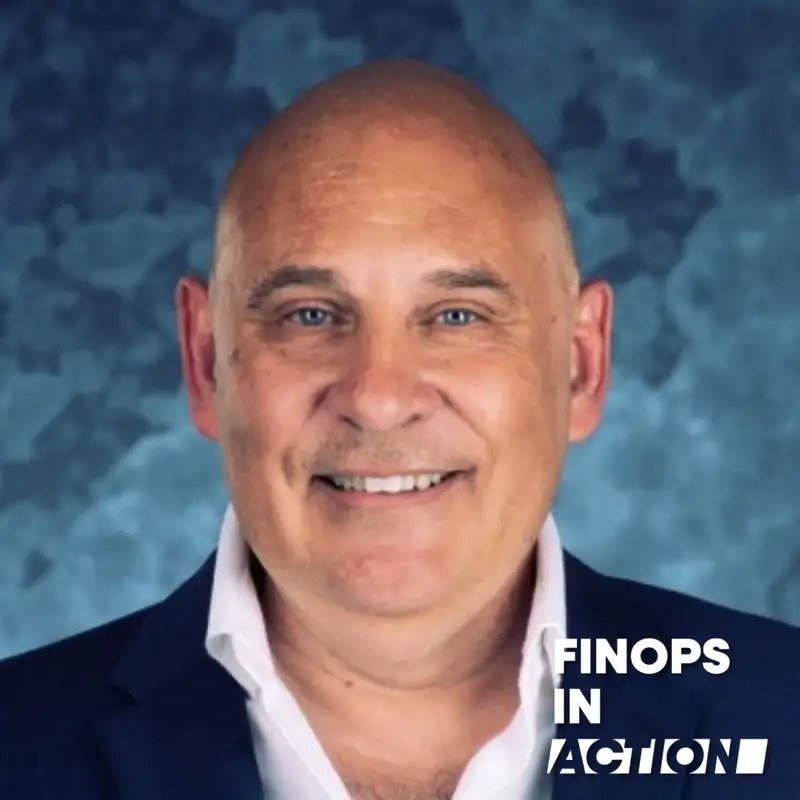
After that, he became a FinOps leader at RGA. So this person has done it all, FinOps all around. I'm happy to welcome Cloud FinOps Manager at IAG Hotels and Resorts, Rick Triana. Rick, what's up?
Rick Triana: I am happy to be here Alon and share whatever knowledge I can have with our broader community and lift all boats.
Alon Arvatz: It's definitely about time. I've been waiting for that for a long time, as You know. And Rick, since you've done it all, let's get back to the beginning and please share with us what is the one thing you actually got wrong when you started your FinOps career. Okay.
Rick Triana: I, as you've mentioned, I started my FinOps career in 2017 at a WSI was already at AWS for two years doing mostly cyber related work as a consultant, as typically is the case. I stumbled upon FinOps. When I became a tam. I heard they had a [00:02:00] technical field community called cost optimization, uh, tams. So I, I joined the community. The one thing that I got wrong from the beginning, which I think most people who get into FinOps probably experience the same thing, is I thought that, FinOps was all about saving money. Yes, it's a part of FinOps, but it's such a small part of FinOps, and if that's your focus is just saving money. I think you missed the big
picture Because the big picture of FinOps is maximizing the value of whatever you spend in the cloud to get the business results that you need. FinOps means you spend more money if you improve your customer experience. By, uh, reconfiguring your application and introducing additional resources, now you get more business derived from whatever you configured and increase your spend. [00:03:00] is also FinOps, so it's really about your cloud. Achieve. It's about cost efficiency. It's about maximizing the value of your cloud expenditures. That's what FinOps is, and that is what I got wrong. 'cause everything I saw in the beginning was how do we save money? And it's such a little part of FinOps.
Alon Arvatz: Absolutely, and actually really curious to hear your thought, because what I see in the market is that typically when people start their FinOps square, they really focus on saving money, like you said, with mostly with commitments and low hanging fruits of user optimization. Then they mature into looking.
More broadly into the business value you get out of your cloud or your IT expenditure. But what I see next is sometimes when you finish with all the dashboards to help you understand the value, you go back to usage optimization to do the [00:04:00] harder parts of usage optimization with the engagement with engineers and the deeper types of waste.
Do you see the same maturity process with different FinOps teams around the world?
Rick Triana: That is absolutely correct. What is funny is. only do you mature your practice, you mature yourself with the, uh, crawl, walk, run, maturity level. Uh, you go through it applies to you in your own career development in FinOps. So, uh, yes, you start with waste reduction. Typically you find, uh, probably some. Basic, uh, ri savings plans. However, I interviewed 18 people this year for, uh, for a position that we had open for someone who was leaving. Um, and he was a senior person, so I was looking for his senior talent. And when I went was interviewing people, I asked the what? [00:05:00] Atypical or something beyond uh, right.
sizing and savings plans. And many of the candidates really couldn't articulate a good answer besides, uh, You know, savings plans and our eyes and right sizing. And that tells me that they are brand new practitioner into FinOps. And I needed to backfill a person who was really seasoned. So you do go through the maturity stages of things.
You start learning that. Uh, dashboard and reporting starts driving behavior and any FinOps tool should have dashboarding and reporting. Otherwise, they shouldn't be in the business of selling a FinOps solution. uh, the purpose of that is to start the business teams and business units under expenditure.
It will drive some behavior. It is a very good thing, however. What you want to, that's Showback in my mind. What you want to have is [00:06:00] chargeback, and that will drive accountability because if you're now paying for the bill and your profit and loss of your business, it is gonna drive significant amount of behavior, and that's also part of crawl, walk, and run.
People usually start showback, but as you move along. You start, uh, looking at things like KPIs, operational KPIs, gigabytes, dollars per gigabyte stored, or however many invocations of a function is costing. But you really want to get to unit economics, which is. Whatever your business model is, whatever that is that you're providing to a client, a, a seat on an airplane, a ride on a Uber, whatever your business model, you want to translate it to how much cloud cost is per your customer. That is FinOps Nirvana. Now, you don't get there overnight. You have to go through all these other things, crawl, walk, and run, and continually iterate to get
Alon Arvatz: Yeah.
Rick Triana: [00:07:00] Also. What it really marks a run stage company is what preventative proactive FinOps governance mechanisms they have in place. Because the best time to catch waste and inefficiency is when you first launch a resource, you should launch it with cost optimization and efficiency in mind. You capture every penny for every second. That, resource was created and launched, and that is Nirvana. But to get there, you gotta grow personally and organizationally through crawl, crawl, walk, and run. To get to that point of, uh, what I would call FinOps nirvana.
Alon Arvatz: Yes, and I actually have to get back to the beginning of what you said, where you said that you not only mature your program, you also mature as a person. And I feel that like [00:08:00] when you go through the FinOps maturity process, you also learn. How to be a leader. So Alon of people, they became suddenly managers and they can start, tell people what to do and people would do it because they're their managers, not because they were able to motivate them, not because they were able to explain to them the why they're doing things, not because they got them excited.
And I feel like as FinOps person, you have to drive action. You have to lead a cultural change. Without the authority where people have to listen to you, so you really evolve your leadership skills. Did you feel the same? Like the more you matured your FinOps program, the more you became a better leader?
Rick Triana: Uh, that is correct. Um, that's a really great point you raised. one, I'm very aware that I have manager of my title. I'm a cloud FinOps manager. However, ha I make a distinction between a leader and a [00:09:00] manager. You know, a manager really should manage things. Leaders, lead people, and if you wanna be successful in FinOps, and this is particularly useful advice for brand new practitioners into this space, is besides the technical skills, you do need Alon of those soft skills. What we do, in many cases, we cannot directly action on recommendations. We provide them to business units. We assist and guide them. Many cases, we'll help 'em do that, but usually what we're doing is influence. So how do we learn to influence a soft skill? Communications, I don't care how well you communicate, you can improve upon your communication skills. So. If you do a great job of communicating. You will influence, better people are more apt to take your recommendations. The other thing that is related to communications, it's a [00:10:00] soft skill that every practitioner should have is, uh, conflict management or conflict resolution skills. Because as we know, we're all individuals.
We have different points of views and conflict is inevitable. And there are five or six strategies to conflict resolution. One of them is avoidance, which only maybe works 20% of the time, and it usually doesn't work too well, and it makes conflict go worse sometimes. Avoiding conflict is the best approach. if you do a great job of communicating, probably will reduce the need for conflict resolution skill, basically. The bottom line, you need to speak the language of the other person. if two people don't understand each other, it's not the other party's problem, it's your problem. You are not communicating in the language of the other person to [00:11:00] understand the point that you're conveying.
It's on you. It's not on the other person. The failure to communicate. Is in the mirror, it's yourself. So you have to strive to be able to communicate your ideas. You need to, uh, people wanna do a good job.
Alon Arvatz: Mm-hmm.
Rick Triana: They don't wanna not do a good job. when someone is not being cooperative. It's really upon you to understand why maybe they don't have the skills.
Maybe they don't understand the ask. Maybe they need help. Maybe they're not the right person. Maybe it should be another person on their team that can action on it. That's all part of communications and conflict resolution, and those are the soft skills that you need as a new practitioner not, it actually is for every aspect of business and technical. You want to have a great career over 30 or 40 years, learn to communicate and learn to resolve conflict. Oh, do I get you further than [00:12:00] any technical skills you can acquire?
Alon Arvatz: Interesting.
Rick Triana: What do you think about that? I'm curious about your thoughts on it.
Alon Arvatz: So I a hundred, a hundred percent agree. I think it's even more. I think that by design you have a different perspective and typically different background than engineers, for example. So if you want them to take action, you gotta get into their shoes. Not only speak their language, but more deeply understand their motivations.
Rick Triana: Correct.
Alon Arvatz: Work out of that because not only go to them and speak the technical language of, Hey, I look at this resource and these are the usage and performance metrics. And that's why I believe we can check which is the, the technical language, which is great. I think it's a good start. But you also need to understand, for example, that an engineer, he needs to balance delivery and performance.
And security and quality and efficiency is another aspect. Now you put in this plate, [00:13:00] and for example, engineers, however they like things that make them learn. They like things that help them progress their careers. And when you frame things as, hey, if you wanna be top, top, top engineer, you have to understand efficiency very deeply.
Then you start not only talking his language, but also talking to his inner motivations. So I, I think what you said is accurate across the board, not only for with engineers, also with executives, with finance, procurement, everyone, but it's definitely also very important with engineers.
Rick Triana: I think you absolutely nailed it. only thing I I could say is basically human nature is people don't care what You know until they know that you care
Alon Arvatz: Yeah,
Rick Triana: and until you care about what they care about and their personal motivations, it is really not gonna go far. So people don't care what You know until they know that you care.
Alon Arvatz: absolutely. [00:14:00] And let's try to dive a bit deeper into cost optimization. You talked in the beginning about starting with cost optimization and. Moving to business value, getting to the nirvana of efficiency by design. And I'm curious, Rick, I know you have Alon of thoughts about it, but first of all, how much time do you spend today on cost optimization?
So like you have a pretty mature FinOps organization, how much time still goes on optimization?
Rick Triana: Really 20 to 25% of the time tops. When, and it really depends on when your maturity level is, right? So when you're a very immature company starting out in FinOps, you do wanna prove yourself, show value to management, and what does that look like? That looks like. Basic waste reduction of finding idle and orphaned resources is saving money that way.
So we're back to saving money, which isn't really the value of FinOps, uh, you need to start somewhere and that's where you start to start showing [00:15:00] value. You might be buying some basic ris. you do also need to have maturity in buying commitments in our eyes because you can over commit. And you don't want to do that. And I've seen mistakes made by people where they wanna hit home runs, they wanna buy three year, uh, all upfront payments because their max, they're getting the greatest discount in their mind. Now they over purchase or they need to switch instance type because they were running a workload on one type where it's more appropriate to run on another type.
But now you're, you're stuck in a instance type RI or savings plan. So you need to mature those things. So you want to buy some basic ROIs. You don't wanna overdo it. You're, it's better to buy many small. Increments of ris a savings plan than one large
Alon Arvatz: Yeah.
Rick Triana: ' cause if you're buying one large one, you're gonna probably make a [00:16:00] mistake. So most of my time is not really, um, in cost optimization or rate optimization. Most of my time is around planning, recommendations that we do have, uh, increasing FinOps adoption. Blowing apart myths of, of, uh, FinOps one, which we already covered, that FinOps is about savings
Alon Arvatz: Yeah,
Rick Triana: Uh, that's probably the biggest, uh, myth that we in this field need to blow away, is that FinOps is about just about saving money.
No, it's not.
Alon Arvatz: absolutely. Absolutely. And. Around cost optimization. There is always, actually one thing I wanted to ask you for a while, Rick, because I think, or I believe I heard in the past saying you're not believing in easy to Right. sizing, maybe I heard you saying even that it's nonsense. So, uh, obviously you are, [00:17:00] you're, you think that phs more the cost optimization, but I wanna for one second hear your thoughts around that.
Rick Triana: Well, Corey Quinn in 2019 wrote a blog post, uh, and this is early in my FinOps career when I read it. Where I was a little bit more focused on optimization and it was a very, it was entitled EC2, right? sizing is nonsense. So I read his blog posts and was very interesting, of which I probably agree with about 90% of his blog posts. I also read. People that were refuting his point of view on Reddit. It was very interesting. I went and Reddit and I would look for articles refuting his point of view, so I understand both sides. So the problem with EC2, right sizing, it's very risky. It's a lot of effort. if you look at tools, tools are great at generating right sizing opportunities.
I go into any FinOps tool, it'll generate 1,237 right sizing opportunities when I go through all of them. [00:18:00] I probably have less than 150 real right sizing opportunities. So if you start bringing Alon of bad recommendations to engineers, you're gonna lose trust and they're not gonna stop listening to you. You brought me 800 recommendations that were all no good, right? So what should we do about EC2? Right? Easy. It is mostly nonsense, but there is targeted approaches to right sizing if it's truly over provisioned. If the team didn't overprovision it for end of month or uh, end of quarter. 'cause they understand their seasonality.
Yeah. Well you may wanna rightsize it, but before you rightsize it, there's three or four things you should do. One is, first of all, are you right running on the right instance? Family, have seen where people are running a memory optimized workload and they're using an M or a c. Uh, why are you using an M or CAWS census type? [00:19:00] And, You know, the same could be said about Azure and GCP. Uh, although I'm in the AWS space and I'm specific to that, it's the same problem everywhere. So you should determine is the intensive use of resources in your workload. Is it memory? Is it compute? Maybe the first thing you should do is select the right instance family. Once you've done that. You have architectural choices, right? Do you really need to run Intel? Maybe you could run Graviton. Maybe you could run a MD just running on the same instance. Family and size on Graviton or a MD will save you anywhere from 10 to 30%. And the newer versions of a MD is also more performant. So Graviton has always been more performant. now you've done that, you, you've looked at your workload, picked the right mem, family size. Uh, in an instance, family, [00:20:00] and maybe you switch architecture, maybe not, maybe you stay in Intel, but because there are reasons you may have to stay in Intel, but most of the time you could probably switch to Graviton or a MD after that. Run it for a while, two, three weeks, a month, right? See what your performance is in CloudWatch or whatever. now if you're truly over provisioned. Okay, maybe you should go down one instance size. When you go down down one instance size, you take your resources and cut it in half. You also take your, you pay for that resource and you cut it in half.
When you go up a size, you double your resources and double what you pay, but you gotta make sure that you're not cutting it in half to the point that on a, on a peak period. You have performance issue, reliability issues. This is why certain engineers do overprovision. Yeah. You know, [00:21:00] it's, uh, and then the other thing you may wanna look at can, you can use scaling groups, right?
Because you can get over that part about over provisioning. If you have a distributed, uh, amount of EC2 instances, you should all these things before you're right size. when, uh, I'm interviewing people and all they're telling me is right sizing savings plans, I'm like, person is fairly new in the industry.
Alon Arvatz: Yes, yes. That's a good sign and thank you really. Nailed it and what you talked about around this is the right sizing and the challenges around that really curled with with a thing I'm trying to tell the industry for a while, and that is, You know what, something that is considered basic doesn't mean, gives you better outcomes, or it doesn't mean that it's easier to resolve.
So. Easy to right. sizing is considered probably the most basic inefficiency you can find, find in your cloud environment, but it's among the hardest to resolve [00:22:00] actually in modern environments where there are Alon of managed services, there are tons of configurations that are very hard to detect because you need to do all the math around the user, historical user patterns and what is better to configure.
But changing the configuration is extremely easy. You know, turning on intelligent tiering, moving from standard to io optimize. So moving between different modes of managed services. Extremely easy to resolve. It's not that easy to find, by the way, you need Alon of complicated math, but it's extremely easy to resolve.
So the fact that something is very basic doesn't mean it's easier. I also think that because a cloud infrastructure started with compute. Compute Alon of the waste. There is either resources and under utilization. Then it became like the basic, but modern architectures where you have Alon of storage and networking and managed services, [00:23:00] things look different from inefficiency and the low hanging fruit are also different than what we had 10 years ago.
Rick Triana: finding recommendations is easy. about any tool can find you recommendations. The problem is you need to access, assess the level of risk, the level of effort action on that recommendation, and how much value you're going to get from actioning on it. So what I do when I have a pile of recommendations is I, I, uh, I give it a score. I weight the score. It's, I basically, my formula is value times effort, times risk, and I weight value higher than I do risk. I give it more points than I do risk and effort. So something high value gets five points, medium value gets three points. Low [00:24:00] value gets one point value is not necessarily dollars. You can apply this to. Uh, things like adopting FinOps or skills enablement or anything. So it doesn't necessarily need to be monetary, uh, then I access level of risk. Now, when level of risk, I do it different. I give, if your risk is low your effort is low, I give you three points. it's medium, I give you two. If it's, uh, risk and high effort, I only give you. Uh, one point. So if it's low, You know, low risk. Three points, right? Low effort, three points, high value. You have 45 points there. So what I do is now I, um, I also use a little bit of judgment. Sometimes I do shift things around, but most of the time I order my, uh, my priorities or recommendations that I usually have too many. I have not enough [00:25:00] people, which is a perennial problem in FinOps, so, uh, that's how I order and prioritize my, uh, huge list of priorities. Or what I call my FinOps equivalent to my wife's honey. Do list of things to do.
Alon Arvatz: Yes. And that is actually an amazing framework that I love, and I particularly love the fact that you, you're not only adding monetary value, but also upskilling and maybe awareness value as well, because something you wanna push for a certain optimization, so your team will be more proficient in this type of inefficiency and maybe can prevent it in the future.
a pretty cool, yeah.
Rick Triana: value, I mean, you could calculate value if it's monetary, but there's some things that on face value is very, very valuable, but it's very hard to calculate, like how do you calculate taking an entire team from [00:26:00] lowen ops maturity. Too high FinOps maturity. there's ways to calculate it. You have no one certified and now you have half your team, uh, practitioner certified and the other half professional certified, and maybe next year you wanna make everyone professional. So you could, but there's no dollar value associated with it. Uh, I mean, I guess there is, you gotta spend money on courses and stuff like that, but it's really about. The value you derived from whatever task or initiative you're undertaking, high value stuff versus low. So I wanna prioritize all my high value stuff that has the least amount of risk and least amount of effort. And then once I've exhausted all that, I move to medium risk and medium effort. And then, and You know what that does?
It elevates. Your capabilities and your skills and your assessment and the ability to look at understand things. So now, now you [00:27:00] just, uh, crawl, walked, and run your way into being able to deal with high risk, high effort activities. 'cause you have all this experience from dealing with low and medium risk and effort. that's why you should pursue it that way. I mean, that's my approach. I
Alon Arvatz: Nice.
Rick Triana: I'm open to others.
Alon Arvatz: I, I actually, I actually love it and I heard similar approaches and typically it calls with a very mature program. So I think it's absolutely great. And today you manage it like in, in a spreadsheet that is being maintained by your team, basically?
Rick Triana: Uh, I do this in a spreadsheet. I like to do this in Power
Alon Arvatz: Hmm.
Rick Triana: but I, at Amazon, we used to have a leadership principle called Bias for Action.
Alon Arvatz: Yeah.
Rick Triana: perfect is the enemy of good. me a good plan today, a perfect plan two weeks from now. Because most decisions, in Amazon, they also talked about one way and two way doors.
[00:28:00] So, a one-way door is a decision that you make that you cannot, uh, retreat or go back. It's, it's, uh, you're committed. And, uh, there's just no way back. You've, you've taken a decision. It's a one-way door. most decisions are two-way doors. You could try something, it fails. You could go back out the door, you came in and, uh, You know, the, it's not a fatal decision,
Alon Arvatz: Yes.
Rick Triana: so. When you're planning for things, uh, I don't need a perfect plan today. First of all, if you wait for perfect information, you're never gonna, uh, get it. Uh, or you're gonna wait six months to get perfect information, right? I need the best information right now to be able to make a decision right now. Two weeks from now, I get more additional information. Well then. I could change my decision or modify it or improve upon it or iterate on it. [00:29:00] Amazon called us Bias for action, and I do exercise bias for action. And it is taking calculated risks. So it's also, how much level of risk you're willing to undertake, but it really all fits in because you gotta start somewhere and everything you do in life is a risk.
Getting out of bed in the morning is a risk, right? Crossing the street, not getting hit by a bus is risks, You know? So, uh, you gotta start somewhere. You start where you are. calculated risks, uh, that are two-way doors and not fatal risks?
Alon Arvatz: Yes, absolutely. I think that was also decision making by ge, uh, Jeff Bezos, uh, 1 0 1. That. That's also his approach. Right.
Rick Triana: Yes.
Alon Arvatz: And Rick, maybe one last question. You mentioned earlier that you interviewed over 18 people in the past year and already [00:30:00] gave us a tip on how to identify FENOs people without much experience.
Can you give us some more tips on interviewing and finding the best fitness practitioners out there?
Rick Triana: I.
Alon Arvatz: I.
Rick Triana: do that. However, I think might be valuable in talking to the practitioners who may see this, who wanna up their game, So we talked about soft skills, right? Communication skills, conflict resolution skills, persuasion skills, presentation skills. Right? Then there are technical skills, right, which is you really under need to understand if you want to talk the language of engineers, the technology. And for most FinOps people, uh, a basic Azure fundamentals or AWS cloud practitioner is, is, is probably sufficient. You wanna go a little further. You do the associate level, or maybe even professional, but you don't need nine or 12 certifications. You just don't. [00:31:00] Why is because when you need, when you're talking to engineers, you need to understand the technology, right? Uh, need to have business skills 'cause you need to assess level of effort and level of risk Uh, presentation skills. It's good that if You know PowerPoint, 'cause even in corporations today. You do unfortunately still present a lot in PowerPoint. able, nobody wants to see a slide with 15 points in nine point fonts, right? You need to be able to convey it with three to five each slide, three to five bullets, maximum probably five or to seven words on a bullet maximum. Throw in a few interesting graphics to be able to have a hook and capture people. So some presentation skills. Uh. There's a lot of resources out there to really learn about the technical aspects of FinOps. One of my favorites is the hub cost efficiency hub [00:32:00] So I know I'm doing a plug right here and uh, I can tell you where to send a check later, but what I love about it is I go there. I'm curious about finding some additional optimization opportunities or techniques that I don't know.
I've been doing this for seven, years. I still find new things I didn't know about yesterday. One of the ways I do that, I go into the cost efficiency hub and I search on the provider, which you cover, AWS Azure, uh, GCP, Kubernetes, and I think other things too, right
Alon Arvatz: Yes.
Rick Triana: your
Alon Arvatz: Snowflake, Databricks. Yes. Many other
Rick Triana: Yeah.
And then I look for things that I'm not really well versed in, and I find techniques. And then I, I found a, uh, orphan SageMaker
Alon Arvatz: nice.
Rick Triana: a failed Experian, and it was an A POC in a region that we didn't use, and that orphan sage maker was costing the company over 3000 a month since [00:33:00] 2021. So you do the math, that's over a hundred thousand dollars on an orphan
resource, right? So that's a, that's a FinOps person's, uh, salary, uh, that you could save just on one action. Uh, so I find things there. Another resource I like Alon, if you search, uh, A-W-S-C-F-M, which is an acronym for Cloud Financial Management. which is technical implementation playbooks or A-W-S-C-C-F-M tips playbook. it's very similar to 0.5. It gives you Alon of best practices also around cultural adoption, uh, about, uh, very basic things you should do. But it gives you a lot of, uh, techniques for finding how to optimize resources. Between, though, I call it encyclopedias, FinOps. Actually, I did a LinkedIn post one time. Um. know, with, uh, an encyclopedia set of [00:34:00] FinOps, multiple volumes. Uh, I play around a little bit with, uh, generative AI and Gemini, and I says, yeah, I need a FinOps Encyclopedia created a nice image for it, but it is a, an encyclopedia of knowledge that you could go in and dive deep and find things there that you didn't know about You. There's, when I started at AWS, it was only 50 something services. If you now run the, uh, command to see how many services, it's over 400 services. I remember when I first started, I tried to learn all 50. Impossible task. I couldn't learn all 50. there's no way you're gonna know 400 services and probably three years from now, AWS will have 800 services. So there's no way you're gonna know
all
Alon Arvatz: Yes.
Rick Triana: so what you need to be is really good at investigation, finding things, curiosity. It's another leadership principle at AWS is being learn and be curious. Um, I have a lot of knowledge in this area. I don't know [00:35:00] any everything, and I'm still learning, and I'm curious.
I learn something every day, which is why I follow several, uh, blog posts. Uh, I follow yours. I follow some of the other popular ones that we see out there. I'm always on LinkedIn looking for new information and just stay, learn and be curious. Start somewhere. Do your, uh, crawl, walk, and run on your own personal development, and then you could have a fantastic career in FinOps.
It's very rewarding. It's much more rewarding. I found cybersecurity rewarding, but I found this more rewarding,
Alon Arvatz: I agree.
I agree.
Rick Triana: And so I,
it's,
Alon Arvatz: Yes.
Rick Triana: passionate
about
Alon Arvatz: Yes, me too. And
Rick Triana: that out
Alon Arvatz: me too. And I made, I'm made the same transition from security to FinOps, so I a hundred percent agree. And
Rick Triana: you wrote a
book.
Alon Arvatz: I also wrote a book about cybersecurity. That's right. Um, And so
Rick Triana: it
Alon Arvatz: Yeah. still very passionate on what I do today. Maybe, probably Alon more, let's put it this way. [00:36:00] And I think that's also
Rick Triana: FinOps.
Alon Arvatz: FinOps. Yes. Yes.
Rick Triana: Yeah,
Alon Arvatz: I think that is actually a great way to wrap our FinOps conversation with your amazing tips on how to grow as a practitioner and leader and in general. I really appreciate everything you share, how you get more maturity, but you're not going anywhere. Rick, before we'll learn more about you on the personal level.
So first of all, I know you today live in, in Pennsylvania, but originally you are from New Jersey, right?
Rick Triana: and raised in New Jersey. Lived in three or four towns in New Jersey. Bergen in Hudson County most of the time. Uh, moved to Pennsylvania to escape New Jersey taxes. Didn't realize that taxes are gonna catch up in Pennsylvania too. But, uh, You know, I have a lot more land. I had a house built in Pennsylvania, which I really like.
Uh, the snow is starting to kill
Alon Arvatz: Yeah.
Rick Triana: [00:37:00] So, uh, we are getting Alon of snow and ice. And my, uh, dry boy right now is, uh, ice skating rink. Not by design, but because of the weather.
Alon Arvatz: Yeah.
Rick Triana: But,
uh, yeah, I love it out here. I love nature. Uh, there's a menagerie of white life outside my window all the time of everything.
I see, uh, foxes and coyotes and bears and deer. I got sometimes like 15, 20 deer in my front yard. Very interesting.
Alon Arvatz: Yeah. And I think you don't live too far from the Poconos, right?
Rick Triana: I am
into
Alon Arvatz: You're in the.
Rick Triana: I am. Yeah. Yeah. And where I built the house, I'm surrounded on three sides by thousands of acres of forests, which is why I, it's like, uh, have, I, it's like I live in a zoo. I have all this wildlife outside, but when I'm not, I love the mountains and I love to hike. I used to be a scoutmaster and I used to hike with the Boy Scouts.
Uh, but I also liked the ocean. [00:38:00] I used to be a scuba diver. As usual, I have something wrong with me, really something wrong. Whatever I get into, I have to master as a subject. So becoming a basis scuba diver was not enough. I became an advanced diver, then a rescue diver, then a master scuba diver. um, and then once I master subjects, I kind of start losing interest and move on to the next subject. So I did that with photography. I've done that with so many different things. Uh, but You know what, it is really about. It's really about learning and being curious and it's being able to, um, something intrinsic about being able to dominate or master a body of knowledge.
It doesn't matter what it is. If you talk to me six months from now, I probably have another hobby.
Alon Arvatz: Yes, absolutely.
Rick Triana: But anyway. What are you into now? I would like to know a little bit personally about what, when you're not doing
Alon Arvatz: Well, I'm not,
Rick Triana: is it that you're doing?
Alon Arvatz: wow. Not, [00:39:00] not, not enough stuff I have to say. I
Rick Triana: 'cause you're a
Alon Arvatz: Yeah, that's true. That's true. And I'm fun and I have a team in the US so I also need to work nights, but I, I do swim like twice a week, something that I really, really like to do. And I like to play chess, although.
Rick Triana: Okay.
Alon Arvatz: Recently I didn't play much, honestly.
I need to get back to, that's something I really love since I was really real little, since I was in elementary school, I was playing chess. Um, and I'm also studying, uh, like Judaic studies. Uh, so that's also something I'm trying to do a few times a day. So I think that with family, with being a founder, definitely fill ups my time.
Rick Triana: Yes. 'cause you're an
entrepreneur. Now one thing though is, uh, you probably know this anyway, but I'll tell you as, uh, as a personal friend, 'cause I feel that we've gone beyond colleagues to developing a friendship here is that you do need to make time for yourself and family. Um, it's [00:40:00] not all about work.
Uh, it's, uh. My father told me a piece of advice before he passed away, that he enjoyed life and that he only wishes for me that I enjoy life. And life is too short. And before You know it, you're an old guy like me. 'cause you're a young guy And you're gonna say, where did the time go? I was building a company and I'm an old
guy. So, uh, so enjoy chess, enjoy your children. 'cause I you have several children, if I
remember how many children you have.
Alon Arvatz: Yes, I
have four. I have four.
Rick Triana: You're, one better than I, I have, uh, three children and I got, uh, six pets in the
Alon Arvatz: Wow, that's great.
Rick Triana: yeah.
Yeah.
Alon Arvatz: Awesome.
Rick Triana: so, so find time to enjoy life. Uh, even if you have to schedule it, just block out time and do things that you're passionate about that are outside of work.
Alon Arvatz: That's,
Rick Triana: And I understand you're, you own a
Alon Arvatz: yeah. Yeah. No, but that's A very important reminder for myself. So,
Rick Triana: Yeah. Yeah.
Alon Arvatz: I [00:41:00] will start putting more focus on that. Rick, thank you for joining. I'm sure Alon of people would love to reach out and learn more from you. What is the best way to contact you?
Rick Triana: Best way to contact me is on LinkedIn. You could find me as Ricardo Triana on LinkedIn. I post Alon. It won't be hard to find me. also, uh, I am a mentor in the FinOps space. I do have a mentee right now that I'm working with. probably could probably work with another mentee, but then I'll, if I take on more than two people, I'll probably, uh, it will, You know, I'll run outta work time, uh, that I need
Alon Arvatz: Yeah.
Rick Triana: dedicate
to, but is the best way to reach out to me.
Uh, just find me on
Alon Arvatz: Okay. LinkedIn, it is. And thank you for the openness to help and support to the community. I really enjoyed our conversation, Rick. Um, I. Really loved your framework for prioritize, prioritizing, recommendation. I [00:42:00] think it's really, really good and practical, and I hope many for our listeners will adopt it.
And in general, all the insights you shared around how you can become more mature and progress your FinOps career. So thank you very much for joining us.
Rick Triana: It was a great time. I can't believe how time flew. I also enjoyed myself. I look forward to doing this again with you on some other topics that maybe the community may
find
Alon Arvatz: Yes, maybe.
Rick Triana: and, and, community out there. Feel free to suggest I'm LinkedIn to either along or myself.
Alon Arvatz: absolutely. And maybe one day you'll have your own podcast and then you'll invite me to be your guest.
Rick Triana: Uh, I am working on it.
Alon Arvatz: Cool. So thank you Rick. Thanks our listeners for joining us once again. As always, don't forget to tell your friends about pH in action. I'm sure they will also gain Alon of value from the podcast and our amazing guests. Rick, thank you again. This will be another exciting, fascinating, fun, [00:43:00] fast episode of FinOps in action.
Hope to see you all next time.
Outro: That wraps up another episode of FinOps in Action. Thank you for joining. For show notes and more, please visit FinOps in action.com. This show is brought to you by 0.5, empowering teams to optimize cloud costs with tip detection and remediation tools that drive action.
Creators and Guests