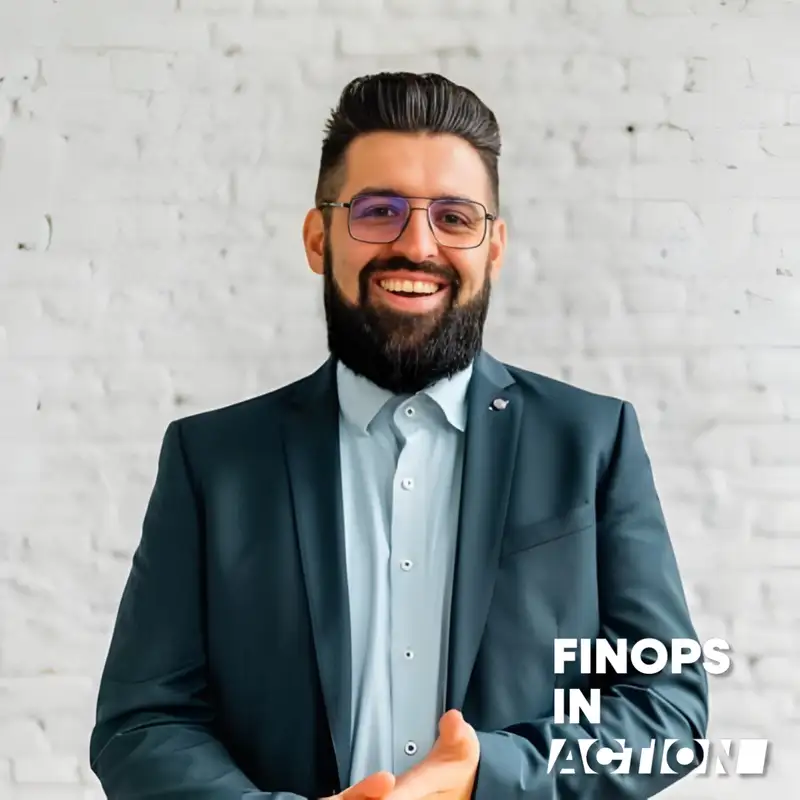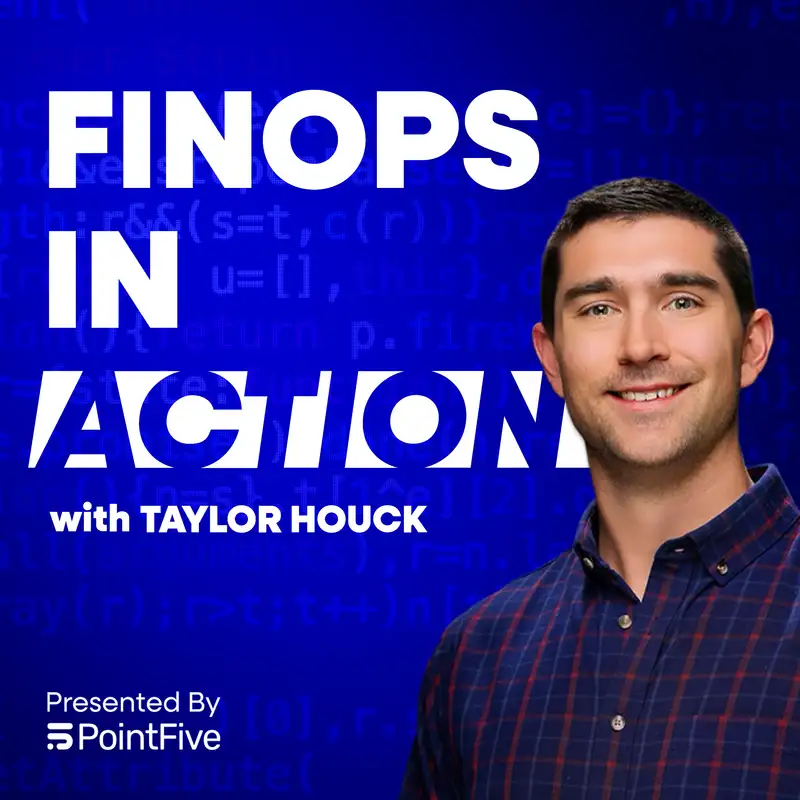
Why Cloud Visibility Is the Foundation of FinOps ft. Stijn Depril, Euroclear | Ep #61
FIA - Stijn Depril
===
Stijn Depril: [00:00:00] flying blind is not the best approach to run your FinOps practice. But of course if you don't have the governance in place to, to, to, to steer your engineers towards a better place and optimized place.
You're basically dead in the water.
You, you can't really move any anymore because your, your engineers don't have the mindset of being cost aware, so they will not proactively look for optimizations.
Intro: Welcome to FinOps in Action. I'm your host, Taylor Houck. Each week I'll sit down with FinOps experts to explore the toughest challenges between FinOps and engineering. This show is brought to you by 0.5, empowering teams to optimize cloud costs with deep detection and remediation tools that actually drive action.
Taylor Houck: Hello, and welcome to another episode of FinOps in Action. I am really excited for this episode because today's guest brings a perspective that we haven't had on the show before. an entrepreneur and a FinOps practitioner who's [00:01:00] built cloud financial management practices across multiple industries and countries. started his career in IT infrastructure, spent years as a
VMware of a archite, and then
had a moment that changed his trajectory.
he walked,
companies
abandon the cloud, now has the technology.
failed, but
The money didn't work that
sent
down the,
FinOps path,
and he hasn't looked back today. He a FinOps,
at Euroclear,
one of the world's largest.
Financial market infrastructure companies.
He's also the.
co-founder of Cora, of FinOps as a service provider and a founding contributor to the cloud efficiency hub.
Welcome to the,
Stijn Depril.
Stijn Depril: Hey Taylor. Thanks for having me
Taylor Houck: Absolutely, Stijn, I'm super excited to get into this conversation with you. You know, just looking back over your experience, you've done FinOps at
Stijn Depril: a
lot.
Taylor Houck: of different places as [00:02:00] an internal, You know, practitioner to a consultant, to, You know, someone that is working alongside, You know, teams that are developing FinOps practices from the ground up. Take me back to the early days of your FinOps journey, right? I kind of alluded to it in the intro,
Stijn Depril: was crazy for me. That was the, that was my aha moment on FinOps, to be honest. And so I wasn't, as you said, a VMware architect for, for, for about 20 years or so, and VMware was at that moment in time. Like the, the, the golden thread to my career is like, okay, this will last for a long, long time. However, at one moment in time I was, uh, I was working for an insurance company.
Through, through VMware, um, because VMware has followed a, a nice opportunity for them because the customer decided to turn back from the clouds saying, we, we, we can't pay for this. It's impossible to pay for this at the rate that we are going at this point. And the customer decided we will go to Azure at that moment in time.
But it, it, it, the story would be [00:03:00] AWS or Google doesn't matter. I think they just agreed they would go to clouds, but they didn't take the financials into account. And for me, that wasn't, that was, that was the, the moment, the aha moment that I said, okay, this is what's missing. In so many cloud journeys, we, we, we talk about technology all day long, especially when you're working, for example, for VMware.
You, you are an, basically an infrastructure company. You're, you're, you're talking about the private cloud And so on, and actually you're talking technology, but in essence, the money part is where, where which, which really is the oil in the machine because in the, the oil in the machine is the, is the, is the most important piece.
So what I, what I, at that moment in time, I, I. I reflected and I said, okay, the, the CFO, at that moment in time, he should have like a, a big red button on his desk saying, oh, no, no, I'm going to press this now and I'm going to stop this journey now because this is just not, not going to happen. And um, and that's for me, the moment that I, that I said, okay, this is, [00:04:00] this is, this is the missing puzzle piece.
And it is, it's until today it is. So it's a, it's a, it was a good start to, to be honest. Uh.
Taylor Houck: So take me back to, to that moment early on in your journey. Do you view it as a financial problem or an engineering problem?
Stijn Depril: Well, honestly, honestly, there, there, I was still in the, in the VMware day, so I I, I was, I was too far from the, from the, the cloud journey there. But I, I, I think it's a bit of both. Uh, I think that they, they, they moved, they moved to the cloud. Maybe a bit eyes closed, saying, okay, oh, nice, good story. Let's find an, uh, an, an enterprise agreement with, uh, with those guys.
And let's go, let's go, let's go. Uh, we need to move to cloud because everybody in the industry is doing it. And then what I, what I really feel is that at one moment in time, you get, um, you get, uh, um, the engineering part maybe as well. But of course if you don't have the governance in place to, to, to, to steer your engineers towards a better place and optimized place.[00:05:00]
You're basically dead in the water. You, you can't really move any anymore because your, your engineers don't have the mindset of being cost aware, so they will not proactively look for optimizations. Of course then, then all of a sudden your money thing grows bigger and bigger and bigger and all of a sudden it's getting out of control.
And that's, I think what, what FinOps brings, it brings a controlled growth. Um, and that's what I've seen in many, in many, uh, FinOps practices I built, is you don't take away the growth per se, but you take. You, you, you gain control as a, as a, in AOP practice. You don't, you, you don't give it away, I would say.
And you basically, in many cases, they give away the keys of the, of the, of the, the chest with, with all the gold they give away, which is never a good idea, I think. Um,
Taylor Houck: So now you've spent many years working,
You know,
Stijn Depril: didn't.
Taylor Houck: Across multiple organizations. When you think back on that journey. Where, where does spin ops go? Right? And
Stijn Depril: Where does it go wrong in, [00:06:00] in my view, it goes in, in, in, I mean, if, if it goes right, there is the right push in the organization, which what I mean is that there is good buy-in from a, a management point of view, and then it goes right. Uh, if there is a, if the, if there is the right push, the right, I would say the right light, the right spotlight on FinOps.
Um. Then, then in my view, um, you have a better chance of surviving as a PHS practice because yes, you will go to the clouds and yes, you will be able to, to, to do nice stuff And so on. But the problem is if you don't get the support, and I've seen, I've seen both sides of the coin. I would say, uh, if you don't get the support also as an, as an external, you, you've been put on the sideline and, and, and then you, you see, you see a hole.
Thing working in front of you, saying, okay, I'm on the sideline of like a, a, a soccer field and, and I know how to score the goal. I, I know I [00:07:00] see the ball, I see the, I see the players running around, but I, I, I, they don't kick the ball in the right direction. They, they are unable to progress the game. And they're unable to make an assiStijnt score a goal, but You know exactly if you would be on the field, I kick the ball to the left, to the right, whatever.
And I try to make the goal, and that's where I see many things go wrong. If you are being put on the sideline with the knowledge you have, you, you are unable to make any goals. And that's where I think the buy-in comes in. If you don't have the buy-in from management. You are unable to, to influence the game, basically, which I think is, is super important as an, as an, as a practitioner in general, but also me as a consultant coming in, I, I, I need to be able to influence the game.
I, if I'm being put on the sideline, I can't influence the game. And that's, uh, that's I think super important and. The places where I saw is going very well is in the [00:08:00] places where, where people put, put the execs in a room and say, we will now do FinOps and we will now listen to those guys. And we will try, we will not give them a, a, a blank blank check and go, but we will, we will give them an um.
some sort of mandate in the organization that they can execute on FinOps. And that's the moment you make so much fun. And where you make so much, uh, so much ground and, and you can, you can make so much ground in a couple of months time, but if you don't have the right mandates, you're, you're basically debt and that's, uh, or you don't even come alive because you basically don't, the inception is never happening.
So, uh, that's it.
Taylor Houck: The
The metaphor of being on this side and not being able to impact
game is,
is is such a good one. I'm curious from your,
do do you think that
FinOps should be the pitch?
Kicking the ball towards the goal, or should we be helping as a manager,
Stijn Depril: as a.
Taylor Houck: As a trainer, to [00:09:00] enable players on the field?
In this case, probably the engineers
Stijn Depril: Yeah.
Yeah.
Taylor Houck: score themselves.
Stijn Depril: It's a, it's a super good question, Taylor, and honestly, I, I think. In, in some of the conversations, the pheno needs to be on the pitch in some of the, in some of the places. Why? Because, I mean, it's, it's a bit like, like if you look at the, the framework, it's the crawl, walk, run kind of thing. Right.
And I even add a pre crawl thing when like the little babies is just. Yeah, li lying there all day long. In some cases, you need to show people this is how you do it. This is how you, how you kick the ball into the right direction. And, and if you show it, they say, oh, wow. Yeah, of course. That's, that's, we never thought about to do it in that way.
We, and there is of course, and that may be a side, a sign. There is of course not one single way to do things. There is also, there is. You need to be a bit creative to, to, to, to find the right angle, to, to, to push things forward. [00:10:00] But I mean, then this may be a part of the, of your own mindset as a FinOps, as a FinOps team.
Like you need to explore all the different options to, to, to be able to move forward. So yes, you need to be on the, on the field, but, and that's, that's my personal opinion. FinOps should also be an enabler of things, should not be the ones doing all the work per se. I, I don't believe that we need to do all the work.
Um, you need to give, uh, people the right tools in hands to make their own decisions. Whatever the, whatever the tool, huh?
Taylor Houck: is almost like I'm picturing it as like if you were to look at the stat line at the end of the season, you wanna see FinOps with a lot of assists
Stijn Depril: Exactly.
Taylor Houck: not goals
Stijn Depril: Exactly, exactly. I I don't, I don't need to have all the, all the trophies on my back here. Note, that's not necessary. I, I want the organization and the, the engineers and the, the architects to do the right job for the organization. And that's, I think, super important in, in [00:11:00] many cases. So
Taylor Houck: This
Stijn Depril: interesting though.
Taylor Houck: if you're gonna be on the pitch and you're gonna be doing these assists, you need to have. perspective that is valuable, you need to be adding value to those engineers.
Stijn Depril: Correct
Taylor Houck: to do that, my feeling
Stijn Depril: is,
Taylor Houck: you,
Stijn Depril: you must be
Taylor Houck: to a
certain technical. Yeah.
Now your title at Euroclear is FinOps architect. It's actually not one that I hear so
frequently.
Stijn Depril: you tell me
Taylor Houck: what
Stijn Depril: what does he mean to be
Taylor Houck: a, a,
Stijn Depril: a op?
honestly, if, uh, look at, look at an architect that constructs a house, he doesn't construct a house per se, but he knows how things should be done, right. He, he underStijnds that if, if you put five floors on top of each other, that you cannot make the. The lowest floor, uh, made out of carton because then it would collapse.
Right. So I think that's, that's a bit how I see my role as an, as an architect, is make sure that, that we build some sort of machine, uh, or machinery and it could be different, different machines [00:12:00] that, that, that work together, um, that, that makes, that can support the customer too. To grow on their cloud journey, but make sure that your fin practice doesn't fall apart when, when all of a sudden there is a humongous amount of data coming in, or there is a, a whole lot of, uh, questions on your reporting, or there is, uh, optimizations everywhere and you don't know how to act.
If you're small, you can influence everything, but if you then build it. A machine that is too small, you're unable to, to, to capture the, the journey. Eh, so for me it's always, oh, for example, in my, in my current assignment, that, that it needs to fit the, the size of your customer. And of course if you, if you're a, a super small, super small customer, yes, you can do stuff by hand if you would like to.
Am I a fan of that? No, because you need to scale and whatever the scale will be, but if you're a multimillion kind of consumer, you [00:13:00] cannot keep up with the changes. Uh, so for, uh, just a simple example. For example, the, the putting stuff off in the evening, there is so many ways to turn stuff off in the evening.
You want to keep an Excel list and go over the Excel and turn them off yourself, fine. That's okay. It's a solution to your problem. Will that scale? No. It won't, it won't because tomorrow your cloud environment looks completely different. So will it scale? No. So should you build something for scale? Yes.
Can you do it for five VMs? Of course. Will it be worthy effort? Maybe not. But will it scale to 200 VMs? Yes, of course. And so that, that, that's, I think that's for me the, the having the. The, the view on the technicalities and knowing that these things are, um, are, are potentially, uh, potentially happening and that these things are potentially, um, um, yeah.
Worthwhile putting the effort in, I would say. So that's for me, the architecting piece, making sure that the, there's a house built and not a, a cartoon box or some sort. [00:14:00] Yeah.
Taylor Houck: When you think about building this. House. What do you think are the key pillars? Like how do you build a strong foundation in a FinOps
Stijn Depril: FinOps. It's a, it's an interesting one. Um, I've been thinking about it, been reading on it. Um, it depends a bit from customer to customer. I, I must say, because in some customers they see FinOps as an investment track saying We wanna make sure that we keep control on our, on our, um, on our expense, on cloud expense.
I saw other customers where they say, we need to optimize now. Okay, then, then your talk track is completely different because I mean, in, in the first one, you can, you can look at the budgets, you can look at your forecast, what's going, what's staying, what's what, And so on. We, we could look at that. And then you keep, then you start building control.
You can turn on anomaly alerts on, you work a bit on the optimizations And so on. So there you build control on, on, on the, on what's there. Of course, if your customer comes in and says, Hey, I want to have optimizations now. You need to [00:15:00] prioritize a couple of things. You need to see what you're doing. So you need to have reporting to start with, uh, because otherwise you won't see any optimizations coming in.
Once you have the optimizations, you also need to have a track to execute on those optimizations, because if you don't put it in action, I mean, it's all nice on paper, on a whiteboard, but if you don't, if you're unable to put it in action, then, then, then yeah, you will never be able to optimize stuff. But on the, on the other hand, you also need to, for example, at that moment in time, put the rate optimization strategy.
First, so it's a bit of an, it depends a bit on how your customer and how, how the organization wants to, wants to work, and how they want to, how they want to, um, um, want to approach FinOps. It depends a bit on your, on the question and, and and how to fulfill that, but the, but the framework has all the answers.
I mean, it, it at least has a, has a box where you can start with. So it's a bit of an, I always fall back on the framework saying, Hey. You know, your question fits in this box. Uh, you want to keep controlling your architects, school, architecting for cloud, it's there. [00:16:00] Let's have a conversation with the architects.
You want to have the work with optimization's, have a conversation with your engineers. How are we going to put these in action? And I mean, we can, we can put everything in, into the, into the framework if we would like to. So I think that's, uh, that's something super important for me to, to be able to link back to something because that's, that's your common language at one point.
Taylor Houck: I want to kind of double click on the optimization, When, when you come in and, and someone tells you, Hey, I, I wanna optimize, that's my goal. I need my cost to go down. I'm either in an unsustainable situation or I just wanna be spending less. By the way, this was my experience in the beginning of my FinOps journey.
My company came and they said, we must reduce our cloud costs. It's imperative, it's a company-wide goal steps that you,
you take.
If, if that was your situation.
Stijn Depril: 0.1, I think I would always. Always ask the team and the company that that is asking me that question, is this your only goal? Because it's FinOps is more than only optimizing your workloads. Right? So it's, it's also, uh. [00:17:00] Ingesting a bit of a culture into your, into your company. Um, it's also, uh, making sure that is the right, um, the right process and policies in place to make that happen.
Of course, if you, if you answer that, they will say, yes, them. That's not the right answer. I want optimizations now. And so we, you always need to find, uh, different speeds and, uh, to the answer, I would say, or to the, to the goal. So what I most of the time would do is I would, I would all sit together with the, with, with one of the teams, or I would go into the clouds, uh, the cloud itself and start looking for like the, the, the base optimizations they could already do.
Because if you can start showing that to the, to, to management and to, to, to people in the organization saying, Hey, I found this, and we will now start working on that. I mean. That's all. Um, helping on the optimization journey, I would say. Um, and then we can start talking about, uh, about, Hey, I found this workload optimization.
Let's say, uh, there is a, a couple of unattached disks and [00:18:00] whatever. It doesn't matter on the amounts. That's where the architect picks, picks over or takes over, is yes, you can delete them manually, but what if we would put a policy in place? Which then automates that for you. So you don't need to really look at it.
You just, you, you, we, we just knock a policy. We say, okay, 30 days not, not used. Let's move it to a snapshot and then delete, delete the data, could be the policy. There is many ways to do that. So, um, I think it's, it's always a, a. I want to say yes to my customer, but not always directly. Yes. If that makes sense.
It's, uh, I always wanna make sure the frame is, is, is clear for them. Um, and in many cases, I, I, I heard one of the, one of the, uh, it, uh, it finance. One day she came to me and she said, okay, Stijn, um, you need to save me 500 K next year. I said, okay, cool. So. Is it on top of what we did this year? And she said, no, no, no.
This year is [00:19:00] done. Right. It's like accountancy. They, they just say at the end of the fiscal year, we stopped counting the numbers anymore. I said, yeah, but that's not correct. I mean, you need to think about what we saved you this year. No, no, no. That doesn't count anymore. I said, okay, let's reverse the question.
Let's boomerang the question. If we wouldn't, if we would not optimize this, if we would not turn all that stuff off. Would it still be a cost for you? And then at that moment in time, I saw the finance lady, like, she started to laugh with me because she was like, ah, damn, he, he got me in a very cornered position here because I, I, I can't move.
Yes, it would still be a cost. So it'll always be a saving, right? Ah, yeah. Then it'll also always be a saving. So that's also the optimization part. If you get the question. I mean, I'm not afraid of challenging whoever, it doesn't matter. Hey, if it's a CFO, it's an IT finance or it's whoever you need to. I think you need to challenge everybody because nobody really is a hundred percent, um, doesn't have [00:20:00] all the knowledge I would say.
So I can learn every day from my customers. I can learn every day from the people I work with. So I think that that, that that's part of your journey as well.
Taylor Houck: I've got a question on
this
Stijn Depril: theme.
Taylor Houck: of challenging people and, and bringing up perhaps tough conversations. You know, on the, on the topic of workload optimization, In
2026,
a
a lot of the
the, low hanging fruit is kind
of
taken care of
at
Ian, people are aware.
it,
say,
the cloud native recommendations that come
out. You
yeah,
underutilized VMs, you have your untouched discs, but
You
You know very well there are many other
cloud services that exist
with all these.
Configurations that
could
Yeah.
Correctly placed or incorrectly placed. But when
when you're looking to occupy and you are working with engineers that have
designed and over
time mm-hmm.
and you
you
cut
them
with an insight or a
to make a
make, they don't always
uh,
jump that
at
opportunity
to, to change their architecture [00:21:00] or
It's true. How do you work with them
through
Stijn Depril: It's I mean, I, I wanna reverse it as you say.
Yes. They don't really wanna, not really, but they, they, they might be hesitant to work with you, eh, if you call it like that. However, I'm, I have a strong belief that an engineer. Really wants to do good for his organization. Right. And that, I truly believe that. And I, and, and in every conversation I go in, whatever, whatever people say around me about the person I will have a meeting with, I always assume there is some sort of positive intent where I can can connect with, right.
So. I really believe an engineer wants to do best for his company, but of course, you need to be, you, you need to show a bit on what the potential might be on, on, on making this optimization. And yes, you need to challenge people. I think you need to, you need to, I mean, you need to challenge people and you need to challenge that engineer saying, okay, okay.
You have, you, you build a fantastic, um, application, but let's, let's dive into this. Tell me about this. How, how do you. [00:22:00] Where do you think that is? Low hanging fruit, because in many cases they don't think about the low hanging fruit that you just said. They think about, ah, but we, we do something inside our application and, and that deserves a bit of attention.
So I will put that on my backlog and I will do that next week, which might save you a, I don't know, it might save you 200 euros, but it might save you 2000 as well, or, or whatever at the end of the month. And that's I think where, where, where you can't be arrogant as an, as an as a FinOps practitioner coming in and say, I know everything impossible.
You, you don't, and that, that's a bit of an, uh, you, you, you just come in and you have a conversation with the people and you try to convince them on how they could potentially optimize them. I, I optimize the application and I'm sure somebody that did the application, built the application, took care of it for, for 10 years.
They, they really know inside out where the, where the sharp edges are, but they might not have time for it. [00:23:00] And that's also where the mandate again, comes in and say, if you, for example, talk to that manager's, the, the engineer's manager say, okay, I need to have a conversation with that guy. Can we have some time on his backlog next, next month?
For sure. Yeah, sure. Let's, let's go. Because that manager will get the heat if the, if that application keeps, uh, keeps spending too much money, so at one moment in time, um, the one end connects to the other end, and then you need to, uh, yeah, you, you just need to, yeah, grab the momentum. I would say I.
Taylor Houck: How you started. That answer is perfect. Engineers, they. Mean
So Well,
they want improvements and operational of course,
And and I think that
this is
important,
think for the listeners to
especially
earlier in FinOps,
if you come in and
view engineering
as
opposed
to your goals or
to
be in conflict with,
FinOps best practices or optimization initiatives,
it's not gonna work. Nope.
This
is a
Stijn Depril: The partnership, but they have so much power. Taylor, they have super, [00:24:00] they they have so much power. If, if, if they don't want to click certain buttons, they don't click it. Or if they don't want to execute certain code, they don't execute it. So you are, you are also attached to them.
So you need to connect with the people. Otherwise, you will be unable to get to a goal
Taylor Houck: And show
show up
with the data in the console.
needed.
If you have a recommendation, you have to show up with all of the data that support that, take that legwork.
of their plate,
Exception
an engineer, you've got
more than enough.
to do.
Engineering
B is
the
scarce
resource.
Working with as a ops practitioner
It's
So if
you're gonna demand,
if you're going to book a
meeting, if
you're going ask them to,
time on a sprint, on an initiative,
You know, better be shown.
Having
Done the work
with a specific ask,
with
all the data
it,
and
writing
to
hear
their
perspective.
and
course.
Accordingly.
Stijn Depril: You, you're, you're, I mean, I of course, if you're in, if you're in FinOps, I, [00:25:00] I mean, you will always think about how do I get my data right? 'cause without the data, I mean, I have like a, a saying, and I think it's being used everywhere, but you cannot control what you cannot see, right?
So if you, if you, if you, if you are unable to connect it to some piece of data. You are flying blind. And as a, as a pheno practitioner, flying blind is not the best approach to run your FinOps practice. So if you show up and you could at least put a hypo hypothesis on the table saying, Hey, dear engineer, I saw this and I think this is the reason why certain things are what they are.
Would you agree or not? And then you. Then you step back and you let them answer because there might be 500 reasons why this is the right way to configure it. And then you just need to, I'm not saying you need to let it go, but you can question them a bit more. But at one moment in time you, you will need to step back because they own the application.[00:26:00]
On the other hand, of course, an engineer, as you said, the time is so scarce, so if they don't want to work with you. They will throw 500,000 arguments towards you and they will not work with you. So there is of course also an an, uh, some sort of, um, gray zone in between the answer and the reality. So you need to underStijnd in which shade of gray you are at that moment in time.
And, and I think that's, that's also super important to underStijnd that.
Taylor Houck: It's so true and, and Stijn, at this point I wanna. I wanna get a little bit tactical with you. I mean, when you think through your, your experience working with engineers and facing these, these challenges and coming up with these proposals, can you think to any time that
Was
a
big
for
for you. You know,
end to end, from the hypothesis through
to
through the execution.
what did it look like?
Stijn Depril: I, I think one of the, um, it's the thing where I'm very proud of, I, I did it with a team in Portugal, um, was I, I organized some sort of hackathon, [00:27:00] um, Phillips hackathon, um, which, which may be not a hundred percent links to your answer or, or answers your question, I would say, but what I, what I really like at that moment in time is, is again, the architecting thought about it.
I don't need to fish for them. They need to learn to fish for themselves, right? So at one moment in time, we, um, we, we had a hard time getting through to the engineers. And also the architect And so on. So we asked again, the mandates. We asked, um, during one of the steer codes, the FinOps steerco, which I think should be mandatory in every, in every, uh, in every FinOps practice to ask for mandate to ask for, okay, can you decide on this?
Really, really, it's, I need it now. And I asked, okay guys, we have a hard time getting through. But I have a proposal. I thought about this. The proposal is let's organize a FinOps hackathon and we will learn the people how to fish basically. And um. We had a, a, a long list of, of, uh, of [00:28:00] optimizations that, that, that we could, we could take off.
We put a lot of effort there. Not, not only myself, I, I don't want to take that, the, the, all the, all the, all the credits for that, but there wasn't a, there was a, a team that put quite a lot of effort in that to, to also talk to the different people because they got the mandates. They could talk to the people.
They, the, the door was open at one point. We would do that at that moment in time. Um, And so we had a lot of agreed savings. Right. Um, so we just needed the time, a window to execute on those savings. What we did that day was not only execute on the savings, we basically build a bridge between teams and, and that, for me was, was the best outcome of the, of that, um, of that day.
We basically build a bridge. Where we could walk in, in bidirectional way. It was no, no longer one directional conversation. No, no, no. They came to us saying, Hey guys, we found something here. Do you see this as well? And so on And so on. So we, we, we finally got a conversation [00:29:00] going at one moment in time.
Couple of months later, um, I was able to, to report into, um, into the steerco saying, okay guys, we were able to, uh, to cut down your ingestion of data in your data platform by X. But before I would report that on my slides, I asked a couple of questions during my steerco and I said, okay guys, I have a question on this.
I would like to talk to you about the data platform, but I first have a couple of questions about how you consume consumed. The data platform the last month. One question. How was your experience last month on a data platform? Was it good and everybody? Yeah. Yeah. It was okay. It was okay? Yeah. It's okay. So did, did you miss any features?
No. standard. Were new features being launched and blah, blah, blah, blah. So your service is getting better, right? Yes. Our service was better last month than this month. Okay. We cut 60 K out of your ingestion process for your data platform, and you didn't even notice. [00:30:00] Right, and that was, that was a moment where the optimization came from.
The engineers, I didn't think, I didn't think about it, but it was the engineers, it was the people that worked every day on the data platform that said. We can do this in a better, more smart way so we can cut out costs because we do, I don't know, X, y, z, different. Cool. Let's do it. And they did it. And it was all of a sudden we saw a drop in the, in the data platform, uh, in pipelines.
We saw, we saw a drop. I said, okay, cool. They did something. We reached out over our bridge that we built during the hackathon, and they said, oh, yeah, yeah, we, we changed stuff. Okay, nice. Thank you very much. And we could, we were able to report it so. Then we accomplished another thing we said to the, to the steerco, Hey guys, your data team, they're genius because they cut out cost.
They are now cost aware. They think with cost in mind. And we were also heroes because we could, we were able to report that. Nothing fell over, but stuff was still running and it was [00:31:00] running more, more, it was more run, more optimized. They got more value out of their cloud, basically. So, uh, that was an fantastic, uh, fantastic moment to be able to report it
Taylor Houck: I mean, this really goes full circle back to the earlier conversation about FinOps being
on the field, on the pitch, getting.
assists, and that's where it's like all that. Time that you spent in training and in practice and working with these teams and building the relationships that comes to fruition during the season, so to speak, on the pitch.
And
Yeah,
you're taking the wins and they're coming to you with ideas and they're scoring goals
on their
exactly.
Stijn Depril: Yeah, exactly. And that's, that's, and that's also I think where, where as an architect, you succeed your mission if you feel that that is happening. Your mission, your mission is, is succeeded because that's the moment you want a team. You have, you've built a team, and that team now thinks for you because you don't need to think about it.
They know the ins and the outs of that data platform. I don't know it, but they were able to report back on, on, Hey guys, we did a thing and [00:32:00] we, we, we were successful by cutting the cost, which is I think, the best outcome they could get.
Taylor Houck: SAML. That's so interesting. And, and now just shifting gears one last time before we, we close things out, I want to kind of put you on the spot and think about a topic Yeah, talking about these days and, and that is ai.
Stijn Depril: interesting. Um, it's an interesting. Topic I've been thinking about, uh, for the last couple of, um, of, of months. And, and I must say I saw the, a news definitely side as well. Uh, the, the, like the survey of the, of the foundation, uh, AI is, is coming on top of everything else, eh? Honestly, I also see this in, in reality.
I saw, I see people, uh, jumping blindly on tokens. Um, where you really need to say to the guys, Hey guys, we okay? I get it. You want to fulfill a business case or a use case or whatever with ai, but think about certain things. We, we, you need to create something that is, that is solid, right? Don Don't, don't.
[00:33:00] Jump into, into the AI bubble directly. But think about it before you jump. I, I, I wrote a, a, a blog about it where, where, where I, I compared the, the, the AI modeling, uh. To an, uh, to, I use a bit of a metaphor. Like at the beginning, at the entrance, you have like a, a, a client, and that client is Stijnding in front of a, of a, of a restaurant where there are no windows.
No windows, but he, he's very hungry And so he is very hungry. He wants to eat. So you say, I'm going in. And at the other end, he comes out. No, no more hungry. No more hungry. Yeah. So he's like, okay, I'm, I'm good. I'm fed. But I don't know if he's being fed by a ough burger of $1 or $2 or whatever it costs, or he had caviar by the kilo.
I don't know. So it's a bit of a, a bit of a problem if you don't know, for example, which models you're going to use in, in ai. So that's one thing I think. So you need to [00:34:00] be able to steer that, right. I think that is super important on the, on the optimization side of how can we, as a, as pheno practice, do something for ai.
On the other hand, AI can do stuff for us as well. Right? I think that's the, that, that, that's, that, that's reversing basically the coin. Um, I'm not a super fan of big, big, big FinOps themes. So there is couple of ways to do things is are you optimize and you automate your own existence as, as a FinOps team.
But I'm not saying that we. Uh, make ourselves worthless in, in, in an, in a company. But you can leave the basic tasks to ai, for example, if you get an anomaly, cool, you get an anomaly. Do I need to look at it or can I, can I train a model that looks at, at this anomaly that makes an [00:35:00] interpretation and, and, and, and makes it connected to a ticket or whatever it may be, whatever the flow is in the company.
Something that we did also in a, in, in, in one of our customers. Um, but we can also, um, work, for example, on budgeting. Hey, we see a trend coming in. Uh, we can make AI, uh, analyze that trend. Why is that? And so on And so on. So you can also make an analysis, I would say, based on. An agent somewhere. Um, I mean, we, we can, I mean, I think we only see the tip of the iceberg of what's possible at this point, and I think there will be more things possible.
But of course, all that interpretation comes also with a cost again. So we need to also find a good balance that we, we don't AI everything, but we, we, we, we find the right value for what? For what our problem is. And then maybe put AI on top of that and, and, and I think AI will, will help us gigantically with, with, with, with putting things together.
I mean, why should we, for example, um, uh. Make our, all our business case ourselves, for [00:36:00] example, why should we, we, we could easily make a, uh, a business case by, uh, saying this, the inputs, go search for all the prices and put it in that format, for example, because the planning and estimating part, I mean, it's a, it's at this point quite a lot of manual work because you can talk to a pricing, API, you can, you can, you can put the, the discounts in there.
You can say, I want one year and three year variance, whatever. Just make it happen. And if you, if you train a model, you, the model will give you normally an output. Um, would say always verify, but then you are already there. I mean, you have already something, a, a FinOps assessment. Why shouldn't you automate that through ai, for example?
I mean, all of these things you can think about every, every single capability. I think you can put AI on top of that if you want, but it's not because it's possible you should do it. That's, that's another conversation. I think that's, um.
Taylor Houck: I think that AI is gonna have a massive impact on almost everything
that
Of course.
It's [00:37:00] also a huge tailwind for us because the cost of compute is only gonna become a more
important business metric. But as
you have One of the things,
won't be
Stijn Depril: won't be.
Taylor Houck: everything. of the things it won't be able to do is cycle 650
kilometers around a.
Stijn Depril: Uh, I didn't see an ai, an AI doing that, that's for sure. That's for sure. Yeah, that's, uh, that's one of my, uh, off, off FinOps moments I would say is, uh, I'm, I'm, uh, so I'm, I'm based out of Belgium and, uh, in Belgium that is quite a big, uh, um, cycling culture, I would say. Um, And so we, uh, we have plenty of, uh, of cycling races And so on.
Everybody knows the two De Frances, but the classics in the beginning of the season are, are super spectacular And so on. They just started. So if you want to watch them feel free this weekend. Uh, there is start Bianchi, but we might be, you need to watch it in the, in the re in the rewind, I think because the, the podcast won't be, won't be published before that.
Uh, so I do that, but it's also, uh, being on the bike, being in [00:38:00] nature, being just. Doing stuff right. And 650 kilometers is in is quite a big, quite a big ride, huh? So I'm, uh, I'm a big fan of, uh, of Sweden, the Nordics. Uh, and there are, if you look a bit at the geography of Sweden, there are two big lakes. And one of the lakes is, um, uh, one of the most popular, uh, gravel pots around it.
So that's something. I did bike back the last year, so I bike backed my way around the lake. You can wild camp in Sweden, so you just go into the forest, put your tent up, and you go. Uh, and this year I didn't, I don't know if, if I told you that, but this year I will do 350. So there are two lakes. The other one.
Surrounding is the 315. So I will cycle that this year, but I will do it in 24 hours. So that's, uh, the other, uh, challenge I'm taking this year. So
Taylor Houck: That's, that's super impressive. If you were, If you were giving
you were, if you were giving someone advice
this, this sport,
Stijn Depril: where would you like, trip, like, where would you go
Taylor Houck: [00:39:00] Trip, like trip, where would you go if I was like, Hey, I
wanna bring a, I wanna go cycle in Europe?
Honestly, honestly, there is so many countries that are beautiful. I mean, but if you're cycling And so I, I, I, I, I did running and cycling and running goes too slow for me. I mean, I don't, I don't, the, the, the, the, the environment doesn't change a lot.
Uh, it's, uh, if you're running in a forest, chances are if you run five kilometers, you're still running in a forest. If you are, if, if you, for example, um, I, I have the, the, the habits of, for example, when I'm in lunch, I take my bike and I go cycling for one hour, and I, I, I can go in every wind direction, I can go, um, and I still find new places.
Which I, I can't say you need to go to the Netherlands or to France or to whatever, but if you're starting, most probably, I won't recommend going to the mountains because then you're going to do one ride and you will say, whew, never again. So you just need to start with what you can [00:40:00] absorb, I would say.
And then you just go and it, it's, it's so nice. If you travel by bike, you see so much more. Um, whatever the environment, if you do 650 kilometers. I saw hills, I saw, I saw forest, I saw greed, uh, sorry, yellow, uh, yellow fields with all little flowers on it. I saw, um, I saw sweat, blood, and tears. But that's also good, right?
It's, it's, it's just, uh, you, you just challenge yourself. So. I like to be, to be challenged. I like to challenge myself. I like challenging organizations in doing FinOps, uh, I get my best ideas when I'm on my bike, which is also good. If I have a, a very hard case, I'll jump on my bike and I go, and then I'll hopefully have an answer when I get back home.
Depends on the amount of kilometers I do. So, uh, yeah.
an amazing way to close it.
Stijn Depril: What an amazing week. Thank
Taylor Houck: uh, coming on the
Stijn Depril: you so much for,
on the show.
No worries. Taylor. Whatever you want me, I'm, uh, available for you. Thank you very much for having me.
Taylor Houck: where, where can people find you?
Stijn Depril: Oh, they can [00:41:00] find me. Uh, I think the, the best place to find me is I think on LinkedIn.
Um, You know, if, if you just type my name, there are not that many Stijndard pros that are inside of FinOps. So, uh, you can just type my name and connect and happy to, happy to, to exchange dms And so on. I'm, I'm, I'm happy to, uh, to, to help build a community, or you can find me, uh, on the cloud efficiency hub as well.
But you will be able to connect there. But this is also a fantastic place to be. I think it's a, as a pheno practitioner, you should be there at least. Uh,
Taylor Houck: Stan, this has been a
fantastic episode. Thank
thank you
for
once again for.
thank you to our
Thank you to our audience.
We got something conversation.
did,
If you did, please share it with someone needs
This has been another
another episode
of FinOps
in Action,
and
and
we'll see you next time.
Outro: That wraps up another episode of Fit Ops in Action. Thank you for joining. For show notes and more, please visit fit ops in action.com. This show is brought to you by 0.5, empowering teams to optimize cloud costs with deep detection [00:42:00] remediation tools that actually drive action.
Creators and Guests