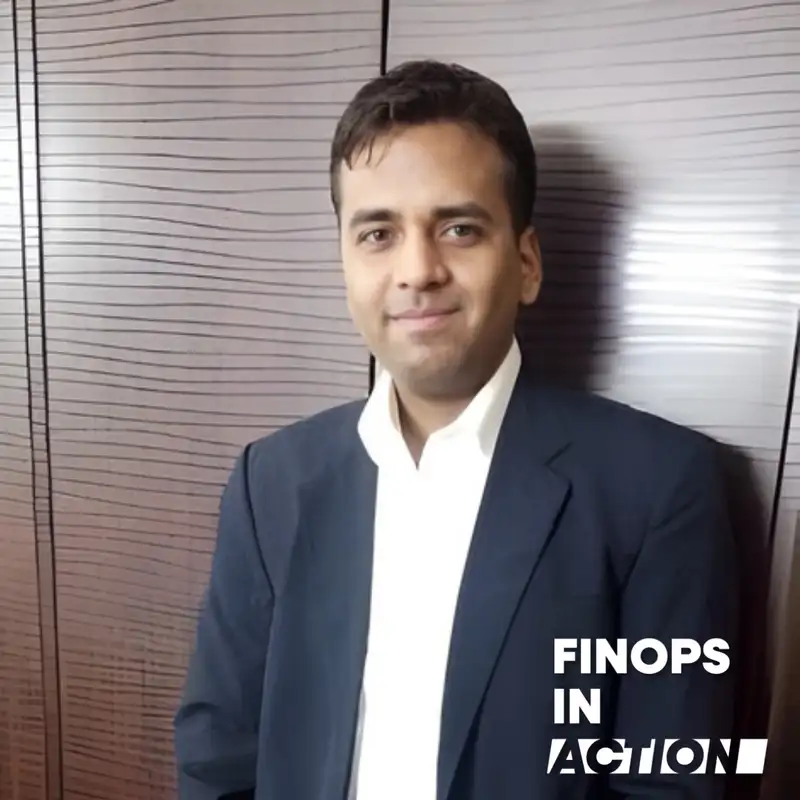
How To Drive Value Without Relying on Cost Savings Alone ft. Rohit Mishra, Avaloq | Ep #55
FIA - Rohit Mishra
===
Rohit Mishra: [00:00:00] saving and cost optimization is a very integral part of Cloud FinOps, but it is not the only thing. go after the low hanging fruit, You know, because if you are able to show. Value, then you get that belief from the top management.
Speaker 2: Welcome to FinOps in Action. I'm your host, Taylor Houck. Each week I'll sit down with FinOps experts to explore the toughest challenges between FinOps and engineering. This show is brought to you by 0.5, empowering teams to optimize cloud costs with deep detection and remediation tools that actually drive action.
Taylor Houck: Hello and welcome to another episode of FinOps in Action. I am super excited to be talking to today's guest. He is an expert in the worlds of cloud capacity management and FinOps. With over a decade's experience managing workloads across AWS Google and Oracle clouds. It's rare to meet someone with such a deep infrastructure and technical background that's also an expert in the cultural [00:01:00] aspect of FinOps. He's a seasoned presenter and speaker leading talks on FinOps and cloud infrastructure at local meetups and conferences. Head of FinOps at Avaloq. Welcome to the show, Rohit Mishra.
Rohit Mishra: Good morning. Uh, I really appreciate the invitation and thank you so much for such a nice intro.
Taylor Houck: Absolutely Rohit, I, I'm super excited to chat with you. You have a lot of really interesting experience that I'm excited to dive into. Uh, I guess let's, let's start here. You've been doing FinOps for a while now. something that you got wrong early in your FinOps journey?
Rohit Mishra: Okay, so how much time do we have? Because I can't go on, but Yeah. Um, so I would, if I, if I have to put in one line, You know, uh, the one thing which I got wrong, I would say. Trying to do everything and going in with this attitude that I understand everything. [00:02:00] And what I uh, actually mean by that is I come from an infra background and we all have this, uh, attitude that, okay, I understand my virtual machines, I understand my storage, I understand the application which is hosted on it.
So when I. Was, uh, doing this for the first time and I used to go to talk to the infra team. I used to think that, okay, I know what is the best I know, uh, if you want to optimize, these are the top five things which we have to do. So I used to go to them, give them those action items, and then hope that they are just going to do it from top.
Bottom and we know that it doesn't work that way, right? So now the hindsight is 2020. So if, if I have to go back and change one thing, uh, I would like to get this. Understanding that, You know, FinOps is about the support [00:03:00] and understanding amongst different teams, whether it is architects, your, uh, operations, your application, your finance team.
So we should first try to get an, uh, complete understanding of what is the application, which are the business forums, which are getting, uh. Impacted, which are the key metrics, which are the key KPIs. Uh, try to understand as much as PO possible and learn from these various teams, and then come up, come up with the action items so that, You know, all those different teams also feel that they're part of the.
Process and it's not, uh, uh, something like someone is coming from the, from outside and giving them orders. So yeah, that is one thing, which, which I feel I, when I was, uh, in my year one, this is the one big mistake, which I did.
Taylor Houck: So Rohit, I mean you, you come [00:04:00] from an infrastructure and capacity planning background. So when you came into FinOps, I think a lot of people when they come into FinOps, they're either from right, or operations, and they don't have that deep understanding of the trade-offs. That you need, the trade off decisions you
Rohit Mishra: Yeah.
Taylor Houck: Um, as it pertains to your cloud infrastructure, you came in, you did have that perspective. How did you kind of approach that and work with these different teams to, You know, help them, enable them to make the decisions when you already had perhaps some of the, the knowledge to even do it yourself?
Rohit Mishra: Yes. So, uh, when my first job, it was a Unix admin, so I, I, I started from the very basic, like doing the very, very. Technical basic jobs on a Unix Unix host. So I did understand the infra part and when I was doing, but, but I didn't have the very good understanding of, as I say, the domain [00:05:00] information. So when I started working with the teams, my, my first goal was, okay, whatever is happening on the infra side.
It, there is a one-to-one link with the application as in the business volumes which are coming in. So if we are just going to take a look at, say, what is a maximum CPU, or, uh, what is a maximum ram, which is used, that gives you an incomplete picture. So what I even do now is first try to understand the application part.
Both of them. And also I think one of in the, is the soft skills and.
Punctuations or the English part, You know, but basically speaking, the speaking the language which the engineer understands. So if, if, if I go to him and say, okay, this is a cost, he might not, because it doesn't have the, that visibility [00:06:00] into the cost. It is something which doesn't matter to him that much.
But if I him how the cost links to the one CPU, which, which on on his. He is wasting that CP, how the cost Information. Then, uh, personally found out that they, they bought into it immediately. So this, these are the two, two things, which, which I do now very often. First try to get the link between the business volumes, metrics, and the infra.
And then when you go to the teams, each team have their own mandate. So. Speak to them in language which they understand, which would be very different for an infra person to a finance person, to an architect. And once if, if we're, uh, able to master this, then I have seen that this entire journey becomes very [00:07:00] smooth.
Taylor Houck: Who? Who are all the teams, Rohit, that you collaborate with, like a lotg this FinOps journey? Like who are the key personas in your opinion?
Rohit Mishra: uh, first of all is the, your top management. You know, because FinOps starts with the management buy-in. If, if, if, if your management is not a hundred percent convinced about the value and the benefit that FinOps team is going to come, come with, is not going to work. So the first thing is to.
Convince or have your manager that belief and trust that what, whatever work we are doing in the FinOps, it is going to add a business value. It is very important that you have the infra team on your side because infra team is a team. actually going to execute the actions.
So infra team for for sure. Then the application team, because they understand the application, they understand the in and out. I might see some [00:08:00] something, uh, say, uh, JVM and I might feel okay it, it is very oversized, but maybe that much is required to.
stepping time. So they, there are different things about a particular application, which only an application team will understand. And then you have your architects, because architects are at the start and they are, the design choice which they're going to make is going to affect the entire, uh, infra.
And then the last and the least is the finance team because we still have so many things which are still controlled by the finance team, as in suppose if you have to actually pay the monthly bill of the crowd that is still controlled by them. If you're making a midterm plan or if you're making a budget estimation in all those things, you do have the finance guy, so your management.
The architects, the infra, the application and the [00:09:00] finance team. I feel these five teams are, are at the core at what we do, and we need to have the, governance calls with, with them so that this entire process, it becomes much more streamlined.
Taylor Houck: I, I'm curious if you have any examples of like times or projects in which you needed the input from, maybe not all of the stakeholders, but at least some of them. working together as a team drove to a measurable, um, outcome. Does anything come
Rohit Mishra: Yeah. Yeah. So I can give you an example. So I, I work a lot in Oracle Cloud. So in the, and we, we, we have this, uh, thing where we try to stop the VMs on, say, on a weekly basis, right? And we all know it. If it is a non broad environment, the virtual machines can be stopped on the. Weekends. But even though we, we had the automation to do it, it was a very huge pain point for us because you [00:10:00] need different signoffs from different teams.
So we used to go to the infra team and say, okay, see, see, on the weekend it is all 10%. Then why, why can't we just, just, just, just drop the VMs and they say, okay, this is not 10. Hand. If you want to do it, we can do it, but please go and ask first the architects. So I think this was a one case where, You know, we, we, we, we set up those governance calls.
We got the, the architects in, we got the financing, we got the sales team in, and instead of just solving it for one customer, we thought, okay, why not? Let's. Scheme of things, as in it becomes a mandate for all the uh, customers, which, which we have. And then after that, whenever any business case is made, so the sales team, they work on a business case and that that is sold to the client [00:11:00] and we convince the architectural, okay, if we can add this point, if it's a non-pro and environment, if we say, if it is an SIT and environment, the VMs have to be up only.
10 hours for five, five days. If it's an acceptance and environment, maybe, maybe you also need to do some test on the weekend, but it can be only eight hours on the weekend. So what, what we found if, uh, once we were able to put this in the business case itself, and this was a mandate coming from the architects to the.
Uh, infra teams, that issue, which, which was a huge pain point for, for us, it was sold automatically. So from, from then on, whenever any new uh, uh, involvement was set, this particular mandate, it was ingrained into it. So the team had to do the, uh, setup in. Such a way. And we, we, we [00:12:00] have lots of automation for it.
We use, uh, some, uh, if you might have heard about cloud custodian tool, we, we also use that tool. We build the functions in and then we found, yeah, so then the, all those emails, which, which we had to send to all the teams saying, okay, stop this, stop this. That entire work. Was gone and all. So I, I would say this, this was made possible because we were able to get in lots of teams, the architects, the sales, the infra, the top management.
So this is in. Example where if all the teams they work in sync with a common goal, and if you are, we are able to give them the, uh, data points on the amount of, uh, savings this particular action is going to get in. That thing gets done.
Taylor Houck: it reminds me of this two. Term that, You know, we've heard a lot recently in, in FinOps, right? And that, that term is shifting
[00:13:00] left. How do you think about, like, what does shifting left mean to you and how do you actually put that in practice? I think this might have been a, a perfect example of it.
Rohit Mishra: Yeah. Sort of. Yes. So, so, uh, You know, we, we always, uh, hear so many buzzwords and, You know, after a few few months we feel that, okay, that it, it, it was just a fad. You know, it is not something, it, it very meaningful, but, You know, I. Truly feel that, You know, the, uh, shifting left is something which is going to be a very, very important in the FinOps context.
You know, so, so, uh, say after, in 2030, if you're going to take a turn back and see about shifting left, it is going to be a very important turning point in how FinOps is perceived amongst, uh, different teams. And also how FinOps is a actually done. So I would give you a long answer, You know, [00:14:00] so, uh, try to think when, when most of the sales team or most of the finance team, when they hear that your company wants to go to the cloud, You know, everyone thinks it is cheap and, uh, but after the few months, they're in for a shock because then they see that, okay, the bills are much way, uh, uh, above what we estimated, and then they call in.
Our team, they call in the FinOps team. Everyone is in a panic, and they ask us to reduce the cost. And I will say this is still a, a reactive mode. Once, once we see an issue as happened, then we are trying to solve that issue. Now, if, if you want to take, uh, one step. Earlier what? What? You can automate lots of things or say if you have an unattached volumes, you have built in those lambda functions or other functions, which are going to do that housekeeping.
So I [00:15:00] would say, but it is still a reactive thing where a volume has become unattached and then you are taking an action. So maybe it is not completely on the right, but it is still at the center and, but when we are talking about the shifting left, we are saying why, why, how to solve that issue in a way that issue doesn't happen in the first place.
So, and most of these things are happening because we are not trying to. Source. So when we say shift left, we go at the source and, and when we say source, it is the architects. So the way the things are being designed, we, we try to give our input at that place. So, so that most of the wastage doesn't happen at all, and we save our time from trying to solve that wastage.
So to and. Example of it, it, it, it is again, Oracle Cloud, You [00:16:00] know, so we have, uh, there is a feature, uh, I think it's there in every cloud. There is a virtual vault where you store the keys. And now in Oracle Cloud, a virtual private vault is a very. Expensive thing. Uh, until few years back, what was happening was that, You know, there were multiple teams were having their own one vault.
So if, if, if, if you had like 20 teams, each team used to go and start a vault of their own. And the, And so the amount of build was like 20 times, no, you don't need this. So at the one of. Option is you send an email to those 20 teams, try to follow up, half of them will not answer, and you waste your time.
So if, if I take this example and say we, if we want to shift left, you go to the architects, and this is what we did at a block, we said, okay, from an architectural [00:17:00] design point of view, you cannot have more than one world. You can only have one vault, like central resource.
All the teams can use it. Of course. Uh, you have different ways of how you can maintain isolation inside it for suppose if, if, if, if you want that. Each team should have their own compartments. You have ways to do it, and this is what we did. So now we have just one vault. For all the teams and they all throw the keys in it.
So now automatically your cost went down from 20 to one. And for, for this, we didn't have to send out 20 emails to all the teams. So if, if we are able to convince the architect at the source itself, we are able to design our infra in a way where the FinOps or the optimization principles are. this is a perfect example of [00:18:00] shifting left.
Taylor Houck: As gets continued to be shifted. Left right, and you're, you're earlier in the design process and you're involved in making these decisions Before you even perhaps deploy these applications, how do you think about. How FinOps is justified as a practice when perhaps cost savings isn't the number one metric that you're impacting.
Rohit Mishra: So if I understand the question, it is mostly okay. If our cost is more or less a stable, how do we justify of FinOps team? Right?
Taylor Houck: Yeah, essentially, You know, if, if we're, if we're shifting left in the design process and we're helping design these applications in a cost efficient way from day
Rohit Mishra: Mm.
Taylor Houck: Right? There is perhaps less opportunity to optimize later. I think that a lot of, in, in my experience, a lot of FinOps teams, they justify their existence through cost avoidance and cost savings, through finding [00:19:00] inefficient architectures
Rohit Mishra: No.
Taylor Houck: Recommending a new path.
Rohit Mishra: Yeah.
Taylor Houck: Taking that path and showing the direct cost savings as a result of that action. But as we get more advanced and we're introducing this FinOps aware, cost aware mindset, early in your, your reviews and in, in the design of these applications,
Rohit Mishra: Yeah.
Taylor Houck: we're not gonna have that metric anymore. How do, how do you think about that?
Rohit Mishra: No. So, yeah, I, I think it's a fantastic question. Right? And this is a question which I've, which, which is on mind of lots of FinOps practitioners. Right? Okay. What if our bill is completely, uh. Then do, do we need FinOps at all? So from my con uh, context, the, the answer to this question is that cost saving and cost optimization is a very integral part of Cloud FinOps, but it is not the only thing.
So Cloud FinOps is a [00:20:00] very large umbrella under which one of the things which we do is cost opt, uh, savings and. Optimization. So we, and if we are not doing it, then we, we have to expand our, our coverage, right? So we, we, we have to go to the teams, we have to go to our management and make sure that we as FinOps team, we also take other things into our area.
And when I say that, You know, so say, let's start with an example of invoice management. So finance team might still be paying the monthly bill, which you get, but you do have cases where in a bill you get a say amount is hundred K or that hundred case used by 10 teams. So then how then you distribute that amount amongst different teams.
So you use the principles of cost reporting the show back. Chargeback. But in then, basically what we are doing is a technical [00:21:00] cost allocation and you are able to do it because you have that bird's view. You understand the what the different teams are doing, and you also understand the infra. So you are not a completely non-tech person.
Right? So that technical cost allocation where you understand, okay. As I said, for the world, there might be a single resource which might be used by multiple teams. And how do you distribute that shared cost. and I, I've also seen lots of teams also use that tax to, for this cost distribution.
Now the tax in the entire company, it has to be a standard. It cannot be like each team have their own. Tag keys. So now which team defines those tag keys? What should be the common set of tags? It might be for your division, it might be for your particular account, it might be for your particular SAP code, but what are those tag keys, which everyone else has to use and the And tag tag.[00:22:00]
Governance part. So this is also very, very big task and very important feature, which is part of the cloud, uh, FinOps. Right? And then as I said, the finance team, they make the MTPs, or you can call the annual plans where they're doing the budget estimation because of, uh, FinOps team has the reports and all the focus reports, and we have all the historical.
Data. So that input, which goes to the finance team based on which the Esti estimates are made, the budget forecasts are made. That is also a big, uh, area where we have to give, give our input. And then the last point when we talk about the cloud planning, right? So I talked about the architect. It, it is sort of, uh, shifting left, but also when architects have their own.
sizing models where they're say, okay, say this application one, it is hosted on this particular vm. You need to start with eight [00:23:00] CPUs. And that input might be coming from some tests, which, which ha have been done. But now as the FinOps team, we have the data when the CU customer goes live, we have all the metrics, we have the monitoring data.
We have to analyze that. Data, find patterns into it, and then go back to the architects and ask them to update their s Scobleizer models. So, so that when we, so it is sort of, uh, shifting left, but it is not something we should do only once, uh,
Taylor Houck: I
Rohit Mishra: month by month. You have to observe this a, apart from the cost, uh, savings, the Cloud FinOps team should also do, uh, cost allocation, the tag governance, capacity planning, budget estimation, forecasting, and all, all, all these things should be part of the Cloud fops team.
Taylor Houck: There. There really is so much work to be done and I [00:24:00] agree with that. But that last point you were making resonated so much with me and that's where I thought you were actually going to go initially. Right? Because essentially even if you shift all of your, You know, FinOps mindset and this, this kind of efficiency architect point of view or what. Um, Warner Vogel from AWS would call the frugal architect, right? This, this mindset, when you're building applications to do it in a Costa wear way, even if you do that on day one, things are going
to
Rohit Mishra: Yeah.
Taylor Houck: Right? And these billing models, like the billing models for these services are so complex with so many different configuration options and each configuration. May be the cost optimal for a specific scenario, and oftentimes I've seen, you can make an assumption as to what your utilization rates are gonna be or how this application's going to get used. But even if you make the best assumption with all the available data on day one, on day 30, 60, 90, things might be different. In which [00:25:00] case, even if you made the most cost optimal decision on day one. now been a drift and now there actually may be
Rohit Mishra: Yep.
Taylor Houck: An opportunity to make a change even if you were considering all the factors early
Rohit Mishra: Yes.
Taylor Houck: That's, that's how I see it.
Rohit Mishra: Absolutely. And you, you have, uh, hit the nail on the head. This is the thing that what, what we think on the day one, the estimates, which we do, the things don't turn out that, that way very often, You know, because, uh, if we talk about the infra team, I won't say it is their fault. But their main aim is to solve an issue.
So say as soon as they are hit with, with an issue and they know that, okay, if I add 10 more, uh, CPUs to it, the issue would get solved. They won't try to do the housekeepers. So, or try to do the RCA because in the cloud it is so easy.
Taylor Houck: Yeah. By the way, this is like, this is the, the crucial. Kind of building blocks for this [00:26:00] new wave and FinOps that we're starting to see emerge that people are calling cloud efficiency posture management. Right? And this, it's this idea that you're, you're, how efficient your cloud is running is, is a posture that can change over time. On one day you might have a, a, a, a strong efficiency posture and be running an efficient way, but things could change that leads to degradation and all of a sudden you're, you're less efficient. But the challenge is at an enterprise scale. It's very difficult to stay on top of all of these changes as they're happening in real time.
And that's where software systems are, are needed. Right. And, and to put checks in place. I mean, you talked to how you're doing some of that internally, um, at Aval Lock. I'm curious, like how are you, how are you keeping track of the efficiency of your architecture, um, and cloud resources in an at scale enterprise environment where it it's, it's too big for a hit to be looking at things in the GUI by himself.
Rohit Mishra: Yeah. So, uh, as, as, as You know, a block is in the banking [00:27:00] domain, very, uh, strict regulations. So I cannot, uh, sh share much. But, but, but what I say, yeah, so over. Period of time. We have, we, first of all, we, as I said, multiple times, right? Understand the application. What are the basic KPIs or important KPIs by which you can define a particular application, which might for starting from app one to app two.
That might be completely, they, they might not be the same, You know? So what is that particular unit metrics, which makes sense for the particular application. We first, we try to define that, then we try to automate that on, okay, on a monthly basis you get that data. You are not just looking at the infra metric, but we're trying to find out the business value.
So that is one, one way we, we try to see, and if we see that okay, the business value has started to [00:28:00] go down a bit, then it means, okay, this time we need to go in and take some, uh, action and validate the things. And also, uh, one more thing I think I, I missed this point in, in your question was when we're also talking about putting these guard rails, right?
Where okay, we are trying to automate the things we are, we, we are not trying to make things, uh, more complex for the engineers. We are just, we are just, uh, trying to help them as much as possible. Also we have seen that we, we had certain cases where. We know there is a wastage and our, as you said, I, I, I, uh, and by the way, I love this term, You know, efficiency posture. It's a very, I'm, I'm going to use this a lot from now. So where we, we, we have seen that there is a wastage. We try, we have disabled the console access.
You know, now if you, if you want to start any virtual machine, you have to use the code only. And then even in the code for [00:29:00] certain applications, we have put things like. When an engineer comes and he, he or she wants to start a machine, they have to give a time that they, okay, they, because it is a test they need, they need it for eight hours or they need it for one day or five days.
So, uh, these, these are some of the ways where we try to make sure that. Uh, in terms of if we, uh, we are not going way off the mark. We try to make it as efficient as possible in the way that it is to be used when it is really required. And then on the top of it, we have the KPIs for different applications.
Taylor Houck: Yeah, absolutely. Rah. I, I. Um, shifting gears just, just slightly here, um, I'm, I'm curious, when you think about all these best practices and, and you're operating thin, opposite, You know, a, a fairly mature, uh, phase, frankly, what, what parts of this job, what [00:30:00] parts of our industry do you think are perhaps underappreciated or, or, or underdeveloped?
Like, if you were to look ahead one year, two years, three years, where do you think we'll see the biggest changes in, in. That FinOps teams are operating.
Rohit Mishra: Yeah. So in terms of a big org, I, I would say now we, we are, no, not just, uh, ALOC, but overall and Fi as you said, FinOps is still a very niche field, You know, so, if you come, uh, compare, say where we were in 2024, we have come a long way.
So I'm sure as we go ahead there, there are more things which are going to be added to it, uh, in terms of what is being done well and not done well. I, I will say that in terms of the, A reporting part. We have come very far and I think the f focus has, has helped a lot and uh, especially in a multi-cloud [00:31:00] setup, right, with the, we now we have more of the standardized columns and all.
So in terms of the showback, in terms of the chargeback, in terms of their tax, I feel that these are the things which we are doing very well as of now, and also in term
Taylor Houck: as an industry,
Rohit Mishra: as an
industry. Yeah.
Taylor Houck: I, I agree. What I say to people is. If reporting and visibility not a solves problem, it is at the very least a very solvable
Rohit Mishra: Yeah.
Taylor Houck: for any company. where we are with technology and BI solutions, it's like literally just grab your billing files, build the data pipeline, and pop it into a, a BI platform, and you can get your cost visibility wrangled in a very short period of time.
You don't need too much fancy, uh, tooling on top of
it.
Rohit Mishra: the, the step one if you want to optimize is the cost should be visible and visible, not just to us, but to everyone. So as you said, yeah, the cost [00:32:00] visibility is, is, is the number one thing. But yeah, it is something which we are doing very well as of now. I would say one thing, which, which, which we need to do more is, as I said, sh shifting left, but in terms of getting, getting in, in the calls more, You know, like get into the calls with the architects, get into the calls with the application teams.
Because, uh, I, I, I still feel that at many places, FinOps is still considered more of a governance function, and it is, it is a governance function, right? But in, but it, it can, can add so much more value because we understand, because we have that bird's view, we understand the infra, we understand the application.
Archite calls where the decision making is done, where the designs are being built, we are going to add so much more value [00:33:00] to it. But I don't see that happening a lot. So I think that that is one thing which is still very under developed. But I hope that in say, if, if, if, if we do the same podcast after 12 months, I would hope to say, okay, now this is also something which we are doing very well.
Taylor Houck: One thing that's interesting is that in, in order to fit well into those meetings with the architects, with the application teams, it takes a specific, specific kind of FinOps persona. Not everyone with FinOps and their title is capable of providing value in those discussions. And I think that upskilling our,
Rohit Mishra: Yeah.
Taylor Houck: to be, to, to have the right blend of skills to handle FinOps
Rohit Mishra: Yeah.
Taylor Houck: in 2026 and beyond is also really important. Um, and, and Rohe, we're, we're coming, we're coming close to a close on, on our time for today, and I, I wanted to have the opportunity to ask you, um, one question specific, because we get a [00:34:00] lot of listeners. Who are earlier on in their FinOps journey than, than you are. So I want to give you the opportunity to speak to them. Um, do you have any, any advice or any, any words of wisdom from your experience that you would share with someone early on in their FinOps journey? Um, perhaps something that, You know, you wish you had heard sooner, uh, or earlier in your journey yourself.
Rohit Mishra: Yes. So the one advice which I would give to someone who is
at a very early stages go after the low hanging fruit, You know, because if you are able to show. Value, then you get that belief from the top management. And once, because in the FinOps, the management buy-in is the most important thing. So in the when, when I was in my first month, You know, I used to go to the AWS console and manually remove the.
Volume. So don't try to automate and make fancy things on the first day. You know, [00:35:00] just go after the low hanging fruits, then go to your management and sh uh, sh show it to them that, okay, these are the savings, which we have brought. And then once you get that, uh, buy-in, then use it to build on, it, stop.
Then you try to automate and then you try to do the, uh, fancy stuff. But yeah, on the day, one day, first month, it is very important to, uh, get some actual savings done and show it to your management.
Taylor Houck: I love, I love that advice, and I think that it's so important because of how tangible, how tangible the value of FinOps can be early on. Like you literally can go out and in a week show up with, depending on the scale of your environment. Of thousands of
Rohit Mishra: Yes,
Taylor Houck: of impact, right? And that gets people excited and gets the ball rolling for you to then tackle the bigger and more challenging issues that are gonna present to you once you get through the kind of the, the, the layer of, [00:36:00] of low hanging fruit to easy
Rohit Mishra: yes.
Taylor Houck: So to speak. Um, Roha, it is been a pleasure, uh, chatting with you today. I think everyone listening has a lot to learn, um, from you and your journey before we wrap. I, I know that. Your entire life does not revolve around FinOps. Uh, I'm curious. I don't know. What, what do you, what do you do for fun out outside of work?
Rohit Mishra: so, You know, I, I have a two and a half years old baby boy, so
Taylor Houck: Uh.
Rohit Mishra: And now most of my time goes, goes in, in that when, as soon as I come home, he's waiting at the door. So if, if I'm inside the home, I cannot work. I cannot watch tv, I cannot do anything. I, I have to be with him. So, yeah, that takes lots of my time.
But. Sports, football, tennis. These are two, two sports, which I watch a lot.
Taylor Houck: Who are your, who are your teams?
Rohit Mishra: I most mostly watch English League. English [00:37:00] Premier League. Uh, so my favorite team is Chelsea. I've been following them from 1998. So, yeah. And, uh, you must be doing, as of now, the Australian Open is also ongoing, so yeah, I wake up in the mornings and also try to watch that as much as possible.
And I'm, I'm, I'm very, uh, still very old fashioned, You know, so when I wake up in the morning, I still want my, uh, news. In hand. So I take time to go through the, newspapers, then I go to office, come back, play with my kid, and then try to watch some, some sports. So yeah, this is my very boring life. Yeah.
Taylor Houck: I don't think that's so boring. I think getting off the screen. And, and stick into a real newspaper is
Rohit Mishra: Hello?
Taylor Houck: That more, uh, more people should be doing. Um, Rohit, if, if anyone's listening that is, You know, uh, newer to FinOps, uh, uh, capacity planning, who is perhaps a, a Chelsea [00:38:00] fan or they wanna reach you, where, where should they find you?
Rohit Mishra: Yeah, so I think, uh, you, I, I will share my LinkedIn address and you can add that, that, uh, that in the text. So I try to, uh, yeah, I do get lots of, uh, messages. I try to answer as, as much of them as, uh, possible. And I will also give my email id. So yeah, the, these are the two mediums where you can find me.
Taylor Houck: Awesome. Thank you so much for joining the podcast. I really appreciated having you on as a guest. This has been an amazing show. Uh, I think all of our audience, uh, will come away with, with something to learn from you. And man, it
was
Rohit Mishra: thank,
Thank
Taylor Houck: you so much.
Rohit Mishra: thank you so, so much for having me. It was great. Yeah.
Taylor Houck: Amazing. Thank you again, and until next time.
Speaker: That wraps up another episode of Fit Ops in Action. Thank you for joining. For show notes and more, please visit fit ops in action.com. This show [00:39:00] is brought to you by 0.5, empowering teams to optimize cloud costs with deep detection remediation tools that actually drive action.
Creators and Guests